.png)
MALAYSIA is bracing for a Super El Nino expected to develop from around November this year, peaking between November and January 2027, according to forecasts.
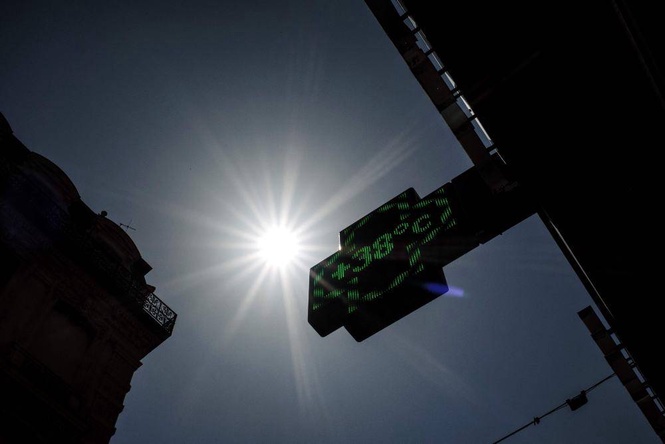
The phenomenon is expected to bring prolonged hot and dry conditions, reduced rainfall and a higher risk of haze once the monsoon season ends.
Alliance for a Safe Community chairman Tan Sri Lee Lam Thye said the warning should not cause panic but should push authorities and the public towards early, coordinated action.
What Super El Nino actually is
El Nino is a natural climate pattern linked to warmer sea surface temperatures in the Pacific Ocean, which disrupts normal rainfall and temperature patterns across the region.
A "Super" or very strong El Nino produces more extreme effects than a typical episode - sharper temperature spikes, longer dry spells and greater strain on water and food systems.
MetMalaysia director-general Dr Mohd Hisham Mohd Anip said the effects are expected to intensify towards the end of the Northeast Monsoon, which typically runs from late October to late March, before peaking in early 2027.
What Malaysia can expect
- Rainfall: Johor and Melaka are projected to see 20 to 40 per cent less rain during the Northeast Monsoon. Sabah's east coast may also see reduced rainfall due to its proximity to the Pacific, though the east coast and north of the peninsula are not expected to see drastic effects this year based on six-month projections.
- Heat: Temperatures above 35 degrees Celsius could occur from February to June 2027, with the highest risk in Perlis, Kedah, northern Perak, and inland parts of Kelantan and Pahang. Mohd Hisham said the national record of 40.1 degrees Celsius, set on 9 April 1998, could potentially be broken between March and May 2027.
- Broader trend: Malaysia's temperatures have risen by 0.19 degrees Celsius per decade since the 1980s due to global warming, and a strong El Nino could add up to 0.7 degrees Celsius above normal on top of that.
Why it matters
Lee said the effects of past El Nino episodes point to a wide range of risks: water shortages, forest and peatland fires, transboundary haze, lower agricultural yields, threats to food security, heat-related illness such as heat stress and dehydration and disruption to economic activity.
Senior citizens, young children, outdoor workers and people with chronic illnesses are considered most at risk.
Agriculture and Food Security Minister Datuk Seri Mohamad Sabu has linked the phenomenon to a wider food security concern, noting that geopolitical tensions, including the conflict in the Middle East and climate-related disruptions to supply chains make food security "no longer an option but a strategic necessity."
Labuan, which sources about 90 per cent of its food supply from Sabah, has already launched a Labuan Food Security Strategic Plan 2026-2030 to boost local production and improve logistics.
The scale of the challenge is not unique to Malaysia. Colombia has already declared a 12-month national disaster over an expected "mega-drought" between December 2026 and March 2027, with President Gustavo Petro warning it could be the country's worst drought on record.
Regional risk: Southeast Asian cities among the world's most heat-exposed
A study by Oxford University, 'A globally comparable framework for heat risk assessment in cities (2026)', assessed heat risk across cities worldwide and found Ho Chi Minh City in Vietnam ranked highest globally, followed by Bangkok and Samut Prakan in Thailand.
Researchers said the risk stems not just from high temperatures alone but from a combination of heat and humidity that makes it harder for the human body to release heat, compounded by the urban heat island effect, rapid development and population density.
Bangkok has already begun drafting water management measures after forecasts suggested El Nino could cause prolonged water shortages lasting into 2027.
The report warned that if a Super El Nino materialises, Southeast Asia - including Thailand, Vietnam, Indonesia and Papua New Guinea - would face prolonged drought, reduced rainfall, strain on water resources and agricultural output that threatens food security, along with heightened wildfire risk.
Climate models are currently showing unusual sea surface temperature patterns in the Pacific Ocean, with scientists forecasting that a Super El Nino could push global temperatures higher still, potentially making 2027 the hottest year on record.
Why this matters beyond the weather
In Malaysia, while public attention remains on political issues, the cost of living and international developments, a slower-moving but potentially significant threat is emerging.
El Nino's effects go beyond hotter weather - they risk disrupting food supply, driving up prices and straining the country's water resources.
Agriculture is among the most exposed sectors: rice, vegetables and fruit all depend on a consistent water supply for optimal yields and prolonged heat in key production areas could reduce output and affect local food supply.
With Malaysia still reliant on imports for several major food commodities, disruption to production either domestically or among regional exporters could push food prices up - echoing pressures seen during past global supply chain crises.
Falling reservoir levels from prolonged dry weather would not only affect domestic water supply but could also hit the industrial and agricultural sectors; several states have had to impose water rationing during past El Nino episodes when storage capacity ran low.
Hotter, drier conditions also raise the risk of forest fires and transboundary haze, with knock-on effects for air quality, public health and economic activity.
The core question, ultimately, is not whether El Nino will occur, but how prepared Malaysia is to face it. Without stronger water management, food supply monitoring and support for affected farmers now, the country risks a compounded crisis of food, water and cost of living - one that would ultimately be felt at every household's dinner table.
What's being proposed
Lee outlined several measures for Malaysia, including:
- Strengthening water resource management through prudent usage, reduced leakages, more storage capacity and contingency plans for drought-prone areas
- Intensified monitoring and enforcement against open burning and forest or peatland fires
- Timely heat advisories, cooling centres where needed, and public education on heat-related illness
- Support for farmers through efficient irrigation, drought-resistant crops, technical assistance and financial aid
- Uninterrupted electricity supply to meet rising demand for cooling
- Stronger coordination between federal, state and local authorities for emergency response
MetMalaysia also provides technical advice for cloud-seeding operations to help raise water levels in catchment areas, though these can only be carried out when weather conditions allow.
"El Nino cannot be controlled because it is a natural phenomenon. What we at MetMalaysia can do is provide information on the conditions that are expected to occur," Hisham said, advising the public to use water wisely and avoid open burning.