India has been roiled by protests seeking the removal of the country’s election chief for deleting about 130 million names from voter rolls, allegedly to benefit Narendra Modi’s ruling BJP party.
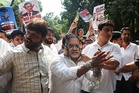
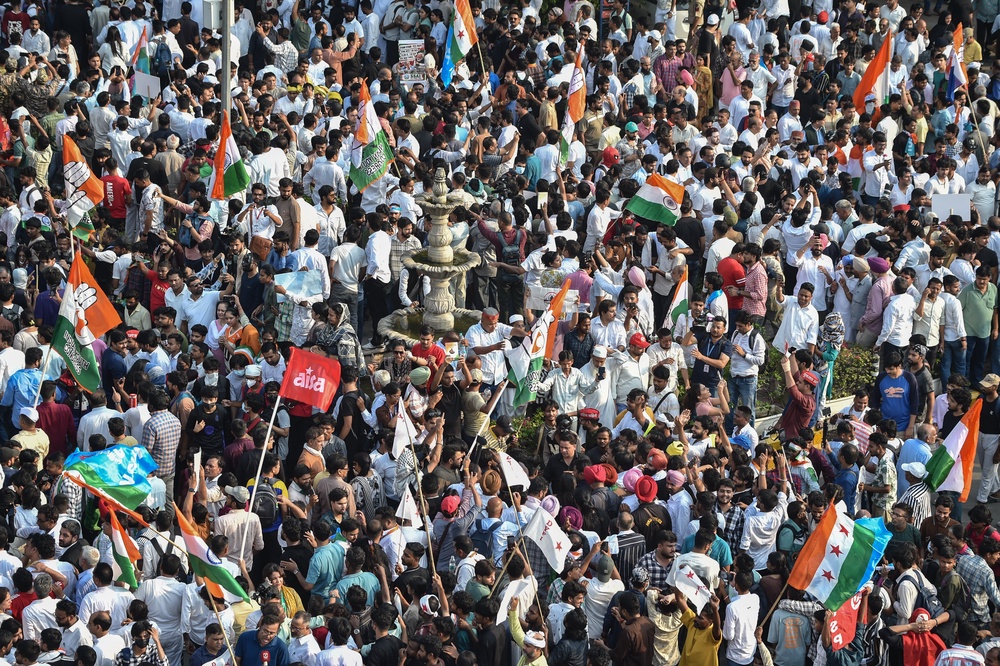
Masses of protesters mobilised by opposition parties and youth groups have taken to the streets of the capital Delhi in recent days, demanding the resignation of chief election commissioner Gyanesh Kumar.
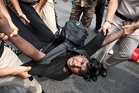
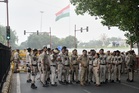
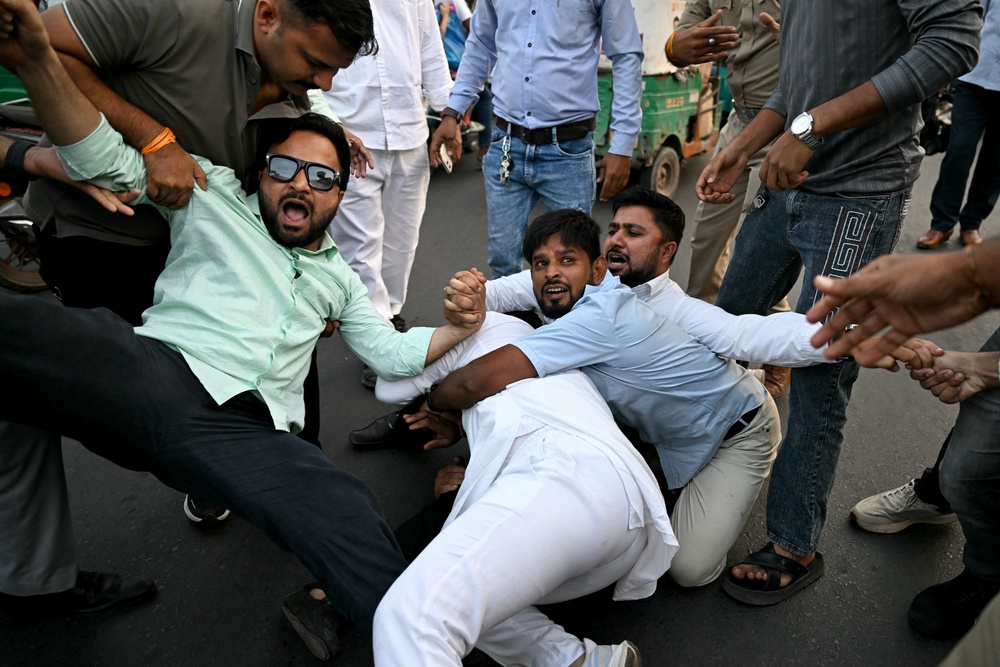
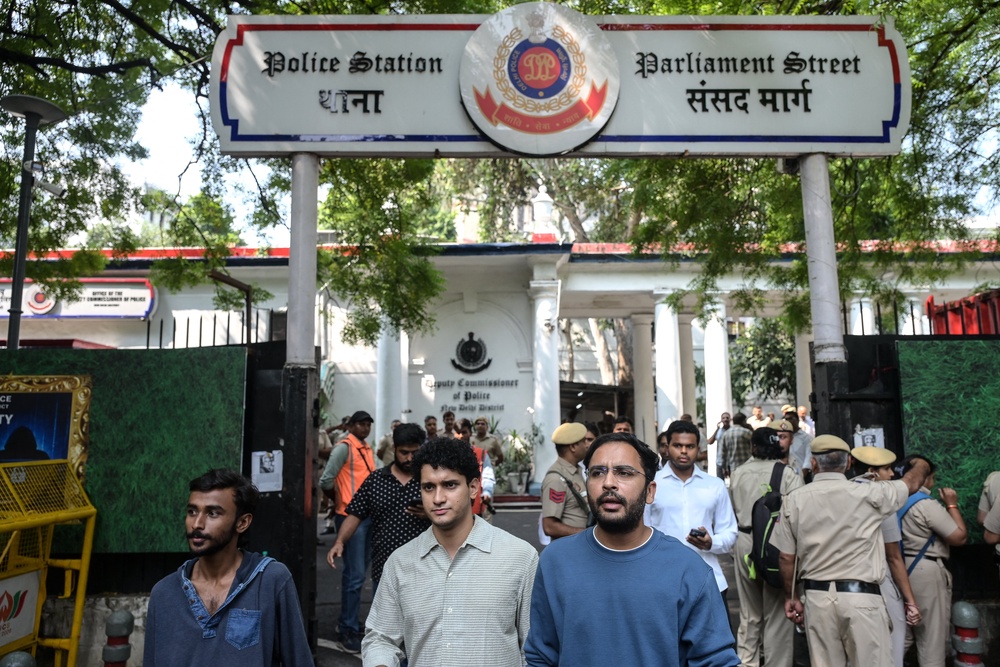
The government has responded by deploying tens of thousands of police and paramilitary personnel, barricading roads, cutting off mobile internet, and detaining political leaders, students, activists, and lawyers en mass.
On Tuesday, police moved for the second time in less than a week to detain leaders of the Cockroach Janata Party, a youth group that sprung up over the summer and led protests that ousted the education minister following a series of botched exams. Ministerial resignations are exceptionally rare in India, and the episode represented one of the clearest challenges to Modi’s authority since he came to power in 2014.
The government has held firm in the face of the latest protest, locking down the capital rather than letting demonstrators gather. That crackdown, though, has failed to dent the ongoing protests or the anger driving them.
The election commission and the Modi government have denied any wrongdoing in the revision of voter rolls. The government has also rejected outright the demand for Kumar’s resignation. “There’s no chance of chief election commissioner Gyanesh Kumar resigning,” one of Modi’s ministers, Ramdas Athawale, said.
For Professor Rajeev Bhargava, a political theorist who formerly taught at Jawaharlal Nehru University in Delhi, the question is not simply why Kumar will not resign but why the government is so determined to defend him.
“A democratic government would have got this guy to resign as soon as there was some doubt,” he tells The Independent.
The chief commissioner’s job after all is to conduct elections impartially and dispel any reasonable suspicion that the process is not fair. “If his legitimacy is in question,” Bhargava says, “that impartial election cannot be conducted.”
But the Indian Express investigation which kicked off the storm “kind of proved” the suspicions against Kumar were “legitimate”.
The three election commissioners, including the chief, “should have resigned” the same day, Bhargav argues. “They did not, confirming people’s doubts that the government and the election commission were in cahoots.”
The daily reported that Kumar’s two fellow election commissioners had repeatedly objected to several decisions and procedures connected to the revision. It also detailed how the centralisation of the election commission’s databases was preventing officials on the ground from rectifying voter lists despite enjoying the legal authority to do so.
The commission acknowledged the commissioners had made objections, but characterised it as part of the routine decision-making process.
It maintained that the Special Intensive Revision was meant solely to update voter lists by identifying people who had died, moved away, could not be traced, or appeared in more than one constituency. It ended up classifying 130 million names as such but insisted that this didn’t mean all of them had been removed. Eligible voters, it added, could apply to be added back.
But opposition parties and critics said the revelations only confirmed their suspicions that the exercise was meant to strategically disenfranchise millions of voters to benefit the ruling party. They argued that the scale of the exercise, the documents demanded to restore names, and the cumbersome process to rectify any mistakes raised concerns over whether eligible voters were being systematically excluded.
Apoorvanand, a Delhi University professor who does not use a second name, argues that “it’s not really about Gyanesh Kumar”.
“He is an instrument in the largest scheme of things,” he says of the chief commissioner, “through which the whole electoral process is being distorted and manipulated to suit the ends of the BJP.”
And the Modi government’s refusal to yield on Kumar’s resignation, he states, has turned a controversy about electoral administration into a test of institutional credibility.
Amit Shah, Modi’s chief lieutenant and home minister who controls the police and paramilitary forces deployed against the protesters, finally broke his silence on the issue on Tuesday, advising the main opposition Congress party to introspect instead of “questioning electoral processes” after repeated election defeats.
Why is the government backing him?
Bhargava argues the government’s public defence of Kumar has compounded the problem. The election commission is an independent institution supposed to stand apart from the political executive. When the government’s representatives defend its chief as if he’s another member of the administration, he says, they make an ostensibly independent body appear politically aligned.
At the same time, the government has avoided meaningful engagement with the opposition to clear the air.
In a democracy, Bhargava says, such disputes should be debated in the parliament and addressed through dialogue between political parties.
When those channels appear ineffective and the courts do not provide a timely resolution – as is happening in this case – people may feel that taking to the streets is their only option.
For the government, Bhargav suggests, the refusal to let Kumar go may reflect a fear of what his departure could imply.
The government could persuade Kumar to resign and appoint a replacement, allowing it to claim that it had restored confidence in the institution. But it appeared reluctant to take the risk, he argued, because it couldn’t be certain the replacement would be more favourable to its interests.
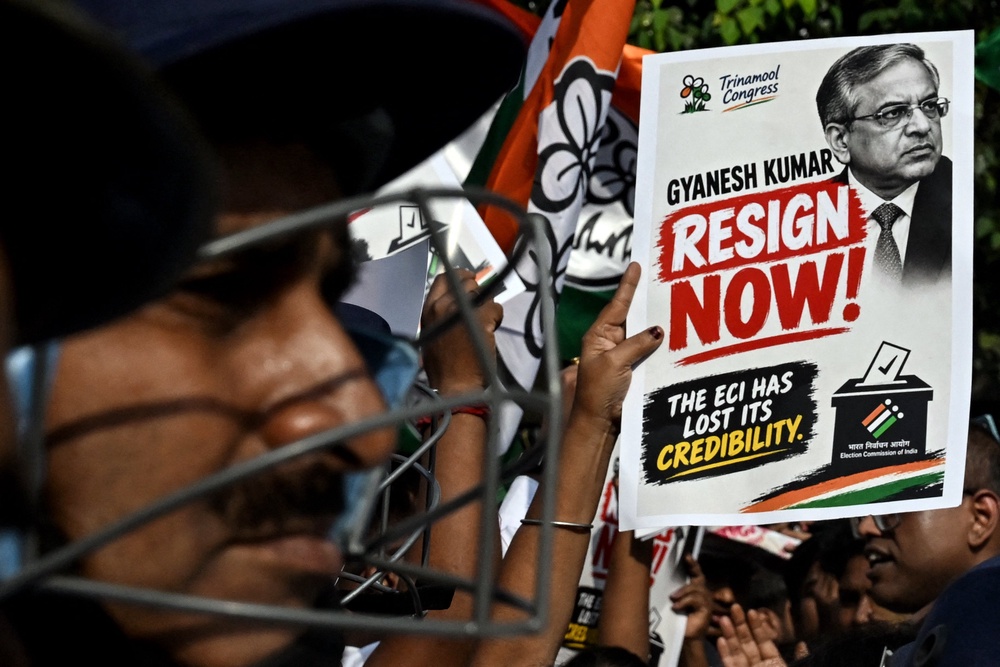
Apoorvanand’s reading is more confrontational. He argues the government is protecting not just Kumar but the wider political authority invested in the revision exercise. In his view, replacing one official does not address the underlying concerns about how electoral decisions are made lately.
This is why, Bhargava says, the government has adopted the strategy of silence followed by force, with the expectation that public anger will eventually subside.
“This is a government that is pretty obstinate. It's a government that’s not responsive to any demands. Its response is to bludgeon. To brazen it out. Even discussion and conversation. It's in silence and then force,” he argues. “And it waits for things to just cool off.”
Apoorvanand interprets the heavy security deployment as a message to the BJP’s core supporters that the government remains firmly in control even as its political narrative faces resistance.
He argues that the crackdown on the protests is intended to project authority rather than acknowledge the opposition’s criticism.
What happens next?
Comparisons are inevitable to the protests in July that led to the resignation of education minister Dharmendra Pradhan.
In that instance, according to Bhargava, the government only gave in after a brutal police crackdown on 20 July threatened to alienate a generation of young voters. And that development helped create space for opposition figures to be heard.
The strength of the ongoing protests, he says, lies partly in the informality of Gen-Z protesters: young activists can use satire, irreverent slogans and tactics that conventional political parties may avoid. He describes the movement as complementing rather than replacing the opposition’s work.
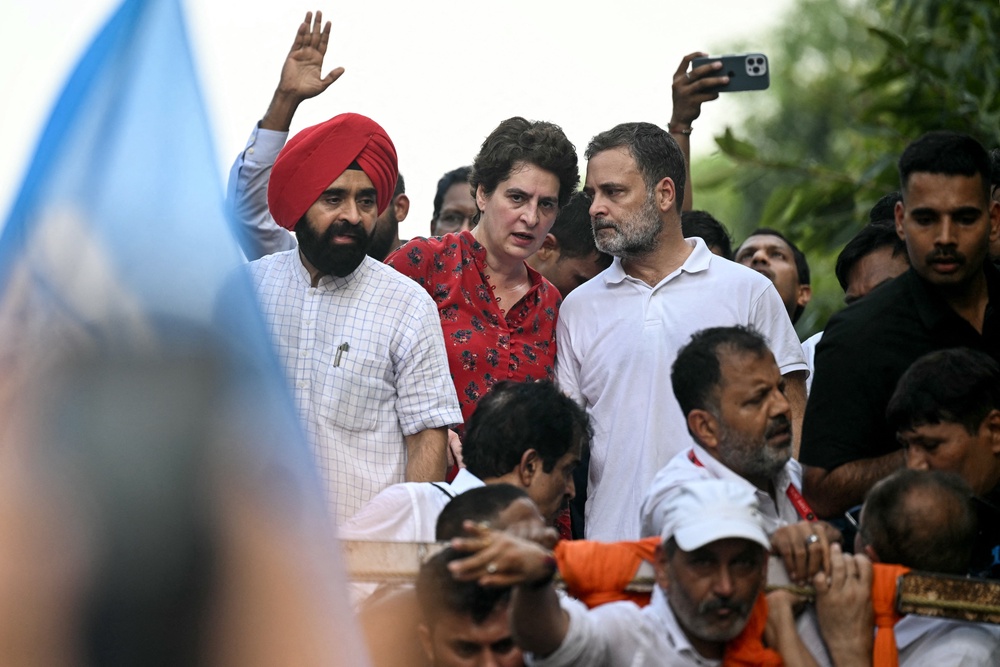
Apoorvanand agrees. When police responded with crushing force to the July protests, “the youth saw the real face of the government”, he says.
“The reality became very clear and stark before the eyes of the people. And people started seeing and hearing the opposition, and Rahul Gandhi, clearly.”
But unlike in July, Apoorvanand does not feel the standoff will end anytime soon. “It will continue because now it's between the government and the people.”
In July, the government wanted to convey the impression that it was responding to the youth. The current dispute is harder for it to manage, he says, because engaging directly with opposition leaders, especially Gandhi, means acknowledging their standing as legitimate political interlocutors in the country.
And the BJP has been loath to do that through its 12 years in power.
Read MoreBollywood actor Imran Khan ordered to leave India after joining youth protests
Man, 21, who spent eight months cleaning river returns to find it filthy again
India’s ‘cockroach’ leaders detained for five days for entering protest site
Children among 13 dead after boat bringing teens to feast capsizes in Ganges
Indian city’s attempt to create real-life ‘rainbow road’ spectacularly backfires
Plane diverted after hijacking alert during flight from Frankfurt to Delhi