.png)
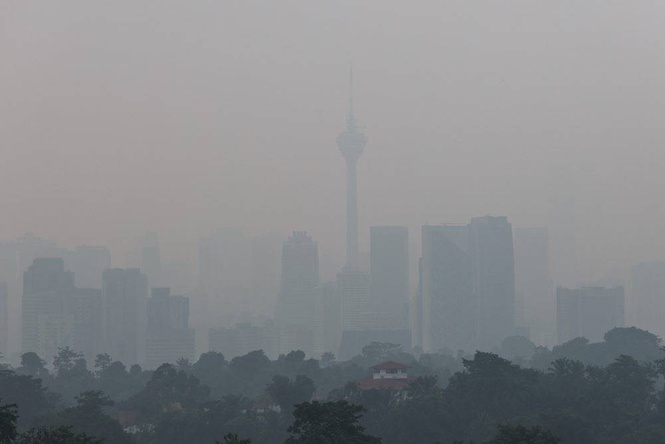
SHAH ALAM – The Department of Environment (DOE) has clarified differences between Air Pollutant Index (API) readings displayed on its official monitoring system, MyEQMS, and those shown by alternative air-quality index sites such as IQAir and aqicn.org.
Sinar Daily contacted the DOE for clarification after netizens compared API readings from MyEQMS with air-quality information displayed by third-party platforms such as IQAir, which in some cases showed significantly higher readings.
The DOE responded by providing Sinar Daily with an infographic explaining Malaysia’s API system, including how the department gathers and calculates air-quality data and why readings may differ from those displayed by third-party platforms.
According to the infographic, the API issued by the DOE is the reference used by the Malaysian Government to determine the status of ambient air quality in the country.
It said Malaysia’s API is calculated using information obtained through the DOE’s air-quality monitoring network, with nationally established methods and breakpoints used to determine the index.
The API is divided into five categories, with readings of 0 to 50 classified as Good, 51 to 100 as Moderate, 101 to 200 as Unhealthy, 201 to 300 as Very Unhealthy and readings above 300 as Hazardous.
The infographic said the index is intended to indicate potential health effects that members of the public may experience as a result of ambient air pollution.
It also explained that differences between the API readings displayed by the DOE and third-party applications could arise because the platforms may use different calculation methodologies, breakpoints, data sources and averaging periods.
According to the infographic, Malaysia’s API system uses methods and breakpoints established at the national level and generally follows the Pollutant Standard Index (PSI) approach developed by the United States Environmental Protection Agency (US EPA).
Under Malaysia’s system, sub-indices are calculated for individual pollutants based on their respective concentrations, with the highest sub-index value used as the API reading for the location.
The infographic also highlighted the treatment of fine particulate matter, or PM2.5.
It said API calculations for PM2.5 use a 24-hour average concentration, meaning a sharp increase in PM2.5 levels over a short period may not immediately cause the API category to change.
This is because the API value represents part of a 24-hour average calculation, according to the infographic.
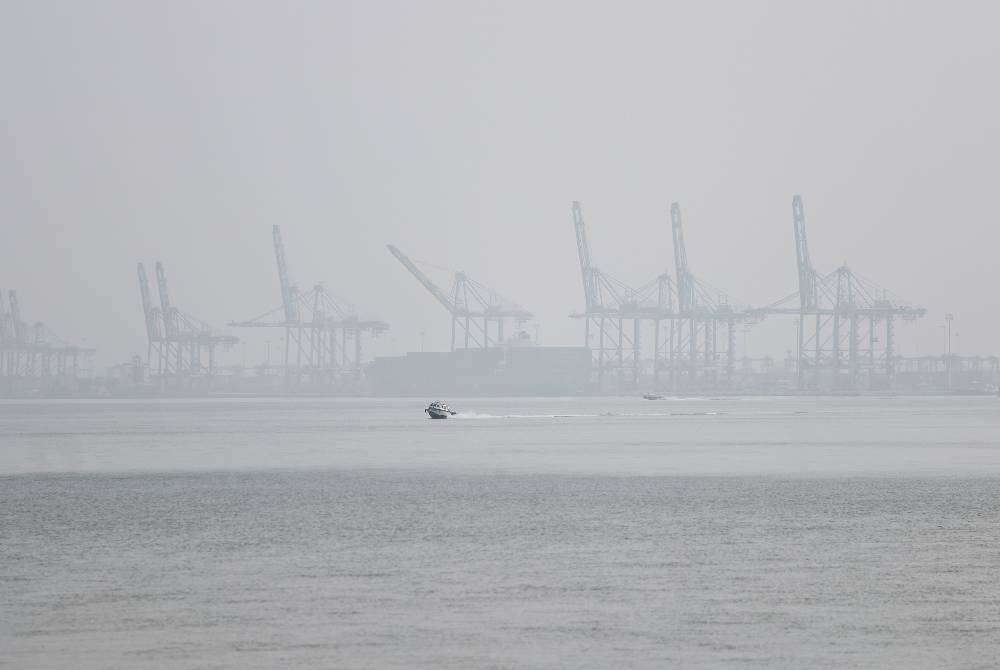
The DOE also explained that visibility could deteriorate over a shorter period than changes reflected in the API, meaning reduced visibility may be observed before corresponding changes in particulate matter concentrations are reflected in the index.
The infographic said the API should be viewed as an overall indicator of air-quality conditions, while individual pollutant concentration data can provide more detailed information about current conditions.
It added that PM2.5 sub-index information calculated over a shorter period could provide additional insight into current air-quality conditions.
The department advised members of the public to refer to official API information provided through MyEQMS and the MyJAS EQMS application.
Sinar Daily contacted the DOE for clarification after netizens compared API readings from MyEQMS with air-quality information displayed by independent platforms such as IQAir.
Attempts were also made to obtain a response from the Natural Resources and Environmental Sustainability Ministry, but no response had been received at the time of publication.