

Flash back to 2014-2024-Cont’d from Part 2
6) COP28 at Dubai, United Arab Emirates , December 2023
At COP28 in Dubai, UAE which was organized from 30 November -12 December 2023,( Fig 23) on 2nd December 2023, more than 20 countries had pledge to triple nuclear capacity by 2050 ( Fig 24 and Fig 25) in the race to reach the Paris Agreement target and had invited shareholders of the World Bank, international financial institutions, and regional development banks to consider the inclusion of nuclear energy in their organisations’ energy lending policies as needed, and to actively support nuclear power when they have such a mandate.
25 Endorsing countries from four continents include the United States, Armenia, Bulgaria, Canada, Croatia, Czech Republic, Finland, France, Ghana, Hungary, Jamaica, Japan, Republic of Korea, Moldova, Mongolia, Morocco, Netherlands, Poland, Romania, Slovakia, Slovenia, Sweden, Ukraine, United Arab Emirates, and United Kingdom. (https://www.energy.gov/articles/cop28-countries-launch-declaration-triple-nuclear-energy-capacity-2050-recognizing-key)
Fig 23: COP28 was held in Dubai, UAE from 30 November- 12 December 2023
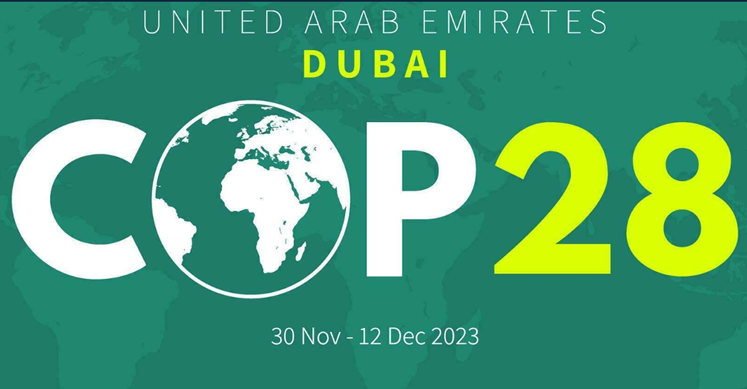
Fig 24 : More than 20 World Leaders has pledge to Triple Nuclear Capacity by 2050 at COP28 in Dubai, UAE
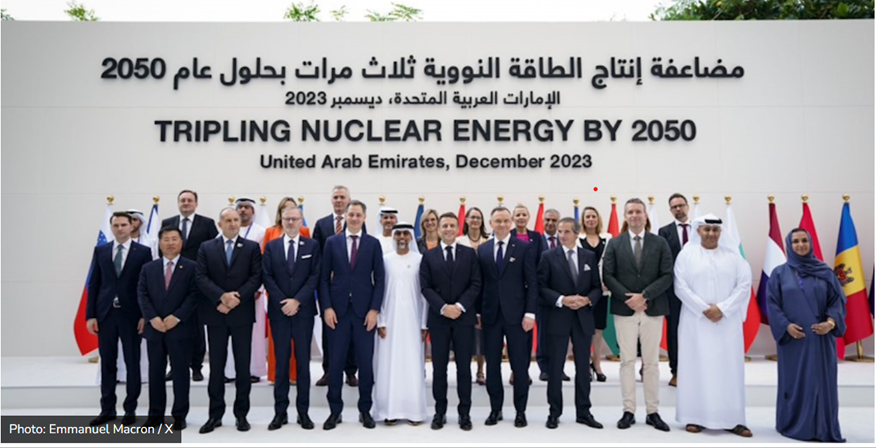
Fig 25 COP28 in Dubai, UAE witness the signing of pledge by more than 20 countries to triple nuclear capacity by 2050
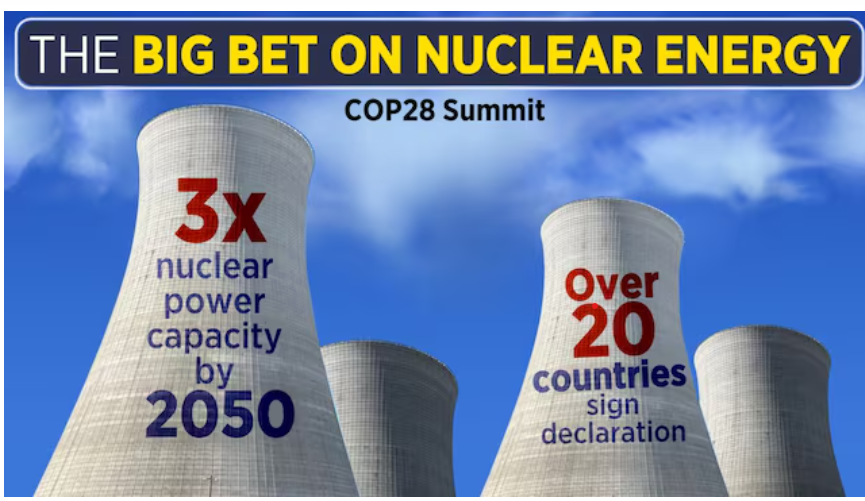
The IAEA highlighted that this declaration made by more than 20 countries at COP28 on tripling nuclear capacity had invited the World Bank, regional development banks and international financial institutions to include nuclear in their lending policies, while underscoring the need for secure supply chains to ramp up deployment of the technology.
December 2, 1942 was a defining moment for the nuclear industry and the world, as the world’s first nuclear reactor, Chicago Pile-1 (CO-1), achieved criticality creating the world’s first controlled, self-sustaining nuclear chain reaction
This significant date of 2nd December 2023 of the pledge to triple nuclear capacity by 2050 is eighty-one (81) years from the historic event of Chicago- Pile 1 (CP-1) the world's first artificial nuclear reactor, built under the west stands of Stagg Field at the University of Chicago which achieved the first self-sustaining nuclear chain reaction on December 2, 1942, under the supervision of Enrico Fermi ( Fig 26 and Fig 27)
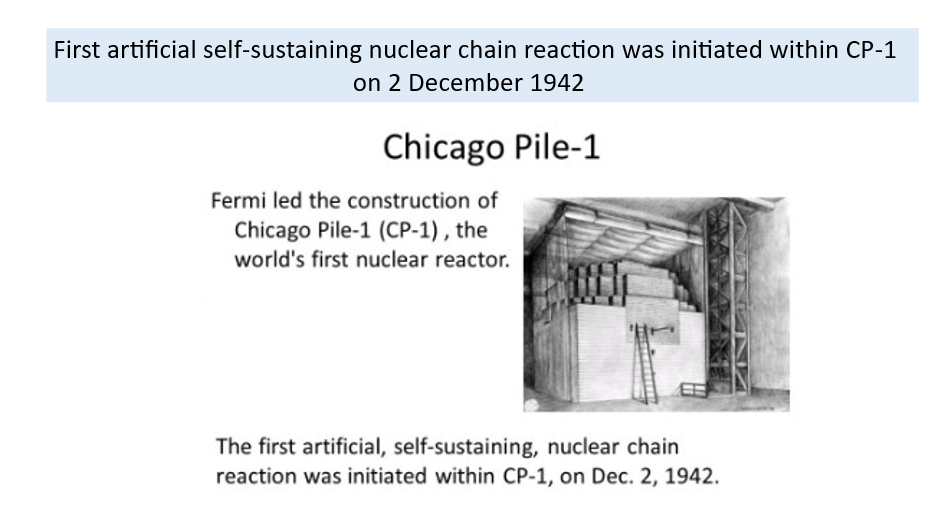
Fig 27: A 2 cm square by 5 cm long sample of graphite from the world’s first reactor, the Chicago Pile (CP-1) which heralded the start of the nuclear fission age on 02 December 1942 at Stagg Field, the University of Chicago.
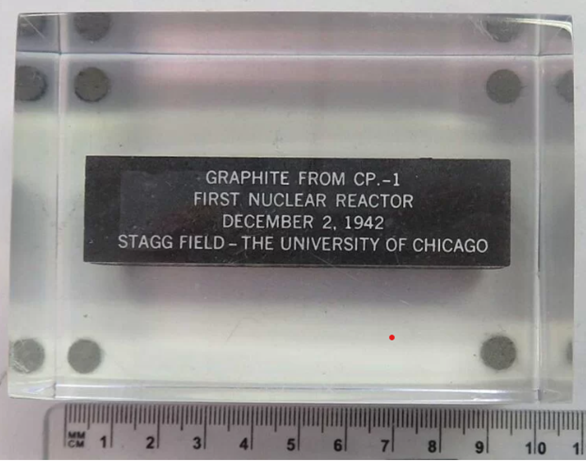
Source: https://nuclearheritage.com/artifact/sample-of-graphite-from-the-chicago-pile-cp-1-the-worlds-first-reactor-2/
7) My appeal to the multilateral development banks (MDBs) through my article titled
NUCLEAR ENERGY: AN INEVITABLE LANDMARK CLIMATE DEAL AT COP28 published by
BERNAMA, Malaysia’s Central News Agency -1 December 2023 (https://www.bernama.com/en/thoughts/news.php?id=2249654)
In this article I had highlighted that as world leaders gather in unison to call for the MDBs to include nuclear in their financing portfolio under ESG, I would like to appeal to the MDBs to please consider including nuclear not only as a key imperative of ESG but also to take into consideration the strategic and significant contribution of nuclear for development in particular for developing countries.
Arising from his concern about the escalating nuclear arms race between the United States and the Soviet Union or ‘Atoms for War’, US President Dwight Eisenhower had delivered his Atoms for Peace Speech at the UN General Assembly on Dec 8, 1953, which had set the direction to shift nuclear application for peaceful uses through cooperation and sharing of information and knowledge.
This speech inspired the creation of the International Atomic Energy Agency (IAEA) in 1957 to promote the application of nuclear science and technology “for the benefit of all mankind”.
During a visit to Malaysia in 2015, Yukiya Amano, then Director-General of the IAEA, in a speech at the Putrajaya International Convention Centre (PICC), had dovetailed that “our mandate has been summarised as ‘Atoms for Peace’, in reference to the speech by President Eisenhower.
Amano said: “I believe we could now expand that to ‘Atoms for Peace and Development’”.
This is timely as countries receiving support from the IAEA and other countries in nuclear applications and nuclear energy have experienced and witnessed significant development in their countries. An example is South Korea.
It is a historic milestone for Malaysia and the world that the famous slogan ‘Atoms for Peace’ by US President Eisenhower was introduced as ‘Atoms for Peace and Development’ by Amano during his visit to Malaysia (and which was formally announced during the IAEA’s 60th Anniversary in 2016/2017)
Amano has thus underlined the IAEA’s role in global development by changing the agency’s official motto into ‘Atoms for Peace and Development’.
Additionally, the IAEA helps countries to achieve the Sustainable Development Goals (SDGs) in energy, food and agriculture, industry, water management and health.
Thus, it is within this context that I would like to appeal to the Multilateral Development Banks (MDBs) to consider including nuclear into the MDBs financing portfolio not only for ESG objectives but also equally important to support the development as well as SDGs of countries as espoused by Amano that nuclear is not only for peace but also for development.
8) IAEA Director General Grossi Discusses Global Non-proliferation, Nuclear Safety Issues with Senior US Officials in Washington DC: 22-24 April 2024 (https://www.iaea.org/newscenter/news/iaea-director-general-grossi-discusses-global-non-proliferation-nuclear-safety-issues-with-senior-us-officials-in-washington-dc)
The IAEA had reported that IAEA Director General Rafael Mariano Grossi met high-level officials from the U.S. administration to discuss important current issues related to non-proliferation and nuclear safety worldwide, during a visit to Washington DC where he also spoke to the heads of the World Bank and Asian Development Bank (ADB) about the financing of nuclear energy projects.
In his meetings with World Bank President Ajay Banga and ADB President Masato Kanda, Director General Grossi discussed the important role of nuclear energy in addressing some of the world’s most pressing development challenges and the opportunities for increased cooperation with multilateral development banks (MDBs) to help realize the full potential of peaceful nuclear applications. ( Fig 28)
Fig 28: IAEA Director General Grossi met with World Bank President Ajay Banga during his three-day visit to Washington DC.
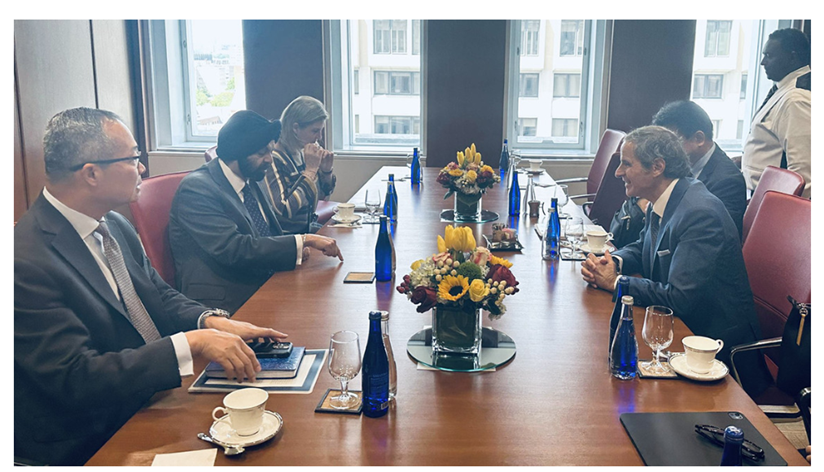
To achieve sustainable development and prosperity, the world needs an abundance of clean, reliable and sustainable energy,” Director General Grossi said.
With World Bank President Banga, Director General Grossi shared the IAEA’s perspective on nuclear energy and said the IAEA stands ready, upon request, to provide technical support to MDBs, particularly on nuclear infrastructure development including nuclear safety, security and safeguards.
Director General Grossi said that financing nuclear power would better align MDBs with the “new global consensus” forged at COP28 in Dubai, where the world called for accelerating the deployment of nuclear power along with other zero emission energy technologies to achieve deep and rapid decarbonization.
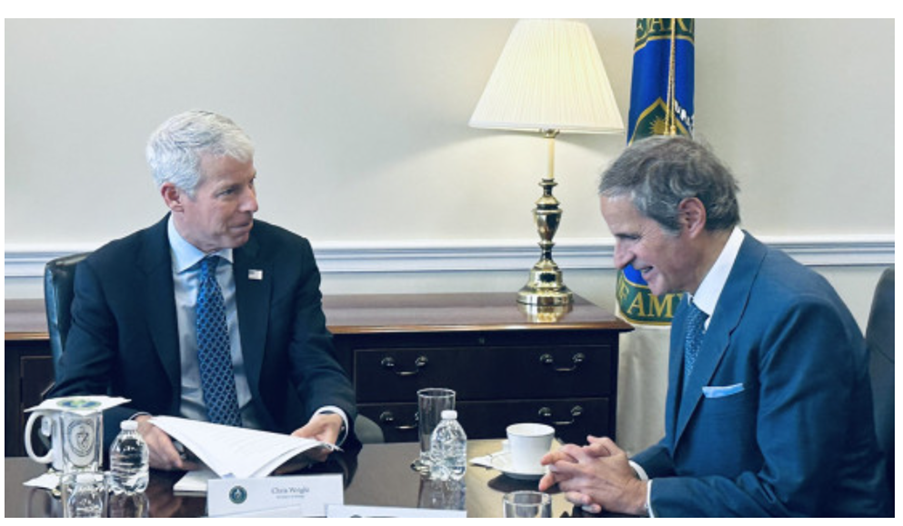
During a three-day visit that ended on Wednesday, Director General Grossi met Secretary of Energy Chris Wright and the chairman of the Nuclear Regulatory Commission (NRC), David Wright. ( Fig 29)
Fig 29: United States Secretary of Energy Chris Wright and IAEA Director General Grossi in Washington DC on 22 April 2025
9) IAEA Director General, Rafael Mariano Grossi speaking in an exchange with members of the World Bank Group Executive Board in Washington: 27 June 2024
The IAEA reported on 27 June 2024 that Speaking in an exchange with members of the World Bank Group Executive Board in Washington, IAEA Director General, Rafael Mariano Grossi, shared the IAEA’s perspective on nuclear energy. ( Fig 30)
Fig 30: IAEA Director General Rafael Mariano Grossi speaks with members of the World Bank Group Executive Board in Washington on 27 June 2024
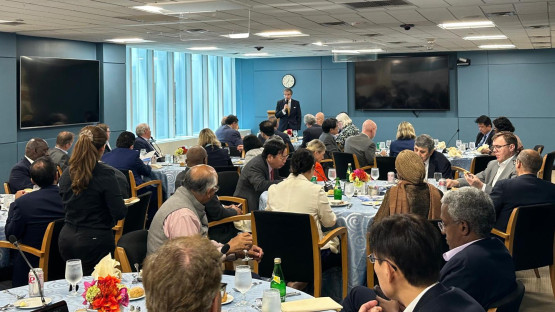
During this session, Grossi highlighted that “From Africa to Asia, countries seeking to add nuclear to their energy mix need technical and financial support. With its technical expertise, the IAEA accompanies them throughout their nuclear journeys, helping them to establish the infrastructure for a safe, secure and sustainable nuclear power programme. But financing remains a hurdle. While the private sector will need to increasingly contribute to financing, multilateral development banks such as the World Bank can advance sustainable development by assessing nuclear project bankability and contributing lending at affordable rates,”
Mr Grossi dovetailed that To achieve sustainable development and prosperity, the world needs an abundance of clean, reliable and sustainable energy. Now, for the first time in history, a new consensus is urging the accelerated deployment of nuclear energy, along with other low emission technologies, to achieve deep and rapid decarbonization and further offered that the IAEA stands ready, upon request, to provide technical support to multilateral development banks (MDBs), particularly on nuclear infrastructure development including nuclear safety, security and safeguards.
10) New York Climate Week, September 2024
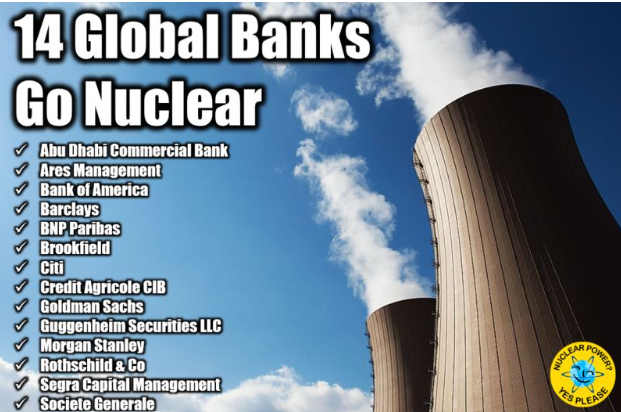
In September 2024, at New York Climate Week, 14 of the world’s largest banks and financial institutions from five countries signaled their support for tripling global nuclear capacity. (https://world-nuclear.org/news-and-media/press-statements/six-more-countries-endorse-the-declaration-to-triple-nuclear-energy-by-2050-at-cop29) ( Fig 31)
Fig 31 Fourteen ( 14) of the world’s largest bank and financial institutions signalled their support for tripling nuclear energy
11) COP29 at Baku, Azerbaijan, 2024
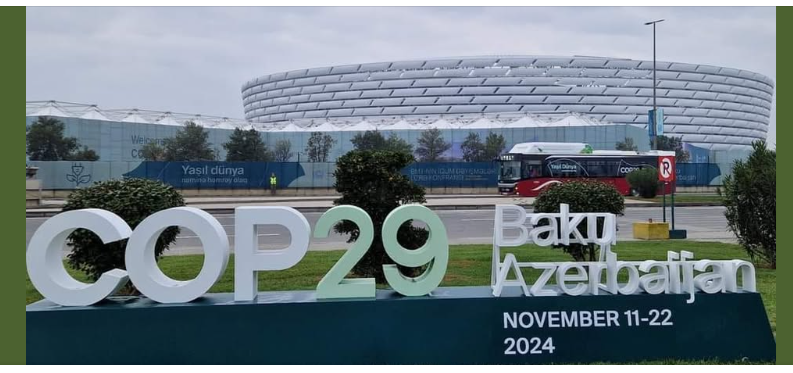
COP29 was held in Baku Azerbaijan from 11-22 November 2024 ( Fig 32)
Fig 32 COP29 was held in Baku Azerbaijan from 11-22 November 2024
The Milestones Achieved (for Nuclear) at COP29 –( https://world-nuclear.org/news-and-media/press-statements/cop29-in-baku-a-landmark-event-for-the-global-nuclear-industry)
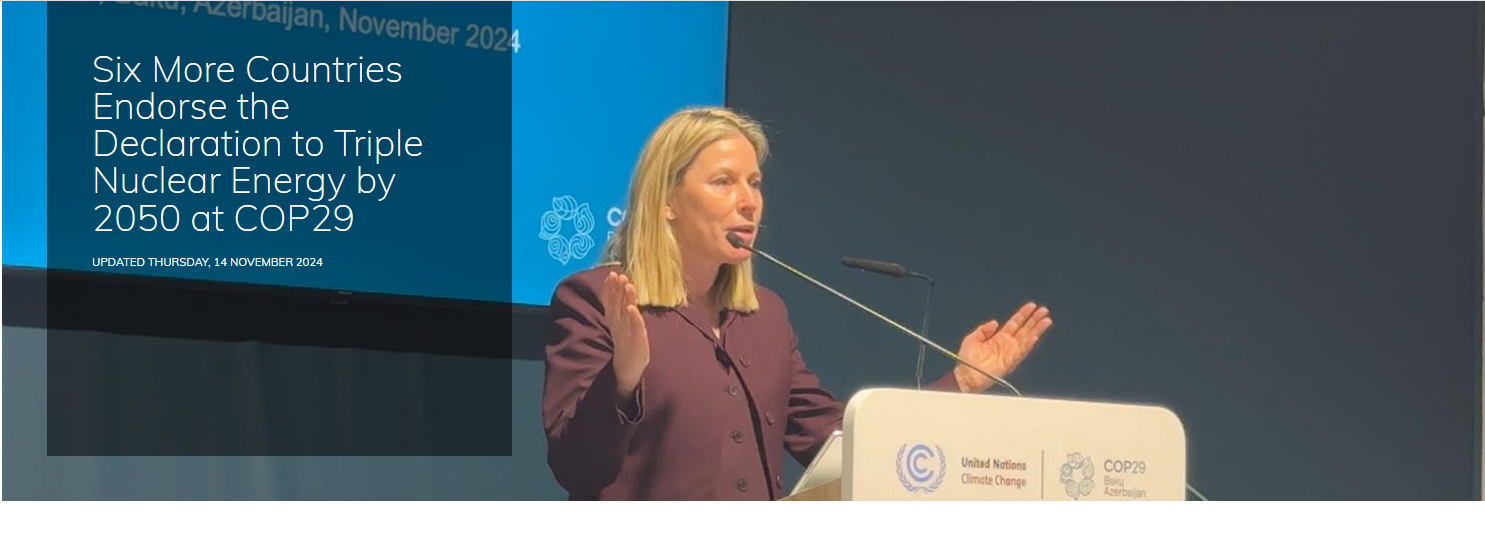
The World Nuclear News (WNN) had reported on 22 November 2024 that One of the highlights of COP29 in Baku Azerbaijan, was the addition of six more countries to the declaration to triple global nuclear capacity by 2050.
The six new signatories are El Salvador, Kazakhstan, Kenya, Kosovo, Nigeria, and Turkey. This growing coalition of the ambitious reflects the increasing recognition of nuclear energy’s essential role in meeting the Paris Agreement goals in a cost-effective and equitable way. ( Fig 33)
Fig 33: One of the highlights of COP29 in Baku Azerbaijan, was the addition of six more countries to the declaration to triple global nuclear capacity by 2050.
The discussions around nuclear energy have also expanded beyond electricity. Nuclear is now recognized for its potential to provide 24/7 energy solutions—not just electricity but also heat—making it a versatile tool for decarbonizing entire economies. This shift has gained interest from new industries, and countries eager to explore how nuclear can support their transition to net-zero emissions.
Priorities Ahead of COP30
World Nuclear News (WNN) dovetailed that Looking ahead to COP30 in Brazil, the global nuclear sector is determined to maintain the momentum. Here are the key priorities:
Expanding the Declaration to Triple Global Nuclear Capacity
Currently 31 countries have joined the declaration. Next year the goal is to bring even more countries into the commitment to triple global nuclear capacity by 2050.
Building Industrial Partnerships
The nuclear industry aims to collaborate with a broader range of sectors, encouraging them to join the industry pledge. These partnerships are crucial for attracting interest from the financial community and engaging with multilateral development banks on the pivotal role of nuclear in clean energy transformation.
Supporting National Determined Contributions (NDCs)
Many countries are expected to incorporate nuclear energy into their NDCs as a key technology for decarbonization. The nuclear sector will actively support these efforts, ensuring that nations have the tools and knowledge needed to achieve their goals.
Fostering Collaboration Across Clean Energy Industries
A unified approach is essential to solving the climate crisis. The nuclear sector will continue working with other clean energy industries to build a comprehensive and effective strategy for achieving net-zero emissions.
It is evident that COP29 had also recognized the need for support from and partnership with the financial community and the need to further and continuously engage with multilateral development banks (MDBs) on the key role of nuclear power for energy transition to reach net zero goal.
To continue reading, check out: Part 4, Part 5, Part 6
Sheriffah Dato Syed (sheriffahkhamseah@gmail.com) is a content creator under the Newswav Creator programme, where you get to express yourself, be a citizen journalist, and at the same time monetize your content & reach millions of users on Newswav. Log in to creator.newswav.com and become a Newswav Creator now!
The User Content (as defined on Newswav Terms of Use) above including the views expressed and media (pictures, videos, citations etc) were submitted & posted by the author. Newswav is solely an aggregation platform that hosts the User Content. If you have any questions about the content, copyright or other issues of the work, please contact creator@newswav.com.

