

A Flashback to 2014 - 2024
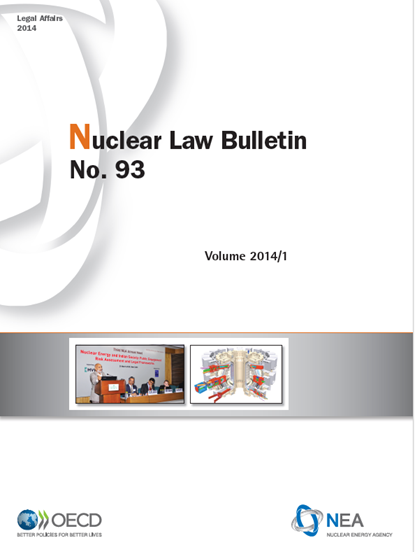
OECD’s Nuclear Energy Agency’s Nuclear Law Bulletin No: 93, Volume 2014/1 ( Fig11) (chrome-extension://efaidnbmnnnibpcajpcglclefindmkaj/https://www.oecd-nea.org/upload/docs/application/pdf/2020-11/nlb93.pdf)
Nuclear Energy Agency’s Nuclear Law Bulletin No: 93, Volume 2014/ ( Fig 11) had underlined that Although the World Bank does not currently fund nuclear energy projects, institutional funders could play a positive role not only in relation to the funding of nuclear build programmes but also by way of introducing conditions to funding that would encourage participation in international nuclear liability conventions. Detailed analysis would be required before taking a firm view on such possibility.
Fig 11: Nuclear Energy Agency’s Nuclear Law Bulletin No: 93, Volume 2014 on World bank not currently funding nuclear energy projects
2a) The International Atomic Energy Agency (IAEA)
Background to the establishment of the IAEA
US President Eisenhower had delivered a Landmark Speech on “Atoms for Peace” speech to the United Nations General Assembly in New York on 8 December 1953 urging the shift of nuclear power from weaponry towards peaceful application ( Fig 12)
The speech had inspired the creation of the IAEA, ( Fig 13- Fig 15) which was founded on 29 July 1957 to promote the peaceful application of nuclear science and technology around the world "for the benefit of all mankind”
Fig 12: US President Eisenhower had delivered a Landmark Speech on “Atoms for Peace” speech to the United Nations General Assembly in New York on 8 December 1953
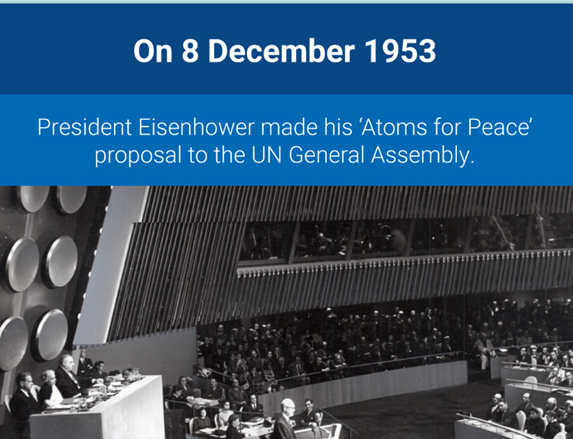
Fig13: The International Atomic Energy Agency (IAEA) original Logo “Atoms for Peace”
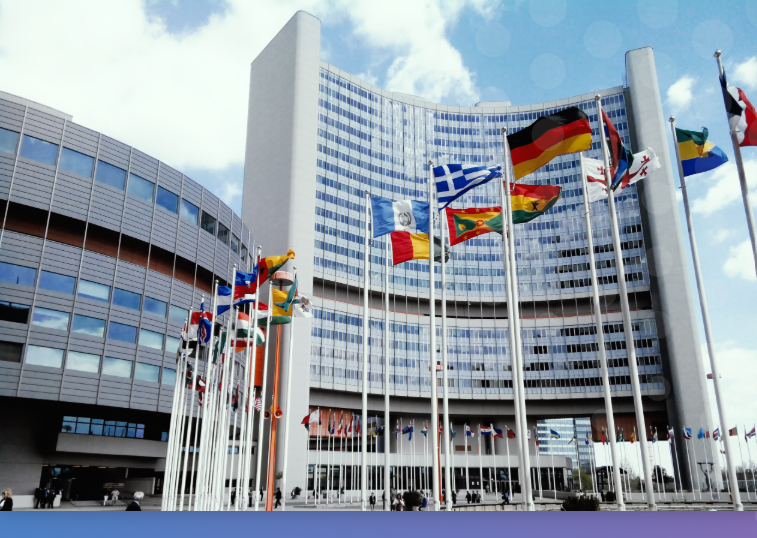
Fig 14: The International Atomic Energy Agency (IAEA) headquartered in Vienna, Austria
IAEA’s Founding and Mission (https://www.iasgyan.in/daily-current-affairs/iaea-report-on-climate-change-and-nuclear-power)
The IAEA, headquartered at the UN Office at Vienna, Austria was established in July 1957, as an autonomous organization within the United Nations.
Its governance is based on its founding treaty, the Statute of the IAEA which was adopted on 23 October 1956 and entered into force on 29 July 1957.
It operates under the framework of the United Nations, reporting to both the UN General Assembly (UNGA) and the UN Security Council (UNSC) and in 2005, it received the Nobel Peace Prize for its contributions to global safety and peace. (https://currentaffairs.chinmayaias.com/international-atomic-energy-agency-iaea/)
The IAEA is imbued with the mission, encapsulated in its motto, “Atoms for Peace and Development to promote the safe, secure, and peaceful use of nuclear technologies, contributing to international peace and security and supporting the United Nations’ Sustainable Development Goals (SDGs).
Structure and Function ((https://www.iasgyan.in/daily-current-affairs/iaea-report-on-climate-change-and-nuclear-power)
The General Conference is the highest policy making body of the IAEA, which has representatives from all member states. It meets annually to approve the budget and set policies.
The Board of Governors is responsible for making most of the policy decisions, it consists of 35 member states, which are elected by the General Conference.
The Secretariat is headed by the Director General, who is appointed by the Board of Governors and approved by the General Conference.
2b) IAEA’s Former Director General expanding Motto of “ Atoms for Peace” to “ Atoms for Peace and Development”- 2016/ 2017 (https://www.mofa.go.jp/policy/other/bluebook/2020/html/chapter3/c030104.html)
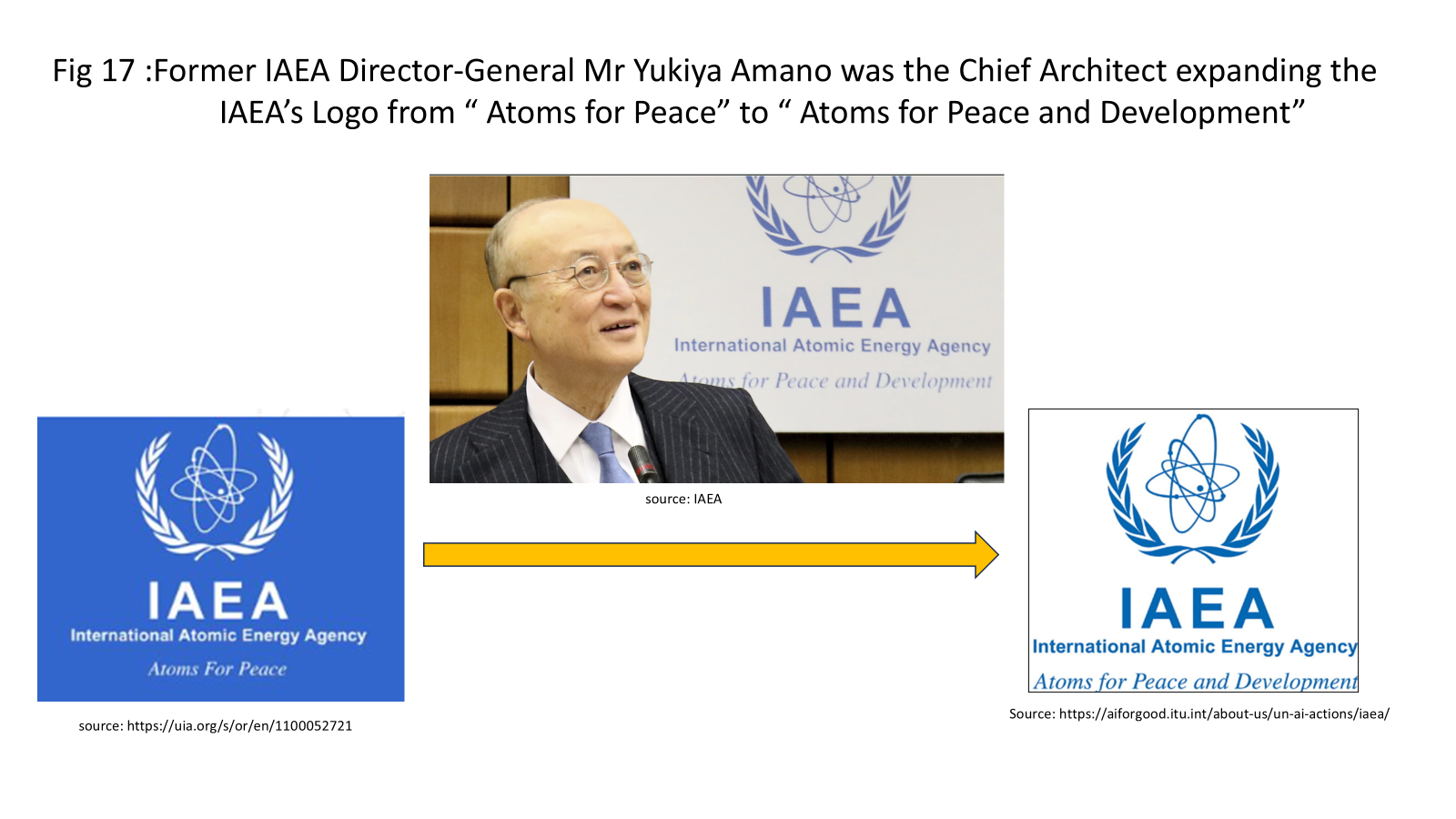
The Ministry of Foreign Affairs of Japan in its Diplomatic Blue Book 2020 had underscored that former IAEA Director General Amano had pursued the wide range of possibilities of nuclear technology and Taking the opportunity of IAEA's 60th anniversary in 2017, he changed IAEA's motto from “Atoms for Peace” to “Atoms for Peace and Development,” ( Fig 16 and Fig 17) and made efforts to promote the use of nuclear technology in a wide range of sectors in developing countries, such as medical care and agriculture, as well as the Renovation of the Nuclear Applications Laboratories (ReNuAL) project of the IAEA. (https://www.mofa.go.jp/policy/other/bluebook/2020/html/chapter3/c030104.html)
A special IAEA 60th anniversary logo has been designed for use during the period from
13 June 2016 to 30 October 2017 with the message '60 Years of IAEA - Atoms for Peace and Development',( Fig 16) IAEA Director General Yukiya Amano announced to the IAEA's Board of Governors on 6 June 2016. The IAEA commenced its 60th anniversary celebrations during this year's 60th regular session of the General Conference in September 2016. "We will use the anniversary to highlight the IAEA's significant contribution to global peace, security and development," said Mr Amano to the Board. (https://www.iaea.org/newscenter/news/new-iaea-logo-announced-60-years-of-iaea-atoms-for-peace-and-development)
Fig 16: A special IAEA 60th anniversary logo with the message '60 Years of IAEA - Atoms for Peace and Development' was introduced
FinNuclear had reported that Grossi's predecessor, the late Yukiya Amano, amended the IAEA's motto to Atoms for Peace and Development ( Fig 17) which aligned the agency more closely with other UN bodies working on the 17 goals for sustainable development. Under his leadership, the IAEA also stepped up its support to countries looking to introduce nuclear power in their energy mix.(https://news.finnuclear.fi/9-world-nuclear-news/11545-https-world-nuclear-news-org-articles-iaeas-presence-is-expanding-says-grossi-feed-feed?back=https://news.finnuclear.fi/?filter_tag[]=216&filter_tag[]=355)
Fig 17: Former IAEA DG Mr Yukiya Amano was the Chief Architect who expended the IAEA’s logo from “ Atoms for Peace” to “ Atoms for Peace and Development “ in 2016/2017
The motto “Atoms for Peace and Development”, which is part of the legacy of Director General Amano, encapsulates the unique dual role of the Agency, contributing to international peace and security by verifying that nuclear material remains for peaceful use, and helping to improve the well-being and prosperity of the people of the world through the peaceful use of nuclear technology. The Agency contributes directly to the achievement of nine of the 17 sustainable Development Goals and indirectly to several more. The Agency’s safeguards inspectors are on the road every day of the year, keeping track of nuclear material to verify that it is not diverted from peaceful activities. The IAEA serve as the global platform for cooperation on nuclear safety and security, helping countries to keep nuclear and radioactive material and technologies safe and out of the hands of terrorists and other criminals. (https://docs.un.org/en/A/74/PV.30)
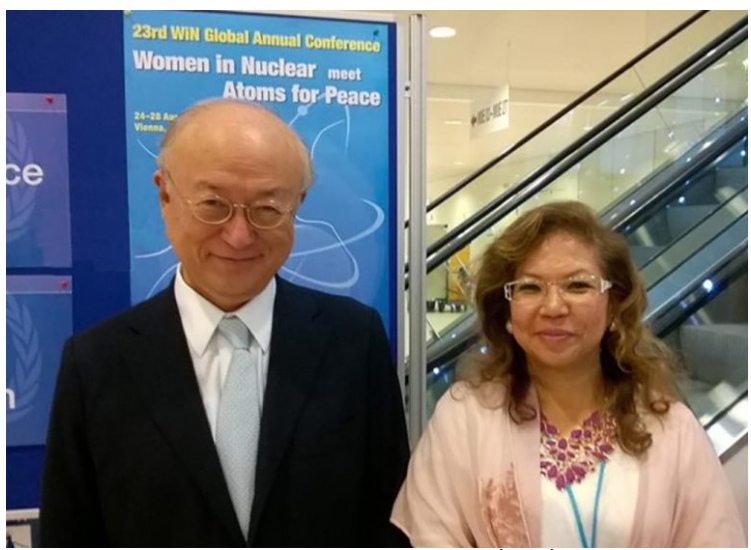
The writer Ms Sheriffah Noor Khamseah Al-Idid bt Dato Syed Ahmad Idid had the honour to meet His Excellency Mr Yukiya Amano at the IAEA in Vienna, Austria ( Fig 18)
Fig 18 Ms Sheriffah Noor Khamseah Al-Idid bt Dato Syed Ahmad Idid had the honour to meet His Excellency Mr Yukiya Amano in Vienna, Austria
3) International Nuclear Financing Act 2021; 8 March 2021 (https://www.congress.gov/bill/117th-congress/house-bill/1646/text)
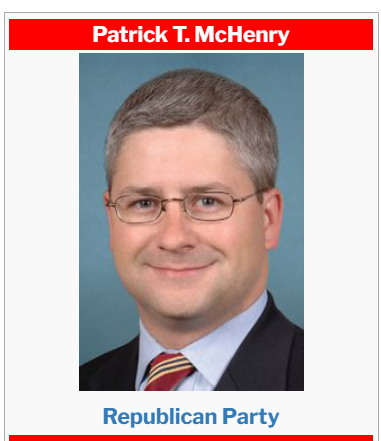
CONGRESS.GOV had outlined that United States Rep Mr. Patrick T. McHenry ( Fig 19) (for himself and Mr. Hill) introduced the International Nuclear Financing bill ( H.R.1646 — 117th Congress ) on 8 March 2021; which was referred to the Committee on Financial Services.
The International Nuclear Financing Act 2021 is to be considered and Be enacted by the Senate and House of Representatives of the United States of America in Congress assembled
Fig 19 Representative Patrick T. McHenry chaired the House Financial Services Committee from 2023 to 2025.
Through this Bill The Secretary of the Treasury shall instruct the United States Executive Director at the International Bank for Reconstruction and Development and, as the Secretary deems appropriate, the United States Executive Director at any other international financial institution (as defined in section 1701(c)(2) of the International Financial Institutions Act), to use the voice, vote, and influence of the United States at the institution to support financial assistance for the generation and distribution of nuclear energy, consistent with the national security interests of the United States.
Patrick T. McHenry (Republican Party) was a member of the U.S. House, representing North Carolina's 10th Congressional District. He assumed office on January 3, 2005 and chaired the House Financial Services Committee from 2023 to 2025 . He left office on January 3, 2025 (https://ballotpedia.org/Patrick_McHenry) after serving for twenty years across ten terms in the United States Congress (https://www.lazard.com/news-announcements/former-us-congressman-and-house-financial-services-chair-patrick-mchenry-joins-lazard-as-senior-advisor/) .
4) International Financing Act 2023- February 2023 (https://financialservices.house.gov/news/documentsingle.aspx?DocumentID=408560)
The United States House Committee on Financial Services had reported that the Chairman of the House Financial Services Committee, Patrick McHenry (NC-10), and the Chairman of the Digital Assets, Financial Technology and Inclusion Subcommittee, French Hill (AR-02), ( Fig 20) reintroduced the International Nuclear Energy Financing Act. This legislation, first introduced in 2021, would bring back financing for nuclear power at the World Bank and other international financial institutions.
Fig20: French Hill, Chairman of the Digital Assets, Financial Technology and Inclusion Subcommittee.
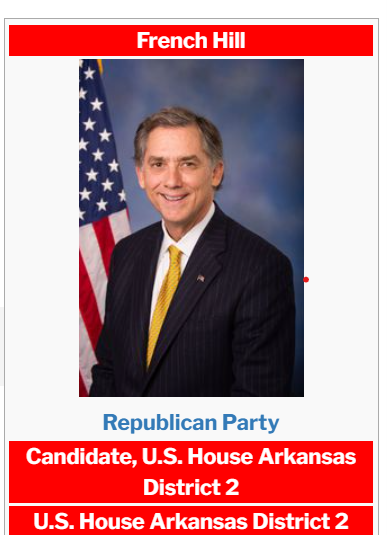
French Hill (Republican Party) is a member of the U.S. House, representing Arkansas' 2nd Congressional District. He assumed office on January 3, 2015. His current term ends on January 3, 2027.( https://ballotpedia.org/French_Hill)
The International Nuclear Energy Financing Act would require the United States Executive Director at the World Bank to advocate and vote for financial assistance for nuclear energy. The bill would also permit U.S. representatives at other international financial institutions – including regional development banks for Asia, Africa, Europe, and Latin America – to push for nuclear projects. Taken together, the multilateral development banks can commit over $100 billion in annual financing.
5)A 2023 definitive Report by The Breakthrough Institute on the Nuclear Ban by The World Bank- 6th October 2023
a)Multilateral Banks’ Nuclear Problem
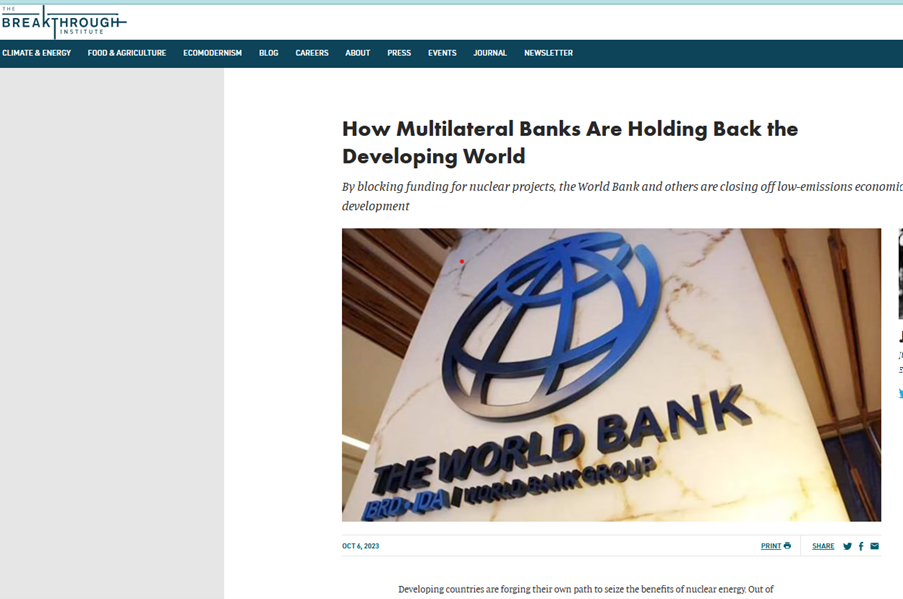
The Breakthrough Institute had published on 6 October 2023 a definitive Report on How Multilateral Banks Are Holding Back the Developing World (Fig21) which had underscored that by blocking funding for nuclear projects, the World Bank and others are closing off low-emissions economic development
Fig21: Breakthrough’s definitive Report
Juzel Lloyd a Climate and Energy Analyst at Breakthrough (Fig22), the author of the definitive report had drawn attention to the Multilateral Banks’ Nuclear Problem highlighting that it faces a structural problem in that, the more funds a country adds into the bank, the larger that country’s voting share becomes and that this has given a handful of developed countries majority control over where funds are spent and in what ways, letting nuclear-opposing countries such as Germany block any serious consideration of nuclear power project financing.
Fig22: Juzel Lloyd a Climate and Energy Analyst at Breakthrough and author of the Report

A case in point, the Breakthrough Report dovetailed that Germany, the fourth largest shareholder in the World Bank and a key member in the European Bank for Reconstruction and Development (EBRD), is infamously opposed to nuclear power. In recent decades, it has opted to extend the life of its coal plants while steadily retiring its nuclear plants as well as had opposed to classifying nuclear power as green under the recently-formulated EU green investment taxonomy.
b) How Nuclear Power Benefits Developing Nations
Breakthrough had reported that abundant, reliable, clean energy powers economic growth. Producing approximately 24% of the world’s clean electricity, nuclear power offers the potential to help support both an energy-rich future and an emissions-free pathway and that a key advantage of nuclear power projects in growing economies is that they provide a large and relatively fast boost to around-the-clock electricity generation
c) Breakthrough’s Insights on Changing the World Bank’s position on funding for nuclear power projects and the United State’s (Proposed) Key Role
Breakthrough’s definitive report had spotlighted that changing the World Bank’s position on funding for nuclear power projects depends on lessening Germany’s anti-nuclear influence. The other primary World Bank shareholders—especially France, the United Kingdom and the United States—should increase pressure on Germany to change its stance.
The Report advocated that in particular, the United States, with the greatest voting power as the bank’s largest shareholder, should lead a strong drive to update the bank’s nuclear financing policy and outlined that recently, U.S. senators are pushing for more supportive nuclear stances like the International Nuclear Energy Financing Act, established to promote nuclear financing at the World Bank. If the bill is enacted, the US executive director at the World Bank would be required to vocalize support and vote for nuclear financing. Regardless of its outcome, the United States will play a key role in access to nuclear funding within the World Bank.
Missed Part 1? Read it here: Part 1, or continue to Part 3, Part 4, Part 5 and Part 6.
Sheriffah Dato Syed (sheriffahkhamseah@gmail.com) is a content creator under the Newswav Creator programme, where you get to express yourself, be a citizen journalist, and at the same time monetize your content & reach millions of users on Newswav. Log in to creator.newswav.com and become a Newswav Creator now!
The User Content (as defined on Newswav Terms of Use) above including the views expressed and media (pictures, videos, citations etc) were submitted & posted by the author. Newswav is solely an aggregation platform that hosts the User Content. If you have any questions about the content, copyright or other issues of the work, please contact creator@newswav.com.

