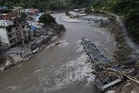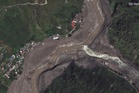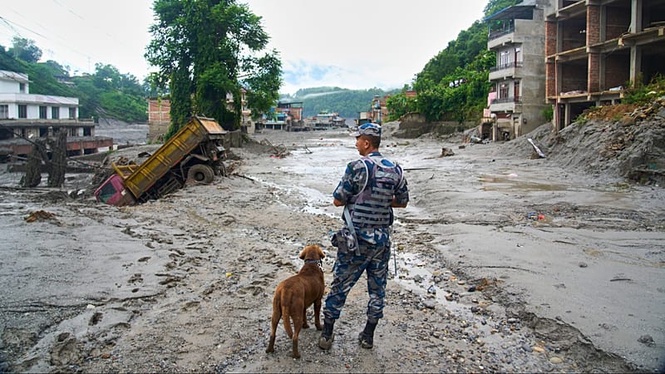
At least 1,924 people are missing and at least 579 have been killed after devastating floods tore through the border region between Nepal and Tibet, as rescuers reached some of the worst-hit areas for the first time.
The International Federation of Red Cross and Red Crescent Societies (IFRC) said on Friday that early estimates suggested about 93,000 people may have been affected by Wednesday's disaster and warned that the death toll was expected to rise.
"The trauma of this event is enormous," said David Fisher, the IFRC's head of delegation for Nepal.
He said washed-out roads and bridges, along with disrupted mobile phone coverage and electricity supplies, meant rescuers had still been unable to reach some of the hardest-hit areas.
Nepalese police put the country's death toll at at least 547 on Friday, while Chinese state media has confirmed five deaths on the Tibetan side of the border.
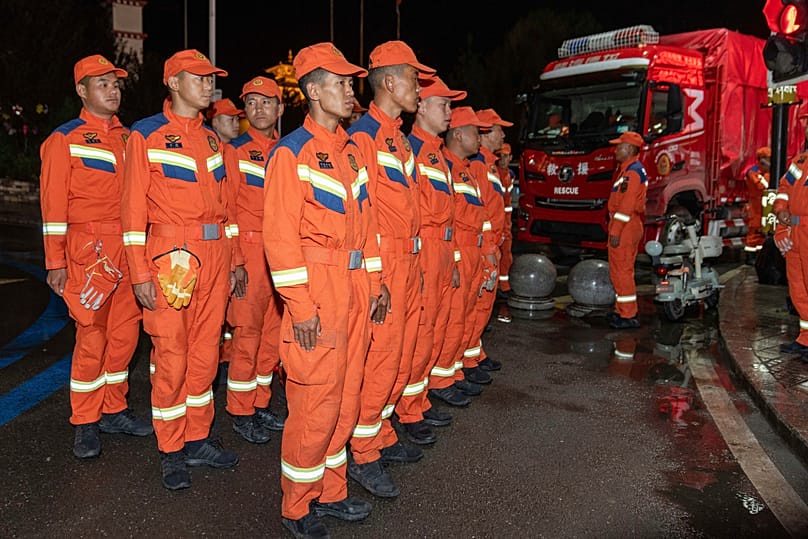
Professional rescue teams have now reached the main disaster zone in Tibet. China's Xinhua news agency said teams from Tibet and neighbouring Sichuan arrived at the "core rescue site" on Friday afternoon.
Chinese state media also said 499 residents and 555 tourists had been evacuated from the disaster zone. The nationalities of the tourists were not immediately disclosed.
More than 100 trapped near hydropower tunnel
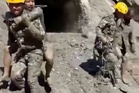
In Nepal, the military said it had located people trapped around the Trishuli 3A hydropower project and was working to bring them to safety.
More than 100 people remained trapped in the area, while around 350 workers and residents had already been rescued, army spokesman Raja Ram Basnet said.
Two helicopters had been dispatched, but rescue efforts were being complicated by the difficulty of locating the tunnel entrances following the devastation.
The operation comes two days after a glacial collapse triggered a vast flow of ice, rock and debris through river valleys near Nepal's border with China's Tibet region.
The US Geological Survey said the debris flow and flooding travelled nearly 100 kilometres along the Trishuli and Bhote Koshi rivers, destroying buildings and infrastructure and cutting a vital highway linking Nepal and China.
RelatedFears of further flooding
Nepalese authorities urged people to move to higher ground on Friday following reports that a dam in Tibet had burst, raising fears of further flooding downstream.
China temporarily halted rescue operations after a lake formed by huge quantities of debris began overflowing. State media later said the danger posed by the lake was decreasing and rescue operations were proceeding "in an orderly manner".
It was not immediately clear whether the overflowing lake was connected to the reported dam burst.
The effects of the disaster have also been felt downstream in India, where authorities said seven bodies believed to be flood victims had been recovered from rivers flowing from Nepal.
Nepal has appealed for international financial assistance but said its own emergency services were currently able to handle rescue operations without foreign teams.
Foreign ministry spokesman Lok Bahadur Chhetri said Nepal would request specialised assistance or expertise if required. Chinese President Xi Jinping has offered Beijing's help.