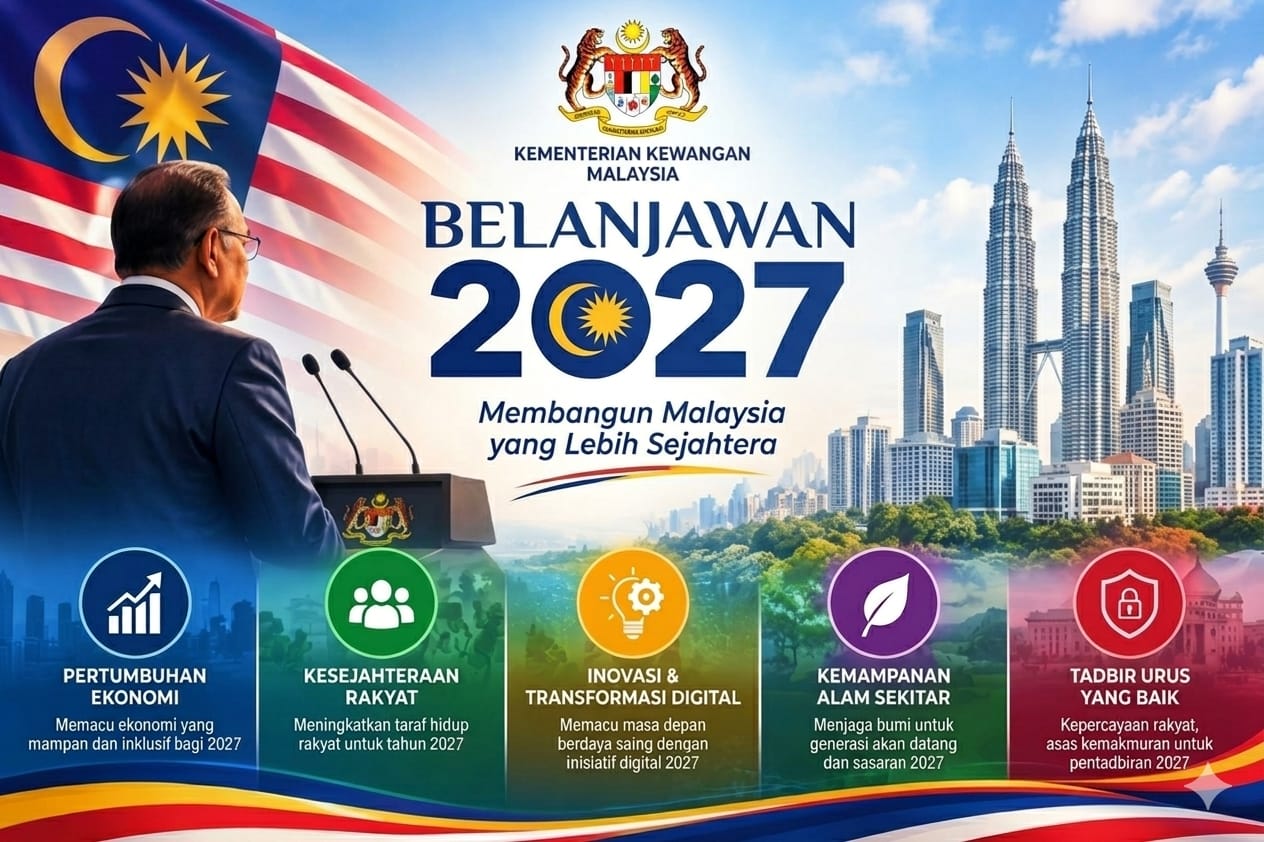
As Malaysia looks ahead to Budget 2027, expectations are high for a budget that responds to the realities faced by households, businesses and communities across the country. Beyond the headline allocations and major announcements, the real measure of Budget 2027 will be how effectively its policies translate into meaningful improvements in people’s daily lives.
For many Malaysians, the cost of living remains a central concern. Food, housing, transportation, education and healthcare are essential expenses that directly affect household financial security. Budget 2027 therefore presents an opportunity to strengthen targeted assistance while ensuring that support reaches those who need it most.
Putting People at the Centre
One of the key expectations surrounding Budget 2027 is continued attention to household wellbeing. Financial assistance can provide immediate relief, but longer-term solutions should also focus on improving incomes, productivity and access to quality employment.
Measures that help workers acquire new skills, transition into higher-value industries and obtain better-paying jobs could play an important role in strengthening household resilience. At the same time, small businesses and entrepreneurs need an environment in which they can manage costs, access financing and grow sustainably.
Tackling the Cost of Living
The cost of living is likely to remain one of the most closely watched issues.
While subsidies and cash assistance can provide support, Budget 2027 can also address the structural factors behind household expenses. Improving public transportation, strengthening food security, supporting domestic production and encouraging competition can complement direct assistance.
For communities, what matters most is not simply the size of an allocation but whether it produces tangible results. A budget announcement becomes meaningful when people can see its impact in their grocery bills, transportation options, housing opportunities and household incomes.
Education and Skills for the Future
Education should remain another major priority.
Malaysia's economic future depends on having a workforce equipped for technological change and emerging industries. Investment in schools, universities, technical and vocational education, digital skills and lifelong learning can help prepare Malaysians for changing labour-market demands.
At the same time, access matters. Students from different socioeconomic backgrounds should have meaningful opportunities to acquire the skills required to participate in the future economy.
Healthcare and Community Wellbeing
Healthcare is another area where budget decisions have a direct impact on communities.
Investment in public healthcare infrastructure, medical personnel, preventive care and digital health services can strengthen the capacity of the healthcare system. Attention to accessibility is equally important, particularly for people living outside major urban centres.
A sustainable healthcare system is not only about treating illness. Preventive healthcare, early intervention and community-based services can also help reduce longer-term pressures on individuals and the healthcare system.
Supporting Businesses and Economic Growth
Businesses, particularly small and medium-sized enterprises, will also be watching Budget 2027 closely.
A supportive business environment can encourage investment, innovation and job creation. Measures involving financing, digitalisation, skills development, taxation and regulatory efficiency can influence how businesses respond to changing economic conditions.
At the same time, economic growth needs to translate into broader opportunities for Malaysians. Strong headline growth is important, but so are productivity, wages, job quality and opportunities for businesses and workers across different regions.
Development Beyond Major Cities
Another important consideration is balanced regional development.
Economic opportunities and quality infrastructure should not be concentrated only in the largest urban centres. Investments in transport, connectivity, education, healthcare and digital infrastructure can help smaller towns and rural communities participate more fully in economic development.
For communities, the question is ultimately whether national development creates opportunities where people live rather than requiring everyone to move elsewhere to find them.
Transparency and Accountability
Budget 2027 should also be viewed through the lens of implementation.
Allocating funds is only the first step. Malaysians need clear information about how programmes will be implemented, who will benefit, how outcomes will be measured and whether projects are delivering value for public money.
Greater transparency can help the public understand not only what the government intends to spend, but also what those expenditures are expected to achieve.
Looking Beyond the Announcement
The excitement surrounding a national budget often focuses on the announcement itself. However, the more important story begins afterwards.
The effectiveness of Budget 2027 will depend on implementation, coordination between agencies, accessibility of programmes and the ability to measure outcomes. Policies that look promising on paper still require effective execution to make a difference in people's lives.
For Malaysians, the key takeaways should therefore extend beyond individual announcements. The broader questions are about affordability, opportunity, economic resilience, public services, accountability and long-term sustainability.
Conclusion
Budget 2027 represents more than a list of allocations and financial measures. It is an opportunity to set priorities for Malaysia's next stage of development.
The expectations from communities are straightforward: meaningful action on the cost of living, better opportunities for workers and young people, accessible healthcare and education, support for businesses, balanced regional development and responsible management of public resources.
Ultimately, the success of Budget 2027 will be reflected not only in government figures, but in the experiences of ordinary Malaysians. The most important takeaway will be whether the policies announced can be translated into practical, measurable and lasting improvements for communities across the country.
#Budget2027 #Malaysia #EkonomiMalaysia #CostOfLiving #Belanjawan2027 #MalaysiaMadani

Have a take on #Budget2027? Turn your perspective into content, join the conversation, and stand a chance to win exciting cash prizes! Find out how to join here. T&Cs apply.
William Lee (kokwei67@gmail.com) is a content creator under the Newswav Creator programme, where you get to express yourself, be a citizen journalist, and at the same time monetize your content & reach millions of users on Newswav. Log in to creator.newswav.com and become a Newswav Creator now!
The User Content (as defined on Newswav Terms of Use) above including the views expressed and media (pictures, videos, citations etc) were submitted & posted by the author. Newswav is solely an aggregation platform that hosts the User Content. If you have any questions about the content, copyright or other issues of the work, please contact creator@newswav.com.