.png)
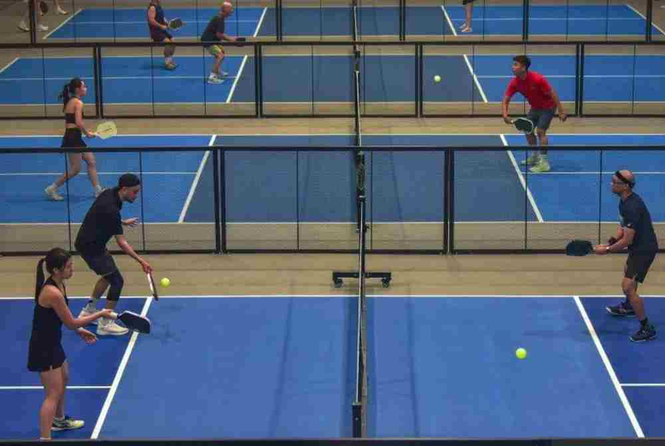
IN recent times, the pickleball phenomenon has captured public attention.
Recreational parks, sports complexes and even tennis courts are increasingly being converted into pickleball courts, reflecting growing interest in this sport, which originated in the United States.
Notably, many who once wielded badminton racquets have now taken up pickleball paddles instead.
This raises a natural question: could pickleball eventually "displace" badminton? The answer, however, is not so straightforward.
Pickleball's appeal is undeniable. It is easier to learn, mid-range equipment remains reasonably priced and the sport is suitable for players of all ages, from children to senior citizens.
Its lower physical intensity also makes it an attractive option for those seeking casual exercise, without the demanding pace of chasing a shuttlecock across the court.
Badminton, however, possesses advantages that are difficult to match.
The sport is deeply woven into Malaysian culture. From village courts to the Olympic Games, badminton has always held a special place in the hearts of Malaysians.
Furthermore, the two sports offer fundamentally different experiences. Pickleball emphasises control, strategy and a more relaxed style of play, whereas badminton is defined by speed, agility and considerable physical endurance.
Given these distinctions, the two sports are best understood as complementary pursuits rather than direct rivals.
While pickleball may continue to draw attention and expand the community of racquet sport enthusiasts, the notion that it could displace badminton remains far from reality.
In all likelihood, both sports will continue to flourish side by side.