Strategists for Taipei Mayor Chiang Wan-an's Kuomintang (KMT) want to warn voters in the final weeks of the race that electing his Democratic Progressive Party (DPP) challenger Puma Shen, whom Beijing has sanctioned as a "diehard Taiwan independence separatist," could cut the city's last official channel to China and put Nvidia's planned Taiwan headquarters at risk, party insiders told Storm Media.
The catch is that nobody in the opposition party wants to say it first. Fearing the message would be branded as scaremongering, KMT figures are privately hoping veteran broadcaster Jaw Shaw-kong will raise the questions on his political talk shows before Taipei votes on November 28 in the marquee contest of the 2026 Taiwan local elections.
Chiang's Debate Showing Stops The Bleeding
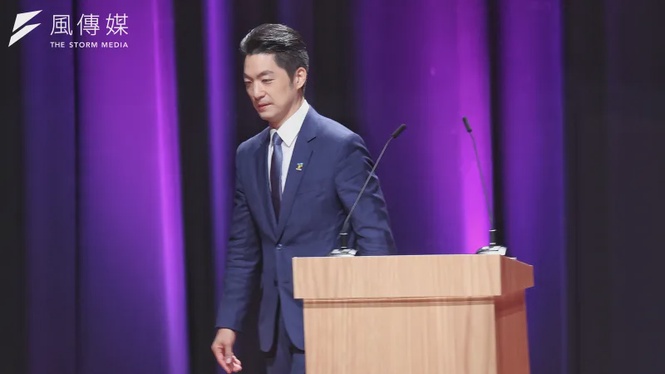
The deliberations come after Chiang steadied his campaign at the televised Taipei mayoral debate on October 31. For more than two months he had been on the defensive against the "Yang Wave," the nickname supporters give to the surge of enthusiasm around Shen, taken from the last character of Shen's Chinese name. Both camps had treated the debate as pivotal, and KMT insiders said Chiang's command of city policy, an advantage of incumbency, clearly blunted Shen's momentum and lifted the morale of party councilor candidates and supporters.
The KMT's campaign machine expects the performance to win back some "light blue" voters, who lean only loosely toward the party, as well as some centrists. Viewers, however, did not hand Chiang the night. A TVBS poll conducted the evening of the debate found that respondents who rated Shen's performance as better outnumbered those who preferred Chiang's by 7 percentage points. Chiang still led Shen in overall support by 4 points.
"Stopping the bleeding" is how one senior KMT campaign figure described the debate's effect. Any boost was small and "far from reversing the course of the race," the figure said, but Chiang is at least no longer simply absorbing blows and now has a footing for the harder fights ahead.
A 1998 Taipei Election Loss Haunts The KMT
Relief inside the party has been short-lived. Most KMT strategists, speaking privately, doubt that showcasing Chiang's grasp of city affairs and his four-year record will be enough to win a majority. A senior party official with long campaign experience said Taipei voters may credit Chiang with real achievements and still not vote for him, because personal factors often weigh more heavily at the ballot box.
Shen, the official argued, has used polished packaging and ample resources to remake his public image, winning over young and centrist voters and shaking the loyalties of groups that have traditionally leaned KMT, including women, business-minded voters, and educated professionals. Against that, the official said, a campaign built only on municipal governance cannot turn the tide. Chiang needs a larger argument that makes wavering voters rethink their choice.
The official pointed to the 1998 Taipei mayoral election as the classic warning. Then-Mayor Chen Shui-bian of the DPP, who later became Taiwan's president, sought reelection with approval ratings above 70% yet won only about 46% of the vote, losing to the KMT's Ma Ying-jeou, a former justice minister. A recent United Daily News poll points to a similar gap for Chiang: 50% of respondents approved of his performance as mayor, but only 41% said they would vote for him. Roughly 9 percentage points of voters, in other words, rate his work but do not plan to back him.
KMT strategists believe the DPP's playbook in Taipei and neighboring New Taipei this year is to play down party branding, present candidates as warm and approachable, and back them with heavy spending and a loud online support network in order to erode the KMT's traditional advantage in the two cities.
The core of the Yang Wave, the KMT figure said, is the same pro-DPP base that drove the 2025 mass recall campaign against opposition lawmakers. That year, the movement's most combative voices, including online activists known as "bluebirds" and young supporters of the "black bear" civil defense movement, alienated centrist voters and the recall effort collapsed. This time they have learned to hold back, matching Shen's gentler new image with a positive, low-key campaign, and the figure warned that Shen could well break through the roughly 46% ceiling that Chen hit in 1998.
Silent Opposition Voters Will Decide Taipei
A veteran KMT party official said recent polls in Taipei, New Taipei, and Keelung show that far fewer KMT-leaning voters are willing to state a preference, which has narrowed races sharply and in some cases flipped them. The hardest question is whether those hidden supporters will vote at all.
If they turn out, the official said, the result could resemble 2010, when the KMT narrowly held Taipei, New Taipei, and Taichung. If they stay home, the party risks a repeat of its 2014 rout in local elections. For both Chiang and the KMT's New Taipei mayoral candidate, Lee Szu-chuan, the official said, the outcome of the 2026 Taiwan local elections will hinge on getting the party's base to the polls.
Many light blue and highly educated KMT supporters appear to have shifted to the sidelines because they were unhappy with how Chiang handled problems in city government or felt he fell short of expectations, the official said. To bring them back, the party has to give them a reason to vote. After weeks of internal discussion, the official said, many in the KMT have concluded that the reason lies beyond city hall: Taipei's mayor is a highly political post with consequences for cross-strait relations and geopolitics, and a win by the strongly pro-independence, anti-China Shen would deal a major blow to the status and identity of the Republic of China, Taiwan's formal name, and to relations with Beijing. Party figures say undecided pan-blue voters, the KMT-leaning camp, need to hear that.
Beijing's Sanctions Could End The Twin City Forum
A KMT figure who follows cross-strait affairs closely noted that Beijing named Shen a "diehard Taiwan independence separatist" and placed him under sanctions in 2024, and that Chinese public security authorities later opened a criminal investigation against him for alleged "secession." In a National Day address on September 30, 2026, Chinese leader Xi Jinping vowed to "resolutely crack down on Taiwan independence separatist forces."
In that climate, the figure said, a Shen victory would likely prompt Beijing to halt the Taipei-Shanghai Twin City Forum on its own initiative, without waiting for Shen to review whether it should continue. The annual forum has been held since 2010, for 16 years, and is currently the only official channel of exchange between the two sides of the Taiwan Strait.
Shen and DPP supporters might welcome the end of a forum they see as a tool of Beijing's "united front" influence campaign, the figure acknowledged. But voters in the KMT and Taiwan People's Party (TPP) camps who want peace across the strait should ask what follows, the figure said. With a mayor Beijing labels a diehard separatist in office and the forum gone, China could conclude that peaceful unification through exchanges is no longer possible and tilt its Taiwan policy toward the use of force, raising tensions for years to come.
The figure also questioned whether Shen, once in office, would follow the DPP-run central government in using administrative tools to promote independence and dilute Republic of China identity, a prospect that KMT voters who identify strongly with the Republic of China would find deeply unwelcome.
Nvidia's Taipei Headquarters Becomes A Campaign Issue
The party's sharper argument concerns Nvidia. The US chipmaker signed an agreement with the Taipei City Government in early 2026 to build its Taiwan headquarters at the Beitou-Shilin Science Park in the city's north. Construction has not yet started and could begin as early as the end of 2026. KMT strategists say Taipei voters should ask, before they cast their ballots, whether a pro-independence mayor would put that project in doubt.
Nvidia CEO Jensen Huang, the KMT figure argued, places great weight on the China market while recognizing that Taiwan's supply chain is irreplaceable, and he manages that geopolitical balance with care. Huang has met senior leaders in Beijing on trips to China, the figure noted, but in Taiwan he keeps to business with tech partners and visits to local food stalls, steering clear of officials from the DPP at both national and local levels to avoid crossing Beijing's red lines. Nvidia's decision to place its headquarters in a city run by a KMT political star, the figure said, would have followed a risk assessment that concluded Beijing would not object.
If Shen, a man Beijing has placed under criminal investigation, were to preside over the groundbreaking, the figure said, Beijing could read Nvidia's presence as open support for separatist forces, a potentially devastating blow to the company's efforts to keep its China business. Given Huang's sensitivity to cross-strait politics, the figure said, he would be unlikely to cancel the project outright, but under the logic of risk management there is "a considerable possibility" that Nvidia would pause or delay it on technical grounds, such as a review of its global AI footprint, until it had sounded out Beijing. The scenario reflects the KMT figure's own reading; it does not come from Nvidia.
No One In The KMT Wants To Speak First
A KMT campaign aide said cross-strait tensions, Republic of China identity, and Nvidia's investment are all issues that could move Taipei voters, but they have been drowned out by the Yang Wave and by sparring over city policy. Many voters are focused on the two candidates' images and have given little thought to the political consequences of either outcome. Light blue and educated KMT voters do care about Nvidia and cross-strait relations, the aide said; the problem is how to turn those issues into a focus of online debate and public conversation before election day.
Neither the KMT, Chiang, nor any other party candidate can raise the topics directly, the aide said, because the DPP would quickly frame it as "intimidating Taipei residents," which would backfire. A warning from party headquarters would be worse still: the KMT leadership's openly pro-China line means the party would be branded a Chinese Communist Party collaborator meddling in the election, playing straight into accusations President Lai Ching-te has made in recent days.
The party has already tried a workaround. According to people familiar with the matter, a senior figure from the KMT's Taiwan-born "localist" wing sent a trusted associate to ask a mayoral or county magistrate candidate in northern Taiwan to mention at a rally that "if Taipei changes mayors, the Nvidia project may change too," hoping the line would spread. After weighing it carefully, the candidate concluded it would help neither his own race nor Chiang's and never said it publicly.
Party Insiders Pin Their Hopes On A Veteran Broadcaster
Privately, KMT insiders agree that only one person is both suited and able to put the issues on the agenda: Jaw Shaw-kong, a former chairman of the Broadcasting Corporation of China who hosts programs on both TVBS and the broadcaster. Some KMT supporters have branded Jaw a "war criminal," a Chinese political term for the person blamed for a defeat, after he interviewed Shen twice during the campaign. He has since interviewed Chiang as well, which insiders say shows balance across party lines.
If Jaw used his talk shows to explore what would happen in Taipei if Chiang wins a second term, and what might follow if a pro-independence candidate wins instead, insiders believe the discussion could get Taipei residents thinking about cross-strait relations, national identity, and the future of the Nvidia project before they vote.
A former senior KMT party official said Jaw has done this before. When then-US House Speaker Nancy Pelosi visited Taiwan in August 2022 and China responded with large-scale military drills around the island, the KMT feared a wave of anti-China sentiment would sink its candidates in that year's local elections. Jaw framed the choice as "war versus peace," telling voters to back the DPP if they wanted war and the KMT if they wanted peace, a message that eased the pressure the drills had put on the party.
This time, the former official said, the aim is simply to prompt questions that bear on the city's future and voters' own interests: Can the Twin City Forum survive? Will cross-strait tensions rise if Taipei changes mayors? Could the Nvidia project change course, and would that hit Taiwan's stock market? Such questions would be debated from several sides on talk shows without necessarily reaching firm answers, the former official said, and raising them would not compromise a journalist's professional standing. "It is more neutral and objective than political language like 'war versus peace,'" the former official said. "I believe Jaw Shaw-kong would not refuse."
About the poll: The TVBS Poll Center surveyed Taipei residents aged 20 and older by landline telephone from 2 p.m. to 6 p.m. on October 31, 2026, reaching 1,906 people and completing 1,747 valid interviews; 159 people, or 8.3%, declined. The margin of error is plus or minus 2.3 percentage points at a 95% confidence level. Numbers were drawn by randomizing the last four digits of local landline numbers, and results were weighted by gender, age, district, and education. The poll was funded by TVBS.
You've read it. Now join the conversation — follow us on X, Facebook and IG. Editor: Penny Wang