THE 2026 Asia-Pacific Economic Cooperation (APEC) summit in Shenzhen, China, has concluded with an important message for the Asia-Pacific: Despite mounting geopolitical tensions, trade uncertainties and technological disruptions, regional economic cooperation remains indispensable. For Southeast Asia, however, the summit was significant not only for what its 21 member economies agreed upon, but also because the leadership baton has passed to Vietnam, which will host APEC in 2027. More importantly, Vietnamese President To Lam has an opportunity to give Southeast Asia a more consequential voice in shaping the Asia-Pacific economic agenda.
Held under the theme “Building an Asia-Pacific Community to Prosper Together,” the Shenzhen summit reaffirmed the importance of openness, innovation and cooperation. Its leaders’ declaration identified four broad areas for collective action: trade and investment, connectivity, innovation and economic growth. Among the key commitments were continued efforts towards the Free Trade Area of the Asia-Pacific (FTAAP), stronger and more resilient supply chains, expanded digital trade and cooperation in emerging technologies. Leaders also endorsed a new APEC Trade Digitalization Cooperation Framework for 2027-2030 and an updated connectivity agenda.
Energy and food security, infrastructure investment, workforce development and support for micro, small and medium-sized enterprises also featured prominently. These are not merely fashionable subjects for international summit communiqués. They represent immediate concerns for businesses and households across the region. For Southeast Asian economies, deeply integrated into international manufacturing and trading networks, reliable supply chains, affordable energy and access to digital technologies have tangible economic consequences.
APEC operates through consensus, voluntary cooperation and nonbinding commitments. Its strength lies less in enforcing agreements than in providing a platform where economies with different political systems and strategic interests can maintain dialogue and pursue practical cooperation. At a time when international trade is increasingly exposed to geopolitical calculations, preserving such a platform is itself a worthwhile achievement.
This is particularly relevant to Southeast Asia. The region has benefited considerably from global trade and investment, including the relocation and diversification of manufacturing supply chains. Yet it remains vulnerable to external shocks, protectionist tendencies and competition among major powers. Southeast Asian economies cannot afford to be passive spectators. They must strengthen their productive capacities while maintaining diversified relationships with the major economic centers.
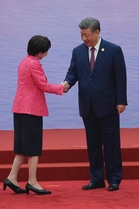
Against this background, Vietnam’s assumption of the APEC chairmanship for 2027 is especially noteworthy. At the handover ceremony in Shenzhen on Nov. 19, To Lam formally received the responsibility from Chinese President Xi Jinping. Vietnam announced the theme for its APEC year as “Creating a New Era of Resilience, Innovation and Shared Prosperity,” with three priorities: enhancing economic productivity; promoting regional trade and investment while strengthening economic resilience; and improving people’s quality of life.
These priorities are well chosen. Vietnam has emerged as one of Southeast Asia’s more dynamic manufacturing and investment destinations, benefiting from supply-chain diversification, a growing industrial base and an increasingly important position in regional trade. Yet its development challenges remain substantial. Moving beyond labor-intensive manufacturing, improving technological capabilities, strengthening infrastructure and cultivating a more skilled workforce will be essential if the country is to avoid remaining in the lower-value segments of global production.
Hosting APEC offers Hanoi an opportunity to address these challenges within a wider regional framework. Rather than simply presenting Vietnam as an attractive destination for foreign investment, its chairmanship can promote practical cooperation in technological upgrading, digital transformation, infrastructure connectivity and industrial innovation. These are areas where Vietnam’s development ambitions overlap with the interests of its neighbors.
To Lam’s personal role deserves particular attention. His appearance at the Shenzhen summit provided an opportunity to articulate Vietnam’s aspirations for its upcoming host year. His remarks were revealing. He advocated an open trade and investment environment, new growth drivers through technological innovation, and greater dialogue to maintain regional stability. Particularly interesting was his suggestion that APEC should serve as an incubator for emerging economic models, including the digital, silver, care and low-altitude economies. This reflects an ambition to move beyond conventional trade liberalization towards emerging sources of productivity and economic growth.
To Lam also emphasized strategic supply chains and economic resilience. This message should resonate throughout Southeast Asia. Resilience does not necessarily mean economic self-sufficiency or retreating from globalization. Rather, it requires stronger domestic capabilities, diversified partnerships and institutional flexibility to withstand external disruptions.
There is also a diplomatic dimension to Vietnam’s coming chairmanship. As a member of both Asean and APEC, Vietnam occupies a useful position between Southeast Asia’s regional integration agenda and the broader Asia-Pacific economic community. Its challenge will be to ensure that these platforms complement rather than compete with each other. Asean centrality must be more than a diplomatic slogan; it should translate into meaningful regional participation, connectivity initiatives and economic opportunities for smaller and less developed economies.
For the rest of Southeast Asia, Vietnam’s forthcoming APEC year should be viewed as a regional opportunity rather than simply a Vietnamese diplomatic achievement. Its neighbors should participate actively in shaping the agenda, particularly on digital inclusion, sustainable infrastructure, food and energy security, and the integration of smaller businesses into regional value chains. There is considerable scope for collaboration even among economies with different political outlooks and strategic relationships.
Malaysian Prime Minister Anwar Ibrahim and Philippine President Ferdinand Marcos Jr. also brought important Southeast Asian perspectives to the Shenzhen summit. Anwar reaffirmed the importance of open trade, multilateralism and inclusive digital development, while Marcos highlighted the need for economic resilience, regional cooperation and stronger connectivity. Their contributions underscore that Southeast Asian leaders should not merely participate in APEC discussions but actively shape the region’s economic priorities and its engagement with the wider Asia-Pacific.
Ultimately, the Shenzhen summit has demonstrated that APEC remains relevant, although its effectiveness will depend on whether members can translate political consensus into practical economic benefits. Vietnam now has the opportunity to carry that process forward next year.
When APEC leaders gather in Phu Quoc in 2027, the real measure of success should be whether businesses, workers and ordinary citizens across the Asia-Pacific experience tangible improvements in their economic prospects. For Southeast Asia, that would be a meaningful achievement indeed.