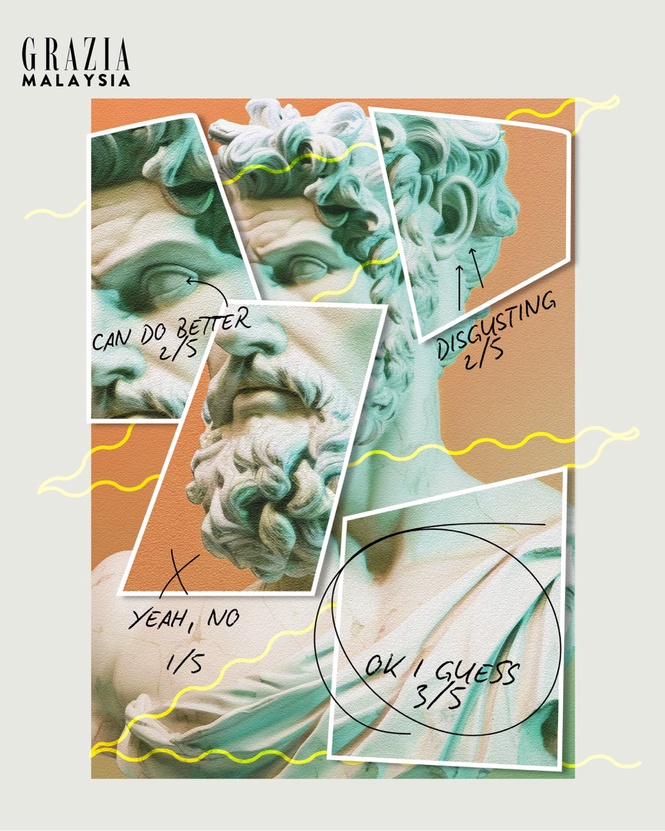
14-year-old Kevin has just returned home from a trying day in school: he was bullied once again for his baby fat, and to make things worse, the girl he asked out turned him down. Life is hard as a teenager in 2026, but no matter: there’s the internet for help. He searches “looksmaxxing” on TikTok and goes on a doom scroll. The algorithm works almost immediately, recommending him a tutorial on getting a chiselled jawline next. Then, a dweeby-looking man in the next video goes on a lengthy rant about how women should “submit” to their husbands. The video after is a clip of comedian Shane Gillis remarking that he “didn’t know women just dress like whores now” at the gym. Slowly, without him even realising, Kevin’s perception and opinions are being moulded like Play-Doh. His brain absorbs what he sees on his phone screen, and he finds himself getting angry at his crush for turning him down. He’ll show her. He’ll looksmaxx like his idol Clavicular and be completely irresistible to other girls.
Now, Kevin isn’t a real person. But he may as well be. His story isn’t that much different from a lot of young boys—and some grown men—around the world. There is a growing number of them calling themselves “looksmaxxers”, and they go to great lengths to achieve a 10/10 physique. From ice baths at 5 a.m. to smashing their bones with a hammer to reshape their facial structures and four-hour gym sessions, there’s no telling what they’d do to “peak” as a man.
For the uninitiated, the term “maxxing” these days is put into basically any possible noun to mean taking that trait to the extreme, optimising it to its fullest potential. However, most may not know that the term dates back to the late 90s, originating from gaming culture—specifically with role-playing games (RPGs) where people maximise a specific skill or attribute while minimising others. This was called “min-maxing”.
Perhaps stereotypically, this phrasing spilt over into incel and manosphere groups, where the suffix “-maxx” began appearing to denote strategies for optimising one’s LMS (looks, money, status) and SMV (sexual market value). By the early 2010s, incel communities began using the -maxxing suffix for their personal attributes—that’s where the term “looksmaxxing” comes from, and it’s still used today, in addition to gymmaxxing, stylemaxxing, moneymaxxing, and fibremaxxing, to name a few. Like any meme, we started out using it ironically. But these days, even I have been using it as part of my adapted Gen Z lingo.
Maxxing, although at its core speaks of self-improvement, does have some nefarious implications. The appeal is there: you are a project, and projects can be improved. In an age where traditional milestones—a home, a stable career, a partner—feel increasingly out of reach for a generation of young men, maxxing offers something rare: achievable metrics. Sleep scores, jaw measurements, protein targets, and follower counts. It’s progress that they can see, track, and control.
The most visible damage is to women, whom this worldview treats as less than people and reduces to mere scoreboards.
How did it get to this point? Three words: male loneliness epidemic. Reporting and research have long documented loneliness among young men that mainstream culture has been slow to address. Men have fewer close friendships, fewer spaces to speak honestly about insecurity, and an advice landscape that has extremes of “toughen up” or staying silent. To be fair, lifting weights, caring for your skin, sleeping properly, and building discipline are not sinister. In fact, it’s good for you. Most maxxing content begins with a harmless tip and a shared joke—that’s how it gets you. The trouble is not the first video, but what the algorithm sends you as you continue doomscrolling on an FYP (For You Page) you built brick by brick.
The word “pipeline” gets used a great deal in conversations about online radicalisation, but nobody is dropped into the manosphere in a single step. They are nudged, one TikTok video at a time, along a gradient so gentle that each stage feels like a natural extension of the last. Writer Catherine Shannon mentions in her Substack article “On Vigilance” that “We need to be careful about what we consume, even the seemingly innocent things. This is because what we consume, we internalise to some degree.”
It might begin with a creator explaining posture or grooming. The next recommendation is a more intense routine, then a “brutal honesty” segment about attractiveness, then a sweeping claim about what women supposedly want. By the time the grievance arrives, it has the credibility of the self-improvement that preceded it. The viewer is already invested in the creator’s authority; the worldview simply rides in on the back of it.
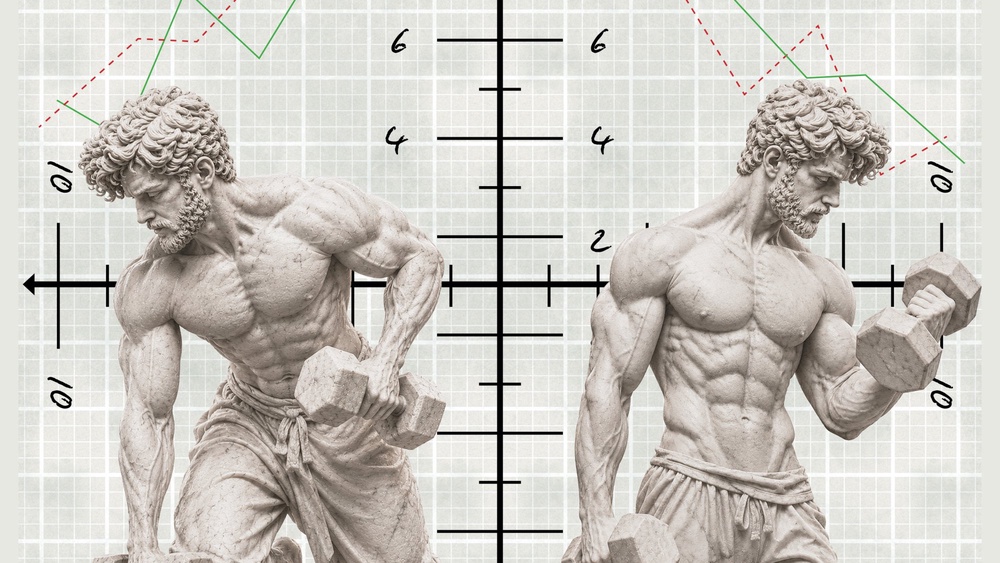
The language does subtle work along the way. Rating and ranking become second nature: faces scored out of ten, men sorted into tiers, and “mogging” is introduced into the vocabulary as shorthand for being outshone by someone better-looking. When people are reduced to numbers, contempt doesn’t feel like contempt anymore, and instead, feels like analysis.
Much of it rests on a business model of courses, supplements, coaching programmes, and paid communities. Insecurity is the product at hand, and the more acute it is, the better it sells. A young man who feels adequate does not need a coaching session worth hundreds of dollars that you’ll need to comment “alpha” to receive. One who has been taught to see his face as a problem to be solved will keep paying.
The most visible damage is to women, whom this worldview treats as less than people and reduces to mere scoreboards. Desirability becomes a currency, partners become proof of status, and rejection becomes evidence of a rigged system rather than an ordinary part of being human. The worst part is when this behaviour spills over into the real world. It shapes how boys speak in classrooms, how young men behave at work and on dates, and how a generation learns to think about intimacy.
The damage to the men themselves is not as obvious but no less real. Clinicians and researchers have raised concerns about body dysmorphia, obsessive self-monitoring, and increasingly extreme practices that are pursued in the name of optimisation. The goalposts will keep shifting. There is always another flaw to fix, another metric to chase, or another upgrade to buy. A philosophy sold as empowerment often has the opposite effect: a permanent, low-level shame.
Culture has begun to register the stakes. Netflix’s Adolescence sent parents and teachers scrambling to understand what their sons were absorbing online. But the pathway into this world is rarely hateful at the beginning. It looks like ambition, which is why it is so hard to spot and so easy to defend.
It is only fair to listen to the other side. Many who take part in maxxing culture insist that it is ironic, that the absurd terminology is half the fun, and that the whole thing is a community of lads encouraging each other to get fitter. Some argue that critics are simply uncomfortable with men taking an interest in their appearance, an interest women have been encouraged—and mocked—for pursuing for decades. All this to say, the culture that sneers at male vulnerability is partly responsible for the vacuum this content fills.
But the defence weakens at a particular point. Irony is a fine shield until it becomes a delivery mechanism, and plenty of ideology has travelled inside a joke. Community is valuable, but a community that bonds through contempt for others or through shared anxiety about one’s own worth is doing something different from encouraging fitness. It’s a simple test: does the space leave its members more confident and more connected, or more resentful and more isolated?
None of this means abandoning the desire to improve oneself, but rather, asking what the improvement is for. A good routine serves a life; it does not replace one. The healthiest self-improvement content tends to share a few traits: it is specific rather than shaming, it treats the body as something to look after rather than a problem to fix, and it doesn’t need an enemy to make its case.
There are creators modelling this already, men who talk about training, grooming and discipline alongside friendship, mental health and respect for the women in their lives. But they tend to be less viral, because contentment doesn’t go viral—only radical opinions. That is exactly why they matter and deserve amplification.
For parents, friends, and young men themselves, the warning signs are not so much about vocabulary as they are about direction. Is the content making the world feel larger or smaller? Is it prompting curiosity or contempt? Is the advice about becoming a better version of yourself or about winning against everyone else?
We go back to Kevin, his thumb automatically scrolling over to the next video. The algorithm will keep offering him the same type of content. But what can change the ending is what waits for him when he puts his phone down. Is there a friend who asks how he’s really doing? Is there a coach that values effort over aesthetics? Is there a mentor figure that tells him he’s not a project to check milestones off? Those should be the things to maxx out on.
This article first appeared in the GRAZIA Malaysia November 2026 print issue.
READ MORE
- Gains, Grids, and Grievance: The Cost of Everything-Maxxing
- Barcelona is Europe’s Christmas Capital for 2026: Home to One of Europe’s Oldest Christmas Markets
- Things to See, Try and Experience in KL & PJ This Month
The post Gains, Grids, and Grievance: The Cost of Everything-Maxxing appeared first on Grazia Malaysia.