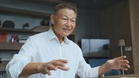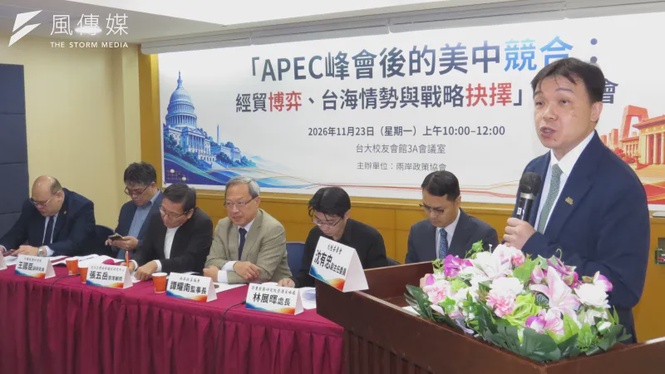
Taiwan's top China policy agency pushed back on November 23 against Beijing's claim that President Donald Trump told Xi Jinping the US "does not support Taiwan independence," noting that Washington itself has not said a word about Taiwan since the two leaders met in Shenzhen. Three Trump-Xi summits this year will not change the structural rivalry between the US and China, said Shen Yu-chung, deputy minister of the Mainland Affairs Council (MAC).
The MAC is the Taiwanese government agency in charge of China policy. Shen spoke at a seminar in Taiwan on US-China competition after the Asia-Pacific Economic Cooperation (APEC) summit, which China hosted in Shenzhen on November 18 and 19.
Washington Has Said Nothing on Taiwan
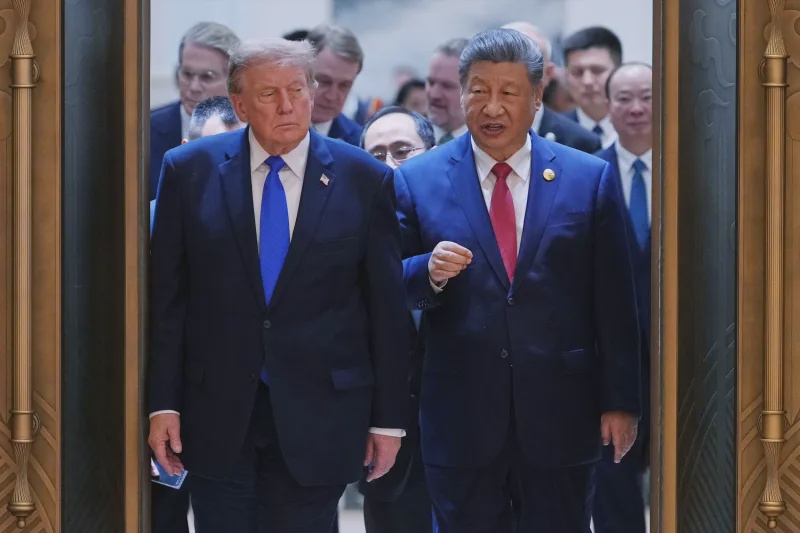
Xi met Trump on the afternoon of November 19 on the sidelines of APEC, their third meeting this year. According to China's state news agency Xinhua, whose account was posted by the Chinese Foreign Ministry, Trump said the US "does not support 'Taiwan independence.'" The US side has released nothing to match it. Neither Washington's public statements nor US reporters' questions to Trump touched on Taiwan.
Shen said Beijing used its official media to spread a false narrative about cross-strait relations right after the meeting, rushing out the claim about Trump. "In fact, whether at press conferences or other important occasions, the US side has not said a single word about Taiwan, the Taiwan Strait, or cross-strait issues," he said.
Shen called on Beijing to face what he described as the objective reality that the Republic of China (Taiwan's official name) and the People's Republic of China are not subordinate to each other. However Beijing conducts cognitive operations at or after the summit, he said, it cannot change that fact. Taiwan's foreign ministry said separately on November 24 that Washington had assured Taipei its Taiwan policy is unchanged, Storm Media reported.
| CROSS-STRAIT & GEOPOLITICSShen Yu-chung: The US-China Rivalry Will Not ChangeTaiwan Should Not Become a Bargaining Chip Between Great PowersNovember 2026 | Analysis After the APEC Summit | |
| Shen Yu-chung, deputy minister of Taiwan's Mainland Affairs Council, says US-China competition is structural and will not change because the two leaders meet. Beijing used APEC and the China-Russia-US summit to project great-power status, but Taiwan should uphold its sovereignty, keep the status quo, and strengthen its own defense and international cooperation. | |
| POINT 01Great Power ImageAPEC Stagecraft | Beijing used APEC to project great-power statusBy hosting APEC and a China-Russia-US summit, Beijing cast itself as one of the great powers that negotiate the international order, and used a peace declaration to advertise its commitment to peace.Shen's challenge: the peace messaging does not match China's military pressure. |
| POINT 02US-China RivalryStructural Forces | Three Trump-Xi summits will not change the rivalryUS-China competition in technology, trade, and geopolitics is structural. Leaders' meetings mainly manage differences and avoid miscalculation; they do not end the competition.Bottom line: talking does not make the rivalry disappear. |
| POINT 03Taiwan QuestionUS-China Tug of War | Beijing is trying to change Washington's wording on TaiwanBeijing claims Trump said the US "does not support Taiwan independence," but US public statements did not mention Taiwan. Shen says Beijing is trying to turn America's "does not support" into "opposes."Shen stresses: Taiwan and the People's Republic of China are not subordinate to each other. |
| POINT 04Military PressureRegional Security | China-Russia military coordination deepens regional worriesShen says China and Russia stepped up military coordination along the First Island Chain, pressuring Japan, Taiwan, and the Philippines. Russian military aircraft violated Japan's airspace and entered Taiwan's air defense identification zone before and after the summit.Taiwan should work with democratic partners to keep the region peaceful and stable. |
| POINT 05Taiwan's ResponseChallenges Ahead | Bracing for more pressure ahead of the 2027 Communist Party congressShen expects Beijing to keep pressuring Taiwan, interfere in its local elections, and use social division to undermine Taiwan's democratic governance.Taiwan should build four strengths: self-defense, economic resilience, democratic unity, and international cooperation. |
| Shen Yu-chung's Core MessageTaiwan should not become a bargaining chip in the US-China rivalry. The government will uphold sovereignty and keep the status quo, and is willing to talk with Beijing on the basis of parity and dignity, without preconditions.Source: Shen Yu-chung's remarks on the US-China-Taiwan situation after the APEC summit | |
Three Summits Won't End a Structural Rivalry
Trump and Xi have now held three summits this year, but Shen said US-China competition is a structural force that will not shift after one or two meetings. The Shenzhen talks, he said, were about managing differences through communication and avoiding the risk of miscalculation, and they leave the competition in technology, trade, and geopolitics intact.
A Peace Declaration Shadowed by Warships and Bombers
Shen accused Beijing of using its role as APEC host, and the first-ever summit of the Chinese, Russian, and US presidents, to build a great-power image and promote a new kind of international order in which big powers decide the rules among themselves. After the three-way meeting, the leaders issued what Beijing calls the "China-Russia-U.S. Heads of State Declaration toward Peace," according to the Chinese Foreign Ministry.
Beijing's actions told a different story, Shen said. In early November, China deployed more than 100 vessels, coordinating militarily with Russia, which in his view shows China remains a troublemaker for regional peace and stability. The Chinese navy and coast guard had more than 100 ships in the western Pacific and around Taiwan at the peak of an unannounced exercise that month, Reuters reported.
Russian military aircraft also violated Japan's airspace and entered Taiwan's air defense identification zone (ADIZ) before and after the summit, Shen said. Japan said suspected Russian aircraft entered its airspace on November 17, the same day they flew into the ADIZs of Japan, South Korea, and Taiwan, USNI News reported. On the morning of November 19, the day of the summit, two Russian Tu-95 strategic bombers flew through Taiwan's ADIZ, Taiwan's Ministry of National Defense said, according to Focus Taiwan.
That show of China-Russia military coordination, meant to intimidate countries in the region, clearly clashes with the spirit of APEC, Shen said.
Beijing Will Turn Up the Pressure Before Its Party Congress
Shen said no amount of political maneuvering by Beijing can deny that the Republic of China and the People's Republic of China are not subordinate to each other. "The People's Republic of China has never governed Taiwan for a single day," he said.
Mainstream public opinion in Taiwan supports maintaining the cross-strait status quo, Shen said, and rejects "one country, two systems" as a basis for talks, as well as Beijing's one-China principle and the "1992 Consensus" as preconditions for dialogue. The 1992 Consensus is a term Beijing uses for a claimed understanding that both sides belong to one China. A recent survey found 83% of Taiwanese reject Xi's "one country, two systems" offer, Storm Media reported.
With the Chinese Communist Party's 21st National Congress set for the fall of 2027, Shen said the MAC expects Beijing to keep intensifying pressure on Taiwan, deepen efforts to divide Taiwanese society, and push ahead with measures to force unification.
Taipei Says the Door to Talks Stays Open
Shen placed the blame for the stalemate squarely on Beijing. "It is the Chinese Communist Party that is unwilling to talk with our government. It is the Chinese Communist Party that refuses to face the existence of the Republic of China. And it is the Chinese Communist Party that deliberately seeks to eliminate the Republic of China's sovereignty and undermine our democratic governance," he said.
Facing that pressure, Shen said, Taiwan's government will keep defending the country's sovereignty and its principles of freedom and democracy, neither yielding nor provoking, and will maintain the status quo. It remains willing, he added, to hold talks with Beijing on the basis of parity and dignity, without preconditions, to resolve differences.
Related: China Eases Taiwan Pressure on Trump, but Four 2027 Flashpoints Loom
You've read it. Now join the conversation — follow us on X, Facebook and IG. Editor: Penny Wang