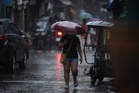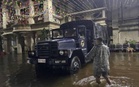
FOR several hours on Sept. 3, it seemed that Metro Manila had stopped moving. Cars, buses, trucks, motorcycles and people were trapped in an endless sea of traffic. Engines continued to run and horns continued to blare, but nothing moved. Metro Manila was paralyzed once again by torrential rains, not because the floods were that high but because the heavy downpour was enough to strand hundreds of thousands in their tracks.
On EDSA and C5, an endless procession of vehicles snaked slowly through every lane, testing the patience and bladder of drivers, passengers and motorists. On the North Luzon Expressway, the bottleneck was much worse, trapping people in buses and cars for hours, regretting why they had to report for work or school, or even go out on an errand. The southwest monsoon, or “habagat,” unleashed strong rains over Metro Manila that day, drenching people and vehicles.
While Filipinos cried to the heavens above, their pleas seemed to fall on deaf ears. There appeared to be no one capable of rescuing them from that carmageddon, the worst so far this year.
Filipino pundits are very smart after the fact. Since floods soaked the nation’s capital this quarter, buzzwords like “comprehensive master plan,” “reef-to-ridge” approach, or “whole-of-government” went viral on social media. Yet, the horrendous traffic every monsoon season keeps recurring without any solution in sight. Often described as among the most patient and resilient people on the planet, Filipinos often accept and tolerate the incompetence and corruption of their government. But their attitude toward such shortcomings borders on masochism. After one horrendous traffic, people get consumed and complain for a few days, then resume their normal lives. Public officials’ indifference to the struggles of ordinary Filipinos is likewise appalling; some even wear designer clothes during calamities.
Yet, Sept. 3 was something else different from the last rainy weeks. The entire metropolis simply stayed still, seemingly accepting this situation without resistance. Metro Manila did not fight back. Traffic management and emergency response appeared overwhelmed by the scale of the problem, while city governments scrambled to deal with the flooding and the resulting gridlock. Motorists and commuters felt abandoned.
Unlike in the early 2000s, I distinctly remember that during former president Gloria Macapagal-Arroyo’s administration, despite the many criticisms received, she would mobilize the military and police on major highways to assist motorists and pedestrians during harsh rains. Her successor Benigno Aquino III had directed the Philippine National Police’s Highway Patrol Group to oversee traffic and impose order on chaotic roads with their batons and high-powered firearms. Former president Rodrigo Duterte would never fail to appear on live telecasts or social media to assuage people’s anxiety during heavy rainfall and flooding. All previous presidents knew that the rise or fall of their legacy depended, in part, on how they responded during the monsoon season.
But people in Metro Manila are now frustrated with President Ferdinand Marcos Jr. and his administration. Unfair as it may seem, the problem lies not simply in the absence of government action, but in the accumulated woes that plagued administrations. The president did order agencies to address the North Luzon Expressway gridlock, while the Department of Public Works and Highways and the Metropolitan Manila Development Authority deployed high-capacity pumps, and the government ordered toll-free passage between San Fernando in Pampanga and Pulilan in Bulacan to help motorists affected by the flooding. Marcos also tasked the Department of Transportation to send timely flood warnings through SMS and other platforms. Still, these were not enough to alleviate traffic and allow people to escape the floods during the Sept. 3 downpour.
Marcos’ critics argued that the government response cannot merely begin after thousands of people are already trapped on roads. Warnings should be preemptive and the government must suspend work and classes earlier. The shift to online modalities during the oil crisis has now waned in schools and companies, which the administration could have ordered to ease congestion on major roads.
Truth be told, traffic and floods might not be solved anytime soon. Metro Manila residents must simply brace for more traffic, floods and heavy downpours amid climate change and increasingly severe weather conditions it causes. It is simply the way things are — and, perhaps, how they will be moving forward in the weeks to come.
For most residents of Metro Manila, they will face a city that will keep coming to a standstill during the monsoon season. Its old infrastructure, inadequate drainage, narrow roads and congested communities will need a major overhaul before things get better. And since our leaders are busy with partisan politics, people are left to fend for themselves.
Unfortunately, there will be more days like Sept. 3. The question is not whether the government will do something, but when will the next standstill for Metro Manila happen.