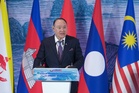
DEFENSE Secretary Giberto Teodoro Jr. has warned that the forced removal of the BRP Sierra Madre by China would constitute an act of war. His warning raises a serious question: Is the Philippines prepared for the consequences if China decides to tow away the vessel despite Manila’s objections?
The issue is not whether the Philippines should defend its national interests. It should. The issue is whether the government’s present approach protects those interests or exposes the country to a confrontation it may not be able to manage.
Tensions between Manila and Beijing continue to rise. Repeated confrontations at sea have been accompanied by increasingly forceful statements from both sides, including calls to declare Chinese Ambassador Jing Quan “persona non grata.” Recently, China announced that it would take retaliatory measures against what it considered aggressive Philippine behavior. Reports that Beijing is considering the removal of the Sierra Madre should, therefore, not be dismissed.
The government must consider the consequences of this course of events. Strong words may demonstrate resolve, but they cannot substitute for the ability to defend the country’s position. A government that issues warnings must also consider what happens when the other side refuses to heed them.
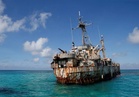
The BRP Sierra Madre presents a particularly difficult problem. The vessel has served as a Philippine outpost at Ayungin Shoal — known internationally as Second Thomas Shoal — since 1999. Its presence has become the symbol of the country’s determination to maintain its maritime interests. A symbol, however, cannot defend itself. If China decides to remove the vessel by force, can the Philippines actually prevent it?
That is a question that our leaders must answer honestly.
The Philippines cannot simply assume that the United States will intervene militarily. Although the Mutual Defense Treaty (MDT) forms part of the country’s defense posture, Article IV thereof provides that each party will act to meet an armed attack “in accordance with its constitutional processes.” The MDT does not prescribe an automatic military response to every clash. Manila also cannot dictate how Washington should interpret a specific confrontation.
Although the US has clearly affirmed its commitments to the Philippines, it remains unproven whether those commitments would result in American military action capable of preventing the forced removal of the Sierra Madre. The outcome cannot be taken for granted.
Suppose China proceeds with towing the Sierra Madre and the Philippines is unable to stop it. Suppose further that the US does not intervene militarily. What then?
The Philippines would suffer a serious political and strategic setback. The loss would involve more than an aging, decrepit vessel. It would expose the limits of the country’s ability to defend a position that its government has repeatedly declared important to national interests. It would also raise questions about the credibility of official warnings and the wisdom of the policies that led to the confrontation.
National pride is not a trivial consideration. A country cannot indefinitely proclaim its determination to defend a position and then remain unprepared for the possibility that it will lose that position. If the government knows that its ability to resist China is limited, it has the duty to consider that limitation before a crisis occurs.
The Philippines must not surrender its rights or accept China’s claims. However, Manila must distinguish between true national defense and reckless, uncontrollable risk. Diplomacy is not weakness, and restraint is not surrender. Both are essential for a foreign policy that puts national interests above political posturing.
Teodoro, as defense secretary, has a particular responsibility in this matter. His warning that removal of the Sierra Madre would constitute an act of war cannot be considered in isolation from the country’s actual capacity to respond. If China carries out the removal, the government must be ready to explain what it intended to achieve, what it expected the US to do, and what contingency plans it had prepared if American assistance did not come.
The responsibility will not rest on Secretary Teodoro alone. The president and other officials responsible for foreign policy will have to answer for their decisions. Teodoro, however, cannot avoid scrutiny of the defense planning behind his warning.
The country should not wait for a humiliating outcome before asking whether its present approach is wise. The duty of national leaders is not merely to show resolve, but also to protect the country from foreseeable harm. This requires a realistic assessment of military capabilities, careful diplomacy, and an understanding that the consequences of a confrontation may be very different from what its advocates expect.
If Secretary Teodoro’s warning turns out to be a bluff, Filipinos will face the devastating sight of their outpost being towed away. Perhaps, such national humiliation matters little to the secretary who publicly admitted he secured Maltese citizenship long before the president placed him in charge of the defense department.
Rafael P. Tuvera is a lawyer who taught law and political science. He analyzes geopolitics and diplomatic strategy with an emphasis on productive approaches with legal and historical context.