.png)
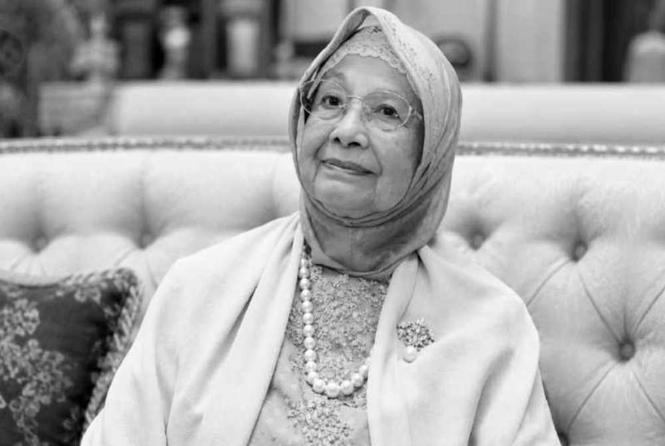
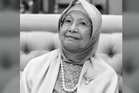
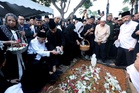
SHAH ALAM – A century is a long time to live. But for Tun Dr Hasmah Mohamad Ali, it was also a century spent breaking barriers, serving communities, raising a family and quietly building a legacy of her own.
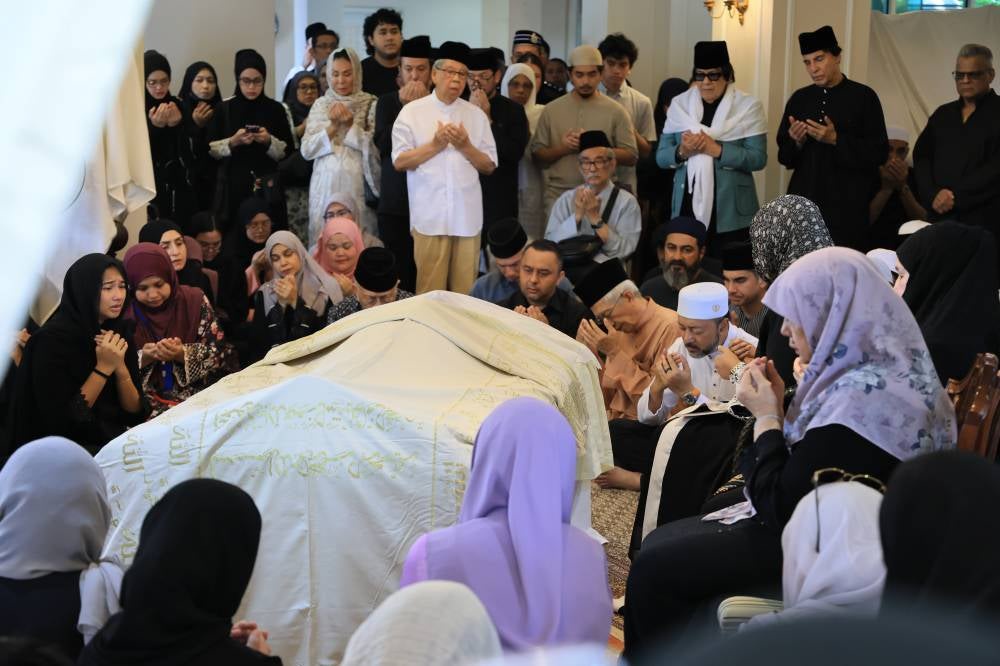
The pioneering Malay woman physician and lifelong companion of Malaysia’s longest-serving prime minister, Tun Dr Mahathir Mohamad, died at 9.20am on Monday at the National Heart Institute (IJN). She was 100.
Affectionately known for decades as Dr Siti Hasmah, a name she later asked the public to stop using, Dr Hasmah leaves behind Dr Mahathir, 101, whom she married on Aug 5, 1956, and their seven children.
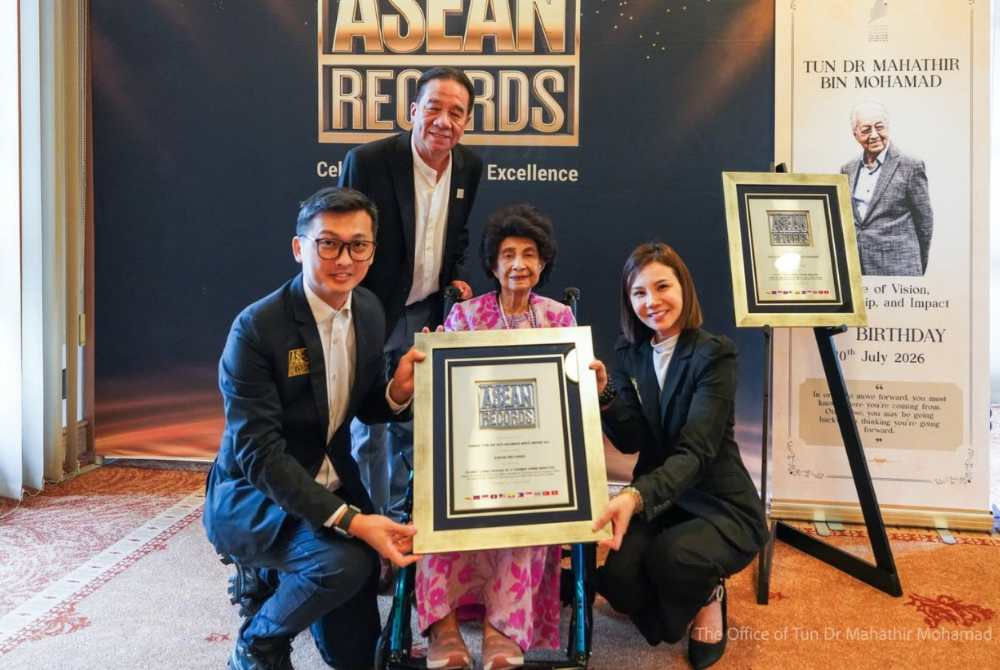
Just a month before her death, the couple were formally recognised by Asean Records and Asia Records as the oldest living former head of government and spouse in the region, the first such partnership in which both had reached the age of 100.
Yet, long before she became a familiar figure beside one of Malaysia’s most prominent political leaders, Dr Hasmah had already carved out a place in history.
A pioneer in medicine
Born in Klang, Selangor, on July 12, 1926, Dr Hasmah was the sixth of 10 children in an illustrious family.
Her siblings included former Bank Negara Malaysia governor Tun Ismail Mohamed Ali, former Armed Forces Chief General Tun Mohamed Hashim Mohd Ali and former Selangor Menteri Besar Datuk Ahmad Razali Mohd Ali. Her sister, Tan Sri Dr Saleha Mohd Ali, was also a prominent medical practitioner.
Dr Hasmah was among the first Malay women to enrol at the King Edward VII College of Medicine in Singapore, a decision that placed her among a generation of women breaking into a profession that was still largely dominated by men.
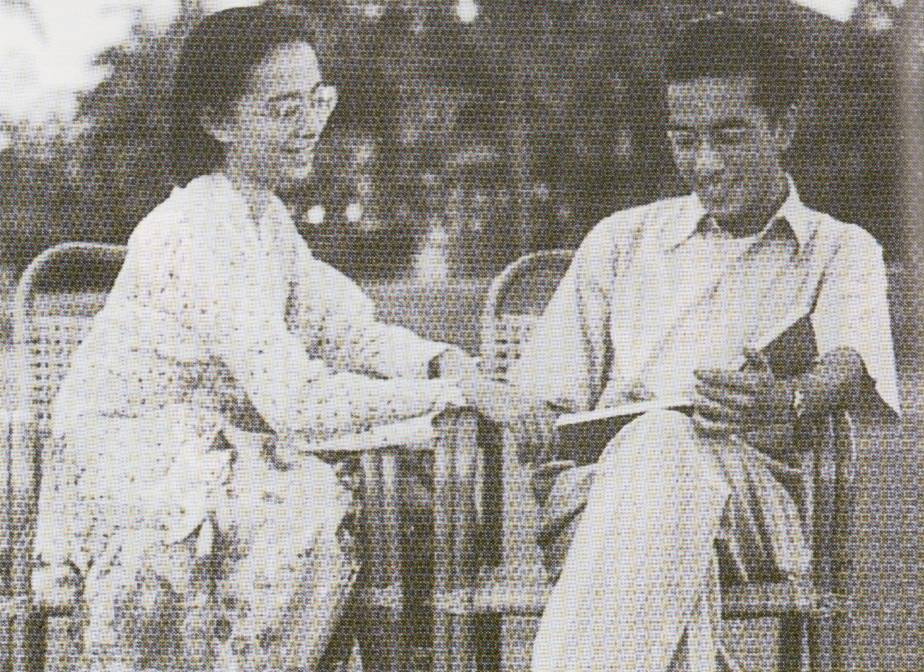
It was there, in 1947, that she first met Dr Mahathir.
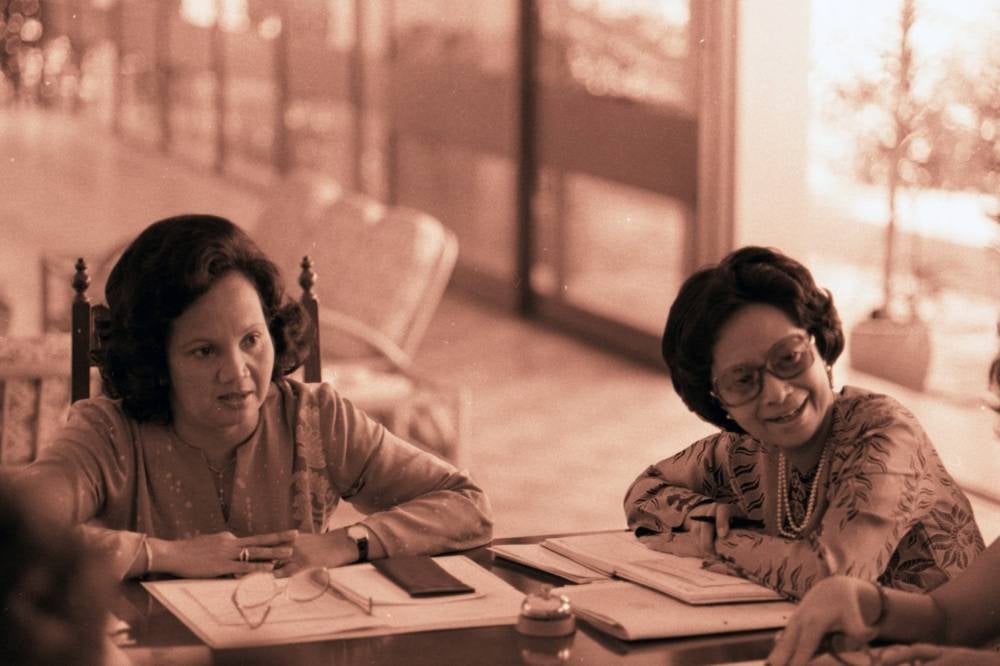
She graduated in 1955 and joined the government medical service, beginning a career that would take her far beyond hospital walls and into rural communities where healthcare was often difficult to access.
Much of her early work was in Kedah, where she championed maternal healthcare, basic hygiene, immunisation and public health education.
Her career continued to break new ground.
In 1965, she became the first woman medical officer in the Maternal and Child Health Department. Nine years later, she became Kedah’s first woman State Maternal and Child Health Officer.
She also obtained a Diploma in Public Health from the University of Michigan in 1966 before serving as a lecturer at the University of Malaya’s Faculty of Dentistry.
Her work in rural Kedah had a lasting impact. Official health records credited her grassroots maternal health initiatives with helping reduce infant mortality from 75 deaths per 1,000 live births to just six.
For Dr Hasmah, medicine was never simply about treating patients. It was about improving the conditions in which people lived.
The woman beside a prime minister
Dr Hasmah married Dr Mahathir on Aug 5, 1956, beginning a partnership that would span almost seven decades and some of the most consequential chapters in Malaysia’s modern history.
When Dr Mahathir became Deputy Prime Minister in 1976 and subsequently Prime Minister in 1981, Dr Hasmah took on a very different public role.
She served as the prime minister’s wife from 1981 to 2003 and again from 2018 to 2020, becoming known affectionately to Malaysians as “Ibu Negara”.
But the title never fully defined her.
With the national platform came opportunities to pursue causes that had long been close to her professional and personal interests - maternal healthcare, family planning, anti-narcotics advocacy and rural adult literacy.
She represented Malaysia on the international stage, leading the country’s delegation to the 1995 United Nations Fourth World Conference on Women in Beijing.
In 2003, she chaired the First Ladies Dialogue held during the Organisation of Islamic Cooperation (OIC) Summit.
She also became the inaugural Chancellor of Multimedia University, serving from 1997 to 2012.
Beyond these prominent positions, Hasmah remained involved in civic and community organisations, including the Malaysian Girl Guides Association and the Malaysian Medical Association Foundation. She also served as patron of the Badminton Association of Malaysia.

A humanitarian mission to Iraq
One of the lesser-known chapters of Dr Hasmah’s public life came in March 2000, when she led an independent five-day humanitarian mission to Iraq.
The mission sought to assess the impact of international sanctions on women and children.
During the visit, Dr Hasmah personally delivered medical supplies to paediatric hospitals and orphanages.
She also held a private audience with then Iraqi president Saddam Hussein - a meeting that had been kept confidential until it took place, reportedly even from Dr Mahathir.
The episode reflected another dimension of Hasmah’s public service: one that extended beyond ceremonial duties and into humanitarian concerns affecting ordinary people.
A life beyond the title
For much of her public life, Dr Hasmah was introduced through her relationship with Dr Mahathir.
But in her later years, she increasingly emerged as a personality and cultural figure in her own right.
She returned to playing the violin after a 70-year hiatus and even auctioned instruments to raise money for charitable causes.
Her curiosity did not diminish with age.
In her 70s, she learned conversational French. In her 80s, she took up the traditional Chinese erhu.
At an age when many people might have considered slowing down, Dr Hasmah continued to learn, perform and explore.
Her autobiography, My Name is Hasmah, published in 2016, offered a more personal glimpse into the woman behind the public persona. In it, she fondly described Dr Mahathir as her “hero”.
But she was also increasingly clear about how she wanted to be remembered.
In 2024, she publicly asked people to stop addressing her as “Siti”, a prefix that had been socially attached to her name in the 1970s.
She preferred to be known simply by her birth name: Hasmah.
It was a small but telling assertion of identity from a woman whose public life had often been defined by titles - doctor, wife of the Prime Minister, “Ibu Negara”, humanitarian and national figure.
She also spoke openly about her breast cancer treatment in 2019, using her own experience to encourage women to undergo early screening.
A century that changed with the country
Dr Hasmah’s life unfolded alongside the transformation of Malaysia itself.
She came of age when opportunities for Malay women were limited, entered medicine when few women did, worked in rural communities when public healthcare was still developing, and later found herself at the centre of Malaysia’s political and diplomatic life.
She was a doctor before she was a prime minister’s wife.
She was a mother, educator, humanitarian and advocate before becoming a national icon.
And even after decades in the public eye, she continued to reinvent herself – picking up instruments, learning languages and speaking candidly about her own experiences.
Her century-long journey was therefore more than a story of standing beside one of Malaysia’s most consequential political figures.
It was the story of a woman who spent much of her life standing in her own right.
Tun Dr Hasmah Mohamad Ali leaves behind a legacy that stretches from rural clinics in Kedah to international conference halls, humanitarian missions, universities and countless lives touched through medicine and public service.
A century after her birth, Malaysia bids farewell to a woman whose life was, in every sense, a life well lived.