.png)
KUALA LUMPUR – Petronas had roughly three to three-and-a-half years to turn the concept of Advanced Sustainable Fuel (ASF) into a race-ready reality for Formula One’s (F1) 2026 regulations.
For Datuk Seri Sazali Hamzah, getting the fuel ready involved considerably more than simply changing what went into the tank.
The Petronas Downstream executive vice-president and chief executive officer said development began after the FIA (Fédération Internationale de l'Automobile) announced its new F1 regulations for 2026 in 2022.
The challenge was substantial. Sazali said starting from scratch and moving all the way to commercial production would have been a “very strenuous target”.
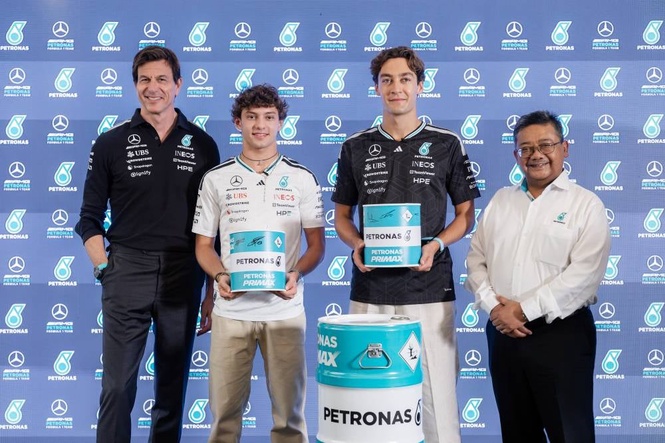
Petronas therefore worked closely with Mercedes, developing the engine and fuel together and making adjustments throughout the process.
“However, working closely with Mercedes, because we developed the engine and also the fuel together, we kind of also (were able to do some) tweaking along the way.
“And Alhamdulillah, by 2026, we made the fuel ready and it was tested,” he said.
But getting the fuel ready for the racetrack required a much bigger operation behind the scenes.
“There is a lot of components behind it,” Sazali said.
He pointed to the technologies involved as well as project management, with Petronas having to ensure that the fuel plant itself was built on schedule.
“We bring the best project management to make sure that when we build the fuel plant, it’s been done on time,” he said.
Then came certification.
For sustainable fuel, Sazali said the process involved detailed calculations and assessments relating to greenhouse gas emissions.
“Actually, the sustainability fuel certification is a very tedious process because we need to make sure every calculation of GHG (greenhouse gas) being evaluated.
“So when we test at the first, the most serious situation, when we handle other options, it is much easier for us.
“I think that’s the benefit that we see in this process,” he said.
Sazali said the knowledge gained through the process would make future projects easier, particularly when testing other options.
But the real test came when the fuel was finally put into competition.
Sazali recalled being nervous when the fuel was first used at the season’s opening race in Australia, even imagining that the car might fail to move.
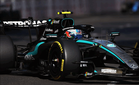
Instead, Mercedes finished first and second before also winning in China.
The fuel worked.
Currently, four F1 teams use Petronas ASF under the 2026 regulations, with Petronas supplying fuel to all Mercedes-powered teams on the grid.
The other three are McLaren, Atlassian Williams and Alpine, which use Mercedes power units