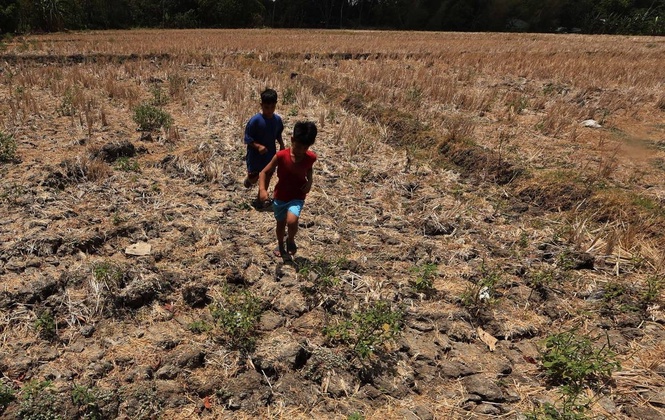
UNITED States Ambassador to Manila Lee Lipton has announced $4 million in disaster assistance to help reduce the effects of El Niño on 38,000 vulnerable families in Eastern Visayas and Bicol regions, including Camarines Sur province.
Lipton visited Camarines Sur on Nov. 23 as part of his ongoing travel across the country to strengthen partnerships that will help Americans and Filipinos build a better future together, the US Embassy said in a statement on Wednesday, Nov. 25.
"This funding demonstrates the Trump administration’s efficient delivery of life-saving foreign assistance with measurable impact," the US Embassy added.
"It also follows the administration’s model for using trusted, vetted partners like the World Food Program to support Philippine Department of Social Welfare and Development programs for Filipino families, including in small rural communities," the statement added.
During a meeting with Camarines Sur Gov. Luis Raymund Villafuerte Jr., Lipton identified more opportunities for Americans and Filipinos to work together, including business and trade development, advanced technology integration, and supply chain security.
“As Ambassador, I want to take our alliance to the next level. I want to build a better future for Americans and Filipinos, and I want to do this together," Lipton said.
Lipton also met Naga City Mayor Leni Robredo to discuss cooperation in public health, advanced American technologies and services, and education.
He shared with Robredo "the ways in which American super intelligence capabilities could be applied to the development and protection of Filipinos’ digital health records,’ the embassy said.
In a meeting with the Metro Naga Chamber of Commerce and Industry, Lipton discussed the local business and investment climate and exchanged ideas on strengthening US economic ties in the region.
Lipton and Robredo visited Balatas National High School, where students from five area schools are completing the intensive, US Embassy-funded English Access Scholarship Program, a cornerstone of the US Department of State’s Bureau of Educational and Cultural Affairs’ workforce development initiatives.
The program strengthens the US-Philippines alliance by helping Filipino students "build the English skills they need for careers of the future, such as in STEM (science, technology, engineering, and mathematics) fields," the embassy said.
Since its start in 2005, there are more than 2,000 Filipino Access alumni.