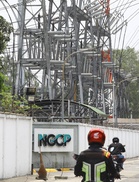
ON Friday, Sept. 18, 2026, the National Grid Corp. of the Philippines (NGCP) announced that the Visayas and Mindanao grids are again “operating normally.” With the full restoration of GN Power Kauswagan in Lanao del Norte and Therma South Inc. in Davao, Mindanao is again exporting 450 MW to the Visayas, putting an end to a four-month period of yellow and red alerts — that is, for as long as no other big plant bogs down.
From the middle of May until last week, rotational brownouts had become part of a new, unpleasant normal across the region. Cebu was no exception. The first few months, it was manageable. Areas would not experience brownouts every day and if brownouts occurred, they would last no longer than an hour. While occasionally there were errors in the schedules and locations of possible brownouts provided by the Visayan Electric Company (VECO) — which serves a large, mostly highly urbanized area of about 2.3 million residents — the inconvenience was tolerable.
On June 17, the Department of Energy “expressed optimism that power conditions in the Visayas Grid will significantly improve in the coming weeks, with the 150 [MW] Unit 3 of the Panay Energy Development Corp. expected to resume operations by 03 July 2026.” (DOE press release)
The relief was short-lived, however. On July 8, a day before the ashfall from Mount Kanlaon blanketed Cebu, we were back to red alerts and rotational brownouts.
By August, bad turned to worse. Rotational brownouts were no longer just a possibility but a reality. Every day. Some areas would even experience not just one but two rotational brownouts in a day, as the red alert could start around noon and extend until late evening. Brownout duration was extended from one to two hours. There was no escaping the brownouts. No one and nothing was spared, including traffic lights, water pumping stations, commercial establishments, etc. Life as we have come to know it was disrupted.
People took to social media to vent their anger, not only over the brownouts but also the significant power rate increases implemented during the same period. Cebu had already suffered the highest inflation rates in the country as a result of President Donald Trump’s war on Iran and the resulting fuel supply crisis. Now this. Consumers in northern Cebu — including areas devastated by last year’s 6.9 magnitude earthquake — saw electricity rates increase from P14.46/kWh in July to P16.43/kWh in August. The local distribution entity — Cebu II Electric Cooperative — buys about one-fifth of its supply from the Wholesale Electricity Spot Market. In August, the WESM price was P21.73/kWh, up from P13.05 in July. The Sept. 10 order of the Energy Regulatory Commission for a regional application of the secondary price cap (SPC) and to apply it retroactively was very welcome. The SPC is supposed to trigger automatically when “the rolling average price across the entire Philippine grid ... breaches a certain threshold.” However, this didn’t happen because the Luzon price pulled down the national average with a price drop from P7.30 to P4.80/kWh (IEMOP, Sept. 10). Luzon accounts for about 70 percent of total peak demand.
NGCP consistently provided updates on alerts — the schedule of yellow and red alerts, the available capacity and peak demand. There was information about the number of plants not in operation or operating on derated capacity. Major plants that were offline were also listed. However, these plants were referred to only by their acronyms: TVI 1, TV 2, PEDC 3, GNPK, TSI, PDPP3-C, BDPP4, etc. This kind of information is not very useful to ordinary members of the public who are unfamiliar with the acronyms of power plants and don’t have the time to look it up on the internet.
Also, simply listing the number of plants that have been on forced outage or derated capacity and since when, without any explanatory details, leads to more questions than answers. Some of us were already talking about conspiracies and grand designs. One had to read elsewhere that several biomass-fired plants have shut down operations due to a shortage of sugarcane bagasse. Sugarcane production is seasonal. The Visayas has 12 biomass plants — majority of which are bagasse-fired and located in Negros Island — with a total dependable capacity of 191.1 MW. It has also been reported that several of the region’s 12 small, mini and micro hydroelectric plants are affected by water shortage.
The rotational brownouts caused much inconvenience to the public and hurt Cebu’s economy, which was already among the local economies worst affected by the closure of the Strait of Hormuz. Ashfall and haze also caused additional disruptions to everyday life in July and September, respectively. But the show must go on, in Cebu as elsewhere in the Visayas. We have recovered from worse. Now we need the government, NGCP, and the private sector to work expeditiously — but without cutting corners — toward ensuring that such a power shortage situation will not happen again.