.png)

SHAH ALAM – Malaysia cannot build a peaceful future if its people continue choosing leaders who spend more time fighting among themselves than working together for the country, says Yayasan Warisan Ummah Ikhlas (WUIF) founder Datuk Hussamuddin Yaacub.
For Hussamuddin, the problem is not simply the politicians themselves, but the voters who ultimately decide who gets to lead the country.
“We are the voters and we are the ones who choose our leaders. It is our choice,” he said.
His concern comes as he looks towards 2057, when Malaysia will mark 100 years of independence, a future he believes should be shaped by today's Malaysians rather than left for the next generation to repair.
“We have to initiate something that can make people realise that this is not just about politics. It is our responsibility as citizens. We have to do something and we have to rise to protect this country,” he said.
Hussamuddin said Malaysians could not afford to spend the next 30 years trapped in arguments over race, religion and politics while the problems that matter to future generations remain unresolved.
“If we are constantly busy with politics, fighting among ourselves and becoming sensitive over small matters, we are not going anywhere,” he said.
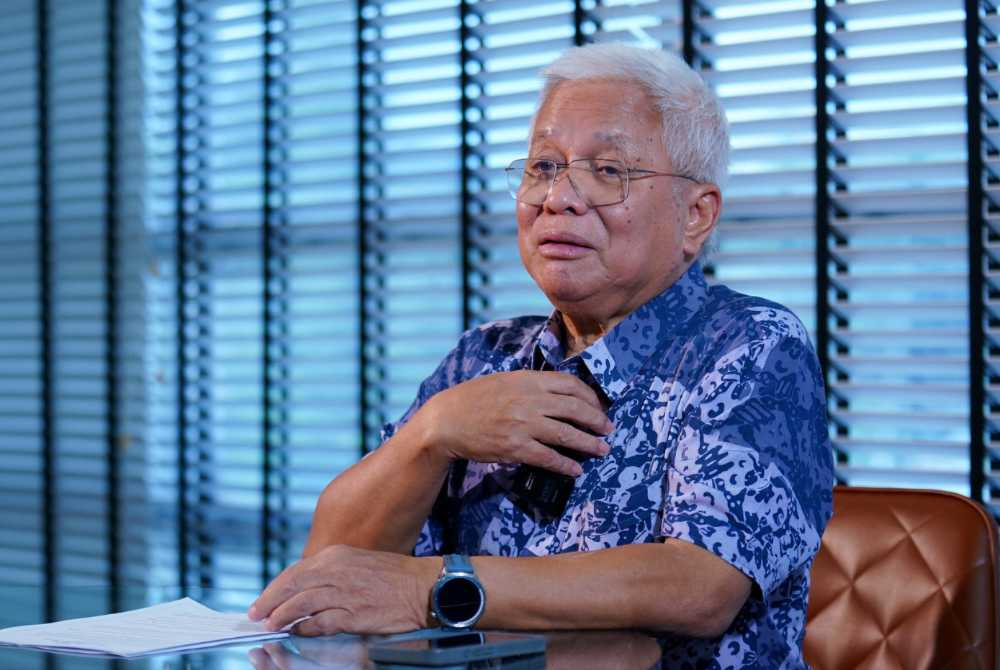
For him, political differences are inevitable in a democracy, but disagreement should not become a permanent state of hostility.
He said Malaysians should be able to disagree during elections and still come together afterwards to build the country.
“After an election, people should be able to work together. That is how we build a nation,” he said.
The need for a more mature political culture, he added, becomes even more important when viewed through the eyes of the next generation.
A child who is one today will be 30 in 2057, when Malaysia reaches its centenary.
By then, today's children could be the country's leaders, parents, teachers, doctors, entrepreneurs or public servants – inheriting not only the country's institutions and economy, but also the political culture created by the generation before them.
Hussamuddin said Malaysians therefore have to ask themselves what they are passing on.
“How can we be comfortable today if, 30 years from now, our children and grandchildren are still trying to resolve the conflicts we failed to settle?” he said.
That question forms part of the thinking behind #Malaysia100, an initiative calling on Malaysians to look beyond immediate political battles and think about the country they want to see when it reaches 100 years of independence.
Hussamuddin said the initiative should not belong to any political party, race or religion.
“#Malaysia100 does not belong to me. It must belong to all of us who love this country and care about the Malaysia our children and grandchildren will inherit,” he said.
He believes the responsibility for Malaysia's future also extends beyond voting.
It includes the way Malaysians speak to one another, respond to differences and deal with people who hold opposing views.
His concern is particularly visible on social media, where political disagreements can quickly turn into personal attacks.
“I want to see a country that is peaceful and calm, where people are not constantly angry with one another,” he said.
Hussamuddin said Malaysians needed to rebuild a culture where disagreement did not automatically mean hatred.
“If you look at social media today, people are constantly insulting and attacking each other, even people they do not know,” he said.
He believes the answer lies partly in rebuilding the country's values – particularly integrity, compassion and respect.
The same principles, he said, should also guide the country's institutions.
In his #Malaysia100 statement, Hussamuddin warned that corruption, abuse of trust and injustice could not simply be met with complaints.
“If our institutions are weak, we must strengthen them. If systems are broken, repair them now. Where injustice exists, we must not look away or pretend not to see it,” he said.
He warned that every problem ignored today could eventually become a burden carried by the next generation.
For Hussamuddin, that is why the conversation about Malaysia's centenary cannot wait until 2057.
The choices Malaysians make today, including the leaders they elect, the values they defend and the way they treat one another, will determine the country their children inherit.
“We may no longer be here in 2057. But the decisions we make today will still be there. The values we uphold today will still be there. And the Malaysia we choose to build today will be the Malaysia they inherit tomorrow,” he said.
The message, ultimately, is simple: Malaysians do not have to wait for the next generation to fix the country's problems.
The generation living through them now has 30 years to decide what it wants to leave behind.
And that choice begins with them.