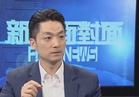
Taichung Mayor Lu Shiow-yen agreed to take over the faltering campaign of Taipei Mayor Chiang Wan-an only after a private, one-on-one meeting in which Chiang accepted her conditions, sources in Taiwan's main opposition Kuomintang (KMT) told Storm Media. The gamble could also revive her own hopes of running for president in 2028.
Chiang announced on October 19 that Lu would chair his campaign headquarters and that five KMT legislators from Taipei would run the final weeks of his reelection bid, covering grassroots organizing, messaging, and online operations. The reshuffle came as Democratic Progressive Party (DPP) challenger Puma Shen surged ahead in the Taipei mayoral race, the marquee contest of the 2026 Taiwan local elections on November 28.
A poll commissioned by the Xinmin Cross-Strait Research Association and released on October 20 put Shen at 50.3% and Chiang at 33.3%, a sharp reversal from September, when Chiang led 41.7% to 40.5%. Other surveys have shown a tighter race, but the numbers jolted a party that has long treated the capital as safe ground.
Lu has few political roots in Taipei, and party insiders concede she is unlikely to bring Chiang many new votes on her own. Still, the sight of the KMT's two best-known mayors joining forces at a critical moment has given a demoralized party a modest lift.
From Party Savior to Candidate in Need of Rescue
Three months ago, the roles were reversed. On July 25, Chiang rallied more than 100,000 KMT and Taiwan People's Party (TPP) supporters on Ketagalan Boulevard, the avenue in front of Taiwan's Presidential Office, to protest the government's handling of the toxic oil scandal, in which soybean oil contaminated with the carcinogen benzo(a)pyrene spread through Taiwan's food supply. He had also helped steer the two opposition parties into rejecting President Lai Ching-te's nominees to the Control Yuan, Taiwan's government watchdog. At the time, many in the KMT saw him as the party's leader in waiting.
Chiang was also the star the party leaned on to lift other candidates, campaigning as far south as Kaohsiung. A senior KMT figure told Storm Media that until mid-October, Lu's visibility on the campaign trail was no greater than that of Legislative Speaker Han Kuo-yu or KMT Chairwoman Cheng Li-wun, and well below Chiang's. Had Chiang kept his summer momentum, the figure said, he would have cruised to a second term, carried KMT New Taipei mayoral candidate Lee Szu-chuan across the line, and left Lu sidelined in the contest for the party's 2028 presidential nomination.
That changed in September, when the "Yang Wave," the name supporters give to the surge of enthusiasm around Shen after the last character of his Chinese name, swept through the capital. According to people familiar with the matter, Chiang's campaign was caught flat-footed. Veteran KMT strategists worried that a team with no experience fighting from behind could not withstand a wave they said was being amplified by the government, the DPP, sympathetic media, and online supporters.
When the party's "hope of the whole village," a Chinese internet phrase for a last great hope, suddenly stumbled, Lu's stock rose overnight. The reason is simple, the senior KMT figure said: Cheng's openly pro-China positions would make her a liability in Taipei, and Han, as head of the legislature, can do little more than appear on stage and offer praise. That left Lu as the only heavyweight able to give Chiang real help.
A Private Meeting Settled Lu's Doubts
Lu did not volunteer for the job, and she had serious reservations, party insiders said. Among those urging her to step in were several of the party's Taipei legislators and CK Yang, chairman of Electronic Commerce Universal Inc. and a businessman with wide connections across the KMT.
Her first concern was Taichung. As the city's sitting mayor, leading the fight against the Yang Wave in Taipei could invite the DPP to bring the battle to her own doorstep and hurt KMT Taichung mayoral candidate Chiang Chi-chen, also known as Johnny Chiang. Her second was whether Chiang Wan-an actually wanted her. She was not prepared to act simply because people worried about Taipei asked her to, a person familiar with her thinking said.
The two mayors then met alone for a frank talk. Lu came away convinced that Chiang needed someone to take charge of the overall campaign, and Chiang accepted without hesitation her condition that every KMT legislator from Taipei be brought into the campaign team. With his commitment confirmed in person, Lu decided to go all in.
She did so knowing it could make her a DPP target and expose Chiang Chi-chen to risk, insiders said. But in her view, losing Taipei would be a catastrophe for the KMT, one that would push the party's 2028 presidential and legislative campaigns into "garbage time," a sports term for the dead minutes of a game already decided, before they had even begun.
Skipping the Party Chair Race Cost Lu Dearly
For Lu, the Taipei assignment is also a chance to repair a decision her own allies now regret. In 2025, she was a leading figure in the KMT's successful fight against a mass recall campaign targeting opposition lawmakers, a victory that put her at the top of the party's 2028 shortlist. She then declined to run for party chair.
A Lu ally said her reasoning at the time was that, having seen the party through its gravest crisis, she could return to Taichung and trust a democratically chosen new chair to lead. Governing the city well for the rest of her term, and avoiding accusations that she was eyeing higher office while neglecting her job, would serve her better on the road to a presidential run.
Instead, Cheng, known for her pro-Beijing stance, won the chairmanship. Over the past year, KMT support has slipped, the party has split into pro-Cheng and anti-Cheng camps, and many members blame Lu for the turmoil and doubt she can beat Lai in 2028.
The ally acknowledged that skipping the chair race has proven to be a "misjudgment" for which both Lu and the party paid a heavy political price. Chiang's call for help, the ally said, gives her a rare chance to make amends, and if she hesitates and backs away a second time, she will have no comeback and no political future.
Why Lu Sees Little Downside in Taipei
A veteran KMT party official said Lu has little to lose. Unless her role in Taipei costs the KMT Taichung, a race the party is favored to win, she comes out ahead either way. An AI voter simulation released on October 21 by TPOC put Chiang Chi-chen ahead of DPP rival Ho Hsin-chun by 46.2% to 35.5%.
If Chiang Wan-an still loses with Lu at the helm, and the KMT also loses New Taipei and Keelung, the official said the party will not blame the person who came to the rescue. Within the KMT's campaign machinery and among many supporters, the leading scapegoat would be Jaw Shaw-kong, a party elder and former chairman of the Broadcasting Corporation of China, whom critics accuse of helping the Yang Wave reach voters beyond the DPP base.
Posts listing Jaw's alleged offenses have recently spread across pro-KMT online communities, which some see as the party establishment preparing to pin a possible Taipei defeat on him.
Ultimately, however, responsibility rests with Cheng as party chair. In the 2022 local elections, then-chair Eric Chu led the KMT to victory in four of Taiwan's six special municipalities. If the party now loses New Taipei, or even Taipei, Cheng would face intense pressure to step down. In that scenario, with Chiang Wan-an recovering from defeat and Lu having handed Taichung to Chiang Chi-chen, the official said Lu would be the party's only real choice to lead a rescue.
A Chiang Win Would Clear Lu's Path to 2028
If Chiang Wan-an defeats Shen with Lu's help, and the KMT also holds New Taipei and Keelung, the veteran official said KMT voters would credit Lu with turning the tide, restoring her to peak standing. Cheng might survive a narrow overall loss and keep her post.
The 2028 field would also narrow. Chiang has publicly pledged to serve a full four-year term if reelected, ruling out a presidential bid. Han, as sitting speaker, would lack a legitimate reason to run unless he gave up the post, and Cheng lacks the political appeal to win. That, the official said, would make Lu the party's consensus nominee.
A former senior KMT official added that whether the party loses badly or narrowly in 2026, and whether Cheng stays or goes, the presidential nomination would make Lu the undisputed leader of the opposition camp. Her good relations with the TPP make a joint KMT and TPP ticket highly likely, the former official said, and even a reluctant Cheng would have to hand campaign control to the nominee and defer to Lu on the party's at-large legislative list.
For now, the former official said, Lu's priority is to prevent a KMT collapse in the 2026 Taiwan local elections, above all in the party's northern heartland of Taipei, New Taipei, Keelung, and Taoyuan. Otherwise she would inherit a broken, demoralized party, and even as chair and nominee she would stand no chance against Lai's bid for a second term.
You've read it. Now join the conversation — follow us on X, Facebook and IG. Editor: Penny Wang