.png)
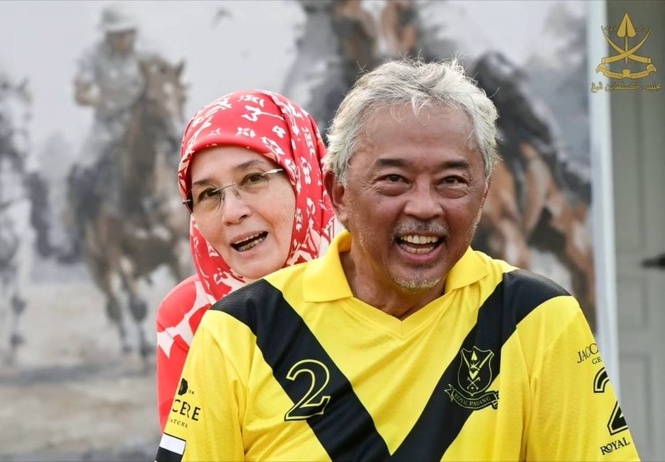
A CENTENARY is supposed to make one think about history.
But yesterday, as I watched my husband play polo with our youngest son on the opposing team, I found myself thinking about something else entirely. I realised I have been watching this man play polo for more than 50 years.
Winning. Losing. Falling. Galloping. Arguing over a foul. Laughing afterwards. Making friends all over the world. And occasionally behaving as though age is merely a rumour.
For my husband, the centenary of polo in Pahang is not simply about marking 100 years of a sport. It is about a legacy left by his grandfather, Sultan Abu Bakar and celebrating that legacy with love, pride and very fond memories.
For me, it is something even more personal.
Polo is woven into our family story. I grew up in a polo-playing family. My grandfather, Sultan Ismail of Johor, loved horses and loved polo, so naturally my father had to play too.
There was only one complication. My father was left-handed. Polo is played right-handed. Quite rightly too. Eight men galloping at great speed while swinging mallets in whichever direction they please would not end well. So my father adapted.
And I grew up around horses, polo grounds, players, tournaments, parties and all the wonderful characters who came with them.
My husband started playing polo in 1973 and continued when he went to England for his studies. Lord Patrick Beresford had everything arranged and from then on, polo became a major part of his life. And, eventually, mine.
The funny thing is that polo had already played a part in Pahang’s royal love stories long before us. The story goes back to 1926, when polo became connected with his grandfather’s courtship of a Perak princess. Then, many years later, polo interfered in my own life too.
I met my husband on a polo field in 1972. In 1973, I watched my boyfriend play in his first tournament. There I was, cheering loudly for Pahang and hoping they would win while my own brother was playing for Johor. I am sure he found me extremely annoying and irritating.
But what could I do? Love knows no state boundary. Polo gave me the perfect excuse to see my boyfriend, watch him play, support him and shout for Pahang without appearing too obvious. At least, I thought I was not obvious. Then I married him. After marriage, polo took us everywhere.
Argentina. The United States. England, where he played in the medium and high-goal polo and competed in tournaments including the Queen’s Cup.
There are some polo memories that sound almost unbelievable now.
In the 1970s, the then Prince of Wales, now King Charles III, played for Royal Pahang with my husband, Howard Hipwood and Charles Beresford in the Royal Windsor Cup, then a 15-goal tournament.
There was also the great Oxford-Cambridge rivalry. My husband played for Oxford, while the Prince of Wales played for Cambridge.
Oxford won. Naturally, my husband remembers that particular result rather very clearly.
That was the world polo opened up to us. Polo has a way of producing these wonderful memories: one day you are playing with old friends, another day against a prince, and many years later you are sitting together retelling the story as though it happened yesterday.
Polo also brought friendships that lasted far beyond the field. My husband played many charity matches with the late Gabriel Donoso, a dear friend who later died tragically in a polo accident in Argentina. That loss was a painful reminder that behind the beauty and excitement of polo is always the danger of the game.
Through polo, friendships stretched across the region too, Harald Link in Thailand; Inigo Zobel, Greggy Araneta and Louis Castillejo at Manila Polo Club; and, of course, the Sultan of Brunei, Perdana Wazir and Prince Jefri. These were not merely names on opposing team sheets. They became part of the wider polo family, people met through horses, competition and tournaments and remembered long after the final whistle.
We travelled to Guards, Cowdray, Cirencester, Ascot, Billingbear and Berkshire. Then there was Sotogrande, Deauville, Brunei, Singapore, Thailand, the Philippines, Dubai, Jordan and polo grounds across Malaysia.
Wherever polo was played, somehow we seemed to find ourselves there. And everywhere we went, the same thing happened.
You arrived knowing a few people. You left knowing many more.
That is one of the great things about polo. You may begin as opponents. You often end as friends.
In the early days I remember, the active polo teams around us were mainly Royal Pahang, Royal Johor, Singapore and Royal Selangor. Polo was never only my husband’s game. His brother, Tengku Muda, was part of that world too and over the years the polo field became a place where brothers, friends and eventually sons all shared the same passion. Royal Perak had stopped playing and later the Malaysian Army became very active in the sport.
I grew up watching these teams compete. I went to the polo parties. And yes, I danced with my boyfriend from Pahang. Very serious sporting commitments.
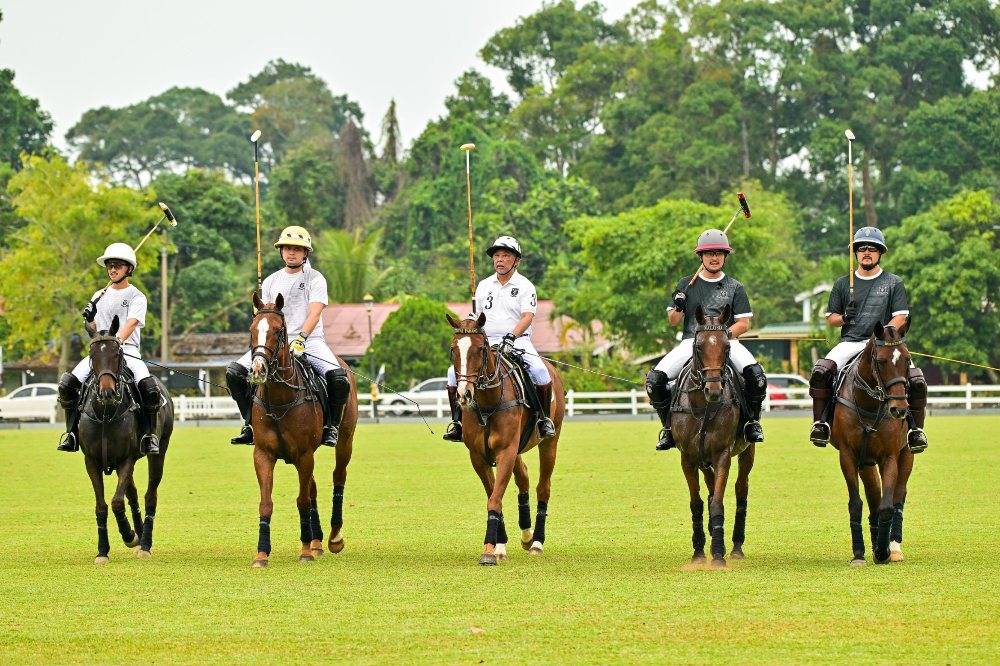
Today, polo has expanded far beyond those early circles. Many more people play. Many more families are involved.
The game has become much more widely enjoyed and with it has grown a wonderful polo family. That sense of family is what I see most clearly now.
My husband once threatened to give up polo for golf. Thankfully, that phase passed.
Today, one of his greatest joys is seeing all four of his sons play polo. He has played in the same team with them. He has competed against them. He advises them. He reads the game and teaches them. He talks tactics.
But I must not forget our daughter, Ilisha. She too became part of the family polo story as the first Pahang princess to play polo.
So perhaps I have been slightly unfair when I boast that I produced a complete Royal Pahang polo team of four sons. I actually did better than that. I produced a reserve as well.
And she is a princess.
The love of polo had crossed another generation, and this time, not only from father to sons, but from father to daughter too.
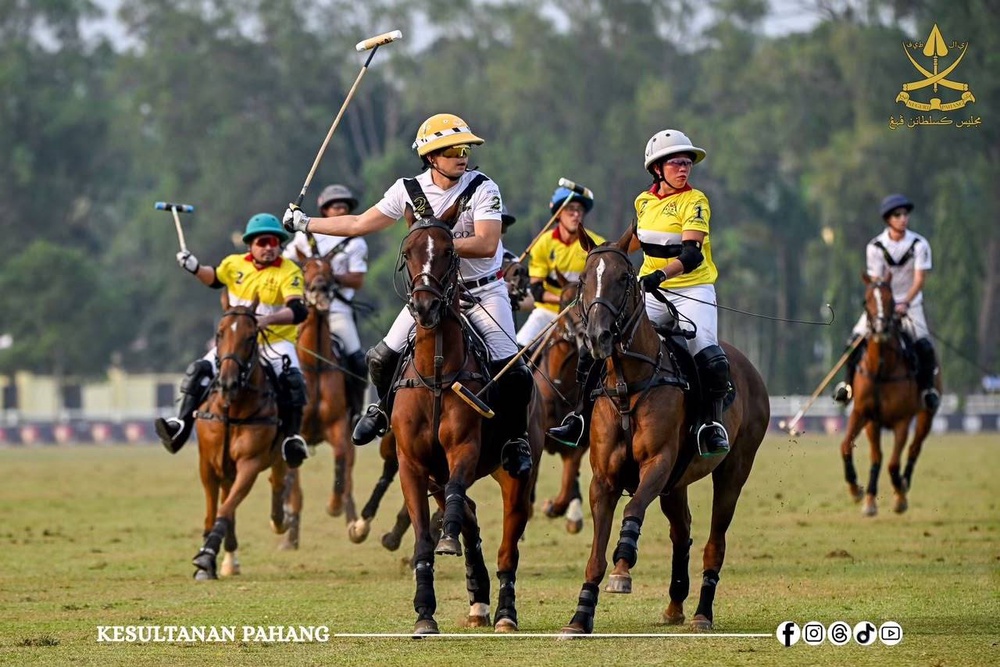
And sometimes I simply watch the father in him. He will turn to me, absolutely beaming and tell me how beautifully one of our sons rides, how naturally he sits on the horse, how balanced he looks.
And then comes the comparison. “Better than Howard Hipwood.”
Now, anyone who watched polo in those days will understand what that means. Howard Hipwood was one of those players we all admired simply for the way he sat on a horse. To watch him ride across a polo field was something in itself.
So when my husband, who has spent a lifetime watching great players, tells me proudly that his own son sits a horse even more beautifully than Howard Hipwood did, I know that is not just polo talk. That is a father’s heart speaking.
And I love watching another thing too. After the match, father and sons will sit together chatting away like old friends.
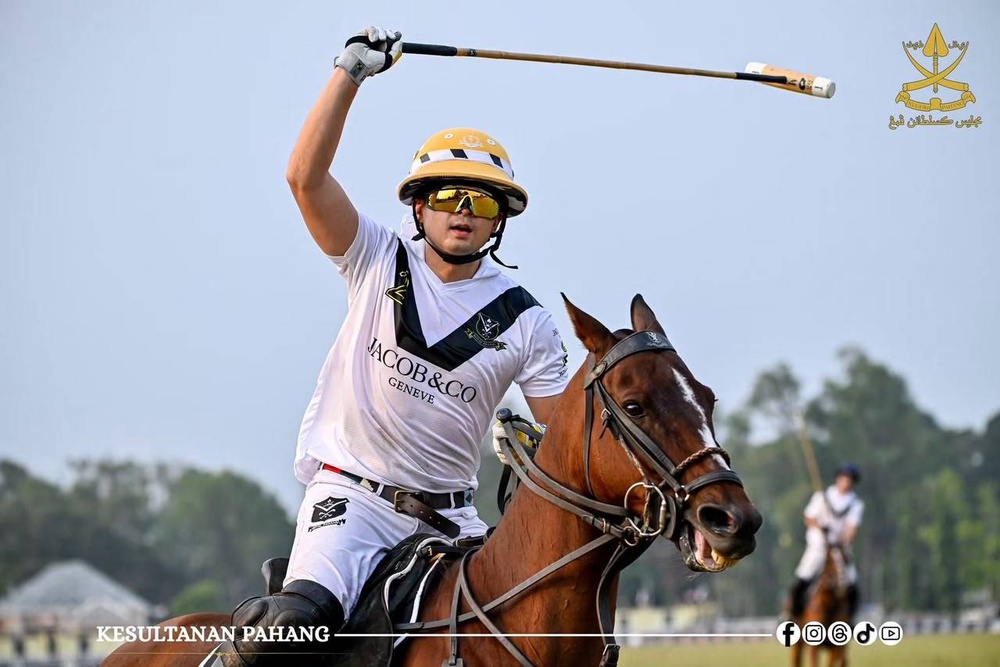
Polo. Ponies. Which horse played well. Which one did not. Who should have passed. Who should have gone forward. Why somebody missed a shot. Where the game changed. Which tactic worked. Which one definitely did not. It can go on forever.
Sometimes I look at them and think: they are not simply father and sons. They are teammates. Opponents. Friends. Men who genuinely enjoy one another’s company. And polo has given them a language of their own.
For a mother, that is a beautiful thing to watch. And of course, behind all this pride and laughter is the fear that every wife and every mother knows.
Polo is a beautiful game, but it is also a fast and dangerous one. A horse is moving at speed. The players are chasing a small ball across the field. Mallets are swinging. Horses can collide. Riders can fall.
Over the years I have seen broken bones, terrible falls and serious injuries. So while the men are thinking about the next goal, the next pass and the next ride-off, the wife and the mother are thinking about something much simpler:
Please do not fall. Please do not get hurt. Please come off that field safely.
When it was my husband playing, I worried about him.
Now I have four sons playing too, so naturally my worries have multiplied.
Five men on horses. Five reasons to pray.
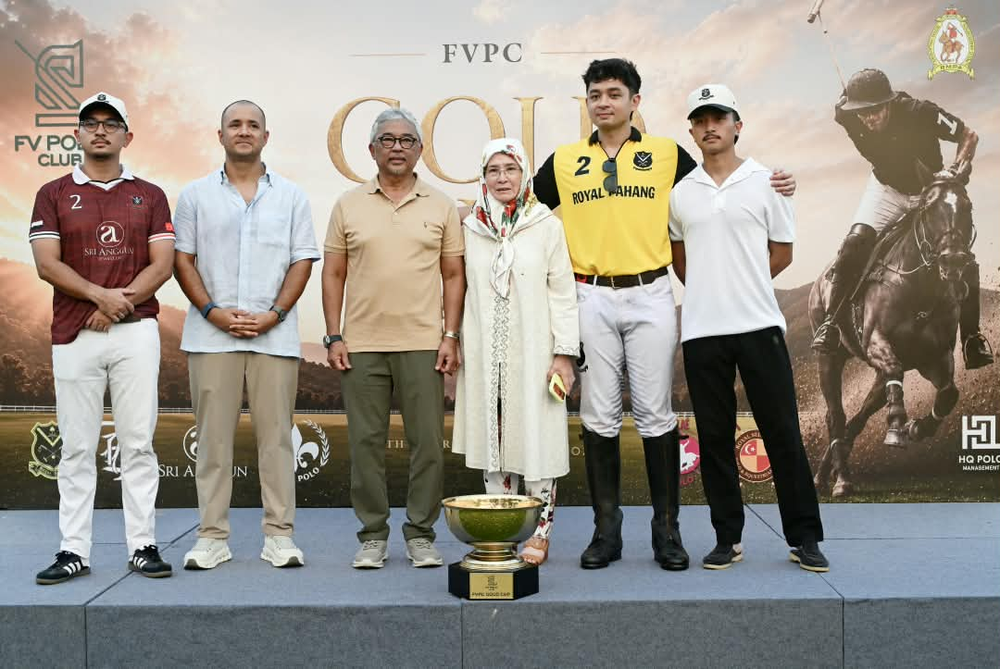
Sometimes I think that is the real role of the polo wife and mother. We stand at the side of the field pretending to look calm while silently watching every gallop, every collision and every fall.
And when they get up quickly, we breathe again. Perhaps that is why I shout so much from the sidelines. Part encouragement. Part excitement. Part fear. And probably a little bit of warning:
“Slow down!”
Of course, nobody listens. Especially my husband.
Then, of course, every now and then my husband forgets entirely that his sons are thirty or forty years younger than he is. That is when trouble begins.
Yesterday, for example, he was playing against our youngest son.
The moment he saw the younger players galloping hard, something happened. Suddenly he was 25 again.
Off he went. Galloping. Chasing. Competing. Refusing to be left behind. When he won, I shouted:
“Well done, old man!”
He was very pleased with himself. A few hours later, the consequences arrived. The soreness started. A ligament objected.
The body lodged an official complaint. And then, of course, he suffered in silence.
This is what I call the true love of polo. Sometimes I think he misses his polo ponies more than he misses me.
His retirement attempts have not been helped by other people.
Once, when we met the late Queen Elizabeth II, she asked him whether he was still playing polo. He said no, because of his knees.
Her Majesty, who rode horses well into old age, replied very wittily that he did not need his knees, she was still riding.
So that excuse did not work.
Then the Sultan of Brunei heard that my husband had retired from polo. His response was essentially:
“I am older than you and I am still playing.”
Retirement finished. Back on the horse. But there is another reason polo means so much to him.
In 1983, my husband won a gold medal for Malaysia in polo at the SEA Games in Singapore. To achieve that as a player was already something to remember for a lifetime. Then, more than three decades later, to see his own son win gold in the 2025 SEA Games in Thailand, must have felt almost unreal.
From father to son. From one generation to the next. The same game. The same country. The same pride.
For him, I think, that must have been a dream come true.
And for me? Job done. I produced a team.
Not one son. Not two. Not three. All four. A complete Royal Pahang polo team.
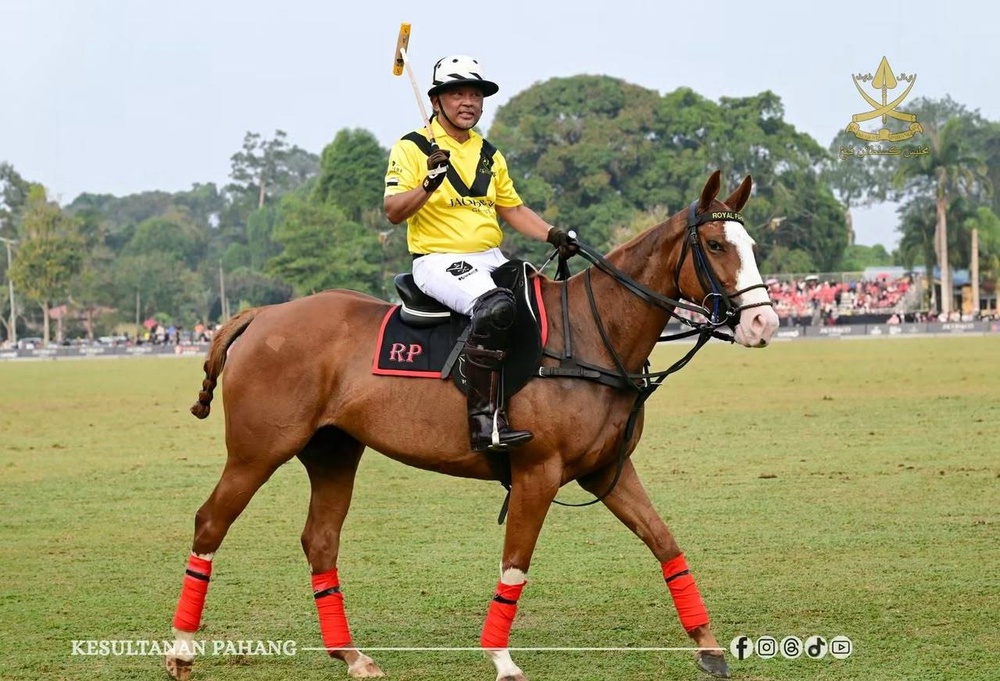
"Mama made it."
When I see my husband beaming with pride as he watches his sons play, that is enough for me. The wins are wonderful. The medals are wonderful. The trophies are wonderful.
But a father’s pride in seeing his sons love the game he has loved all his life, and then sitting with them afterwards, talking polo as equals and as friends: that is something else.
And sometimes I think of our two grandfathers, who prayed and hoped for this union. I wonder what they would say now. Their great-grandsons are all playing polo.
Not one. All four.
I think they would be rather pleased. Perhaps they knew something we did not. Perhaps, somewhere, they are smiling and saying:
“Good. The plan worked.”
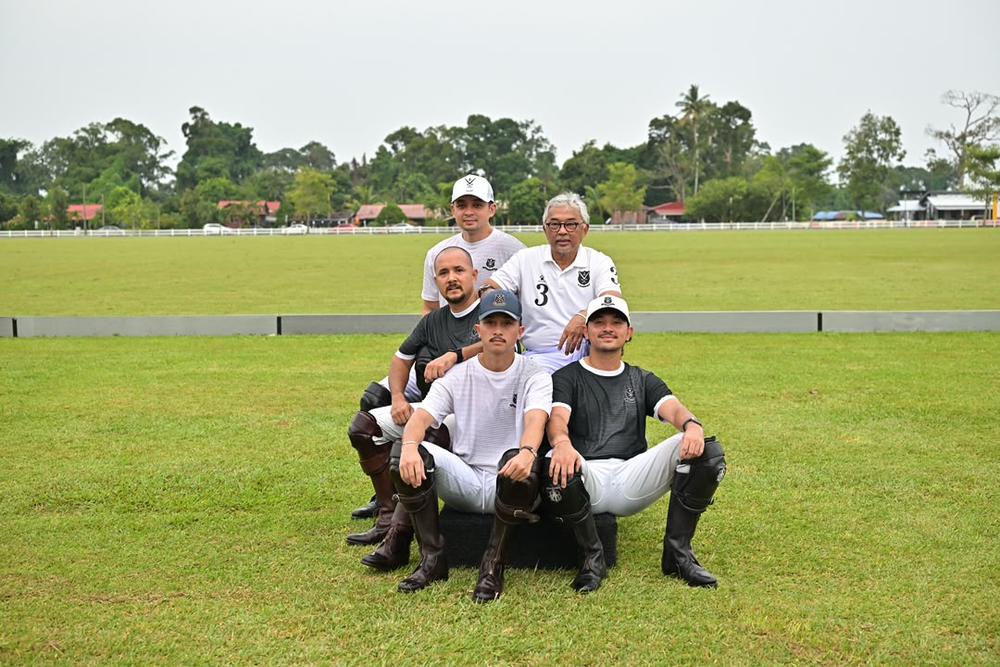
And I suppose I should take a little credit too. After all, my husband contributed the polo genes. I contributed the players. A very successful collaboration.
For me, polo also brings back people and memories from long ago.
I think of Pak Cik Hatta Ali and Uncle Michael Lee, recruited to play polo by my father, and I remember them carrying me around on their shoulders at the polo field in the 1960s.
Recently, I said to them:
“Who would have thought then that one day a polo trophy would be named after me—the Tengku Ampuan of Pahang’s Cup?”
Life can be very funny. I have a confession. I am frightened of horses. After more than 50 years around polo, after travelling the world for polo, marrying a polo player and producing four more of them, I remain perfectly happy standing beside the field.
Somebody has to cheer. Somebody has to worry. And somebody has to pray.
But this centenary is not about showing off.
It is about remembering. Remembering the people who kept the sport alive.
Remembering the horses, the grooms, the players, the patrons, the families and the friends. Remembering the Jumabhoys, the friendships built on polo grounds and carried through life.
Most of all, it is about sportsmanship.
You play hard. You compete. You want to win. But sometimes you lose. And that is all right.
You shake hands. You congratulate the other side. You sit together afterwards. You laugh. You talk about the game. You meet again at the next tournament. You remain friends.
That, to me, is the real spirit of sport.
The discipline to compete without bitterness. The grace to win without arrogance. The dignity to lose without resentment. To fight for every ball and still respect the person riding beside you.
That is what I have seen in my husband. And now I see it in my sons.
For me, the whole story has come full circle.
I watched a boyfriend playing polo more than 50 years ago. I cheered for him. I married him. I travelled the world with him because of the game.
We had four sons. All four became polo players. Now I watch their father play with them, compete against them, admire them, advise them and occasionally try to outrun them. And more precious still, I watch them sit together afterwards as friends.
That, perhaps, is what I am proudest of.
And one day, InshaAllah, perhaps I shall sit at the same polo field and watch our grandchildren gallop past. Then I will know that the story continues.
For 100 years, polo has been played in Pahang. May it continue for another hundred.
Play to win. Learn how to lose. Respect your opponent. Make friends. Enjoy the horse. Enjoy the game. Enjoy the company. And above all, remember that victory lasts for a day, but friendship can last a lifetime.
That is what polo has given our family.
It gave me a boyfriend. It gave me a husband. It gave him four sons to play with. It gave those sons a game they now share with their father.
And perhaps, one day, it will give us another generation standing,or galloping, on the same field.
Love brought us together. Polo gave us somewhere to meet. And somehow, after more than 50 years, the love of polo has helped keep us together too.
Mama made the team.
Now I am waiting for the grandchildren.
Tunku Azizah Aminah Maimunah Iskandariah holds a master’s degree from the International Institute of Islamic Thought and Civilisation (ISTAC), International Islamic University Malaysia.