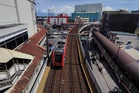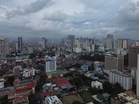
AMID the housing congestion, traffic gridlock, urban blight and higher cost of living, there is a growing exodus of Metro Manila residents to nearby provinces. Metro Manila has more than 14 million inhabitants occupying just about 636 square kilometers of land area. As the nation’s capital, Metro Manila is home to major commercial, financial, cultural, education and political institutions. The influx of Filipinos to Metro Manila became a growing phenomenon after World War II and continued as the metropolis became the country’s principal economic center. But the risks of disasters, such as earthquakes, floods, or fires, are ever present in this crowded metropolis, where many inhabitants are cramped inside high-rise buildings, informal settlements, and old residential areas. Still, residents continue to cope with and survive these challenges because of Metro Manila’s built-in economic advantages.
But with the overall quality of life in Metro Manila becoming more difficult to improve, some residents have chosen to move to suburban areas in provinces bordering the metropolis, such as Cavite, Rizal, Bulacan and Laguna. This led to the phenomenon of reverse migration, with Filipinos veering from highly urbanized cities toward their more livable, peaceful and relaxed outskirts.
It was our best decision as a family to relocate to San Mateo in Rizal. It is an interesting first-class municipality, since it was once a relatively quiet town during my college years, with few inhabitants and a limited number of businesses. Now, it sits at the boundary of Metro Manila and at the rapidly urbanizing eastern part of Rizal. With 55 sq km of land area, San Mateo is a town with expanding businesses, residential areas and exclusive subdivisions on its hillsides, offering a breathtaking view of the National Capital Region. With roughly 300,000 inhabitants, San Mateo offers fresh air, natural habitats, pristine rivers and wooded hills.
San Mateo is also becoming a destination for tourism and recreation, with its camping sites, resorts, biking areas, and heritage and religious sites. The completion of the C-6 Road provides a critical artery linking the municipality to the broader transport network of nearby Rodriguez town — formerly Montalban — and neighboring provinces. Its proximity to Metro Manila makes it an important catchment area for people seeking housing outside the metropolis while remaining within commuting distance to their jobs and life’s basic amenities.
Yet, similar to many fast-growing municipalities, San Mateo continues to struggle with land-use pressures and mass migration. My recent conversation with San Mateo Mayor Bartolome “Omie” Rivera Jr. revealed both promises and difficulties for the municipality. With its transition from a rural town to a densely populated urban sprawl, San Mateo faces growing pains, such as inadequate road infrastructure, solid waste management, housing shortages, watershed damage due to quarrying, and rising demand for public transport and utilities.
Mayor Rivera is conscious that despite the opportunities San Mateo has as the eastern gateway to Metro Manila, these must not sacrifice ecological balance and sustainable development. At the center of its development are the gracious people of San Mateo, whom the mayor values above all else. The intent is for San Mateo not to lose its character and charm as one of Rizal’s old municipalities while it continues to grow.
Similarly, San Mateo must implement a comprehensive urban development plan that classifies areas as residential, commercial, industrial and protective zones. The possible conversion of the municipality into a component city is a matter that requires broader consultation and careful preparation to avoid unnecessary disruptions. The influx of new migrants would increase the town’s human talents, but it can also generate friction between the oldtimers and newcomers. In addition, growth and development come with the social ills of urbanization, such as illegal narcotics, uncollected garbage, unemployment and poverty. San Mateo must ensure that the transition is neither too fast nor too slow, and this can be realized if both old and new residents work together to help the municipality progress.
The demographics in Metro Manila and nearby provinces are profoundly changing. Rural and semi-urban areas around the metropolis are becoming more urbanized as people seek wider spaces for homes and businesses. This poses both risks and benefits to towns like San Mateo. As a crucial gateway between Metro Manila and Rizal, San Mateo could be the driver for economic growth and sustainable development across the eastern side of the Luzon corridor. Through Mayor Rivera’s dynamic leadership and its people’s commitment, San Mateo could be a prime example of where good governance intersects with public safety, environment protection and local economic development.
Hopefully, our family’s decision to migrate to San Mateo is calculated in a way that its future growth would not contravene with what made us want to move there in the first place and call it our new home.