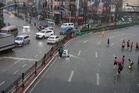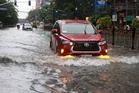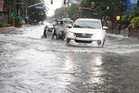
METRO Manila was again submerged in floodwaters this past week. During heavy monsoon rains (around Aug. 17–19, 2026), several key roads in the metropolis experienced severe flooding and were rendered completely impassable to all or light vehicles, notably España Boulevard in Manila, Bonifacio Cloverleaf in Quezon City and segments of Dr. A. Santos Avenue in Parañaque. Television broadcasts and news reports showed the now-familiar scene: commuters wading knee-deep, sometimes deeper, through brown floodwater, many of them still managing a smile for the camera (GMA News Online, Aug. 19, 2026).
There is something unsettling in those smiles — not because the people are wrong to endure with grace, but because it captures how normalized the abnormal has become. Behind those floodwaters is a paper trail of billions of pesos in taxes collected for flood control projects that, by every indication so far, failed to control anything except, perhaps, the flow of public funds into someone else’s pockets.
The same flooding since 1857
Historian Ambeth Ocampo, in his Aug. 19, 2026 Philippine Daily Inquirer (PDI) column, recalled an 1857 dispatch and illustration from the Illustrated London News depicting Manila residents wading through a flooded street near San Antón, taking the deluge in stride even as their nipa homes, built elevated on stilts, kept them dry. Driving to class through last Monday’s flood, Ocampo found the parallel to 1857 hard to shake, concluding that “not much has changed in our response to rain and floods since 1857.” He closed by asking when Filipinos should set aside their storied resilience and patience in favor of anger and a demand for something better.
But something has changed, and that is precisely what should trouble us. The government has poured billions of pesos into flood control infrastructure through decades, funds justified, appropriated and disbursed specifically to prevent the scenes we saw again this month. Last year’s flood control scandal laid bare a system in which contracts were awarded, projects certified as complete and payments released — for infrastructure that either didn’t exist, didn’t work, or didn’t last (PDI, Jan. 6, 2026). The evidence of the flood control scam are piling up as the rain continues — a river wall in Marilao, Bulacan, collapsed on Aug. 10, barely two months after it was finished, undone by monsoon rains and a high tide it was built to withstand (Philstar.com, Aug. 16, 2026).
So, what caused the flooding in 1857 and the flooding in 2026 might be the same, but the backdrop are really different. In 1857, there was no expectation that engineering had solved the problem, because the money and the mandate to solve it did not yet exist. In 2026, we know precisely how much was spent, who signed off on it, and how much of it may never have reached the ground it was meant to protect.
History repeats itself
It is said that history repeats itself — and it will in the future, unless we all cry for accountability and not apathy. The public outrage that flared when the flood control scandal first broke last year has largely dissipated. Officials named in Senate hearings continue in public life. Contractors implicated in substandard or “ghost” projects continue to bid. The floodwaters recede, the news cycle moves on, and by the next dry season the anomalies are, for most of the public, already forgotten.
Where, then, is the collective rage of the people? Corruption does not require universal complicity to survive — it only requires enough silence, enough forgetting, enough willingness to wade past it with a smile and move on to the next inconvenience.
It has often been said, in words commonly attributed to the statesman Edmund Burke (though scholars note there is no confirmed record of him having written or said them in that exact form) — that the only thing necessary for evil to triumph is for good people (men in the original) to do nothing. Whoever first said it, the warning still holds: Corruption thrives not because it is hidden, but because it is tolerated. Until the public outrage matches the scale of the looting and theft, the floods will keep rising, retaining walls will keep collapsing and next year we will be back in the same scenario, wading through the same flood and asking the same questions.
allinsight.manilatimes@gmail.com
Facebook: www.facebook.com/All.Insight.Manila.Times
Viber: (0915)4201085