Bottom Left: Harland and Wolff Owner, Lord Pirrie
Top Right: Chief Designer of Titanic, Thomas Andrews
Bottom Right: Owner of White Star Line, J.P. Morgan. Source: Shorthand Social
The allure of the Titanic continues to fascinate scientists, explorers, industry titans and business mavericks to explore the Titanic wreckage
Recognizing the allure of the Titanic, OceanGate started to offer Expeditions to the Titanic wreck starting 2021 with its last being the ill-fated journey on 18 June 2023.
White Star Line’s ambition to rival competitor with more reliable and luxurious ships via Olympic, Titanic and Britannic
In the early 1900s, the transatlantic passenger trade was highly profitable and competitive, with ship lines vying to transport wealthy travelers and immigrants. Two of the chief lines were White Star and Cunard. By the summer of 1907, Cunard seemed poised to increase its share of the market with the debut of two new ships, the Lusitania and the Mauretania, which were scheduled to enter service later that year. The two passenger liners were garnering much attention for their expected speed; both would later set speed records crossing the Atlantic Ocean. Looking to answer his rival, White Star chairman J. Bruce Ismay reportedly met with William Pirrie, who controlled the Belfast shipbuilding firm Harland and Wolff, which constructed most of White Star’s vessels. The two men devised a plan to build a class of large liners that would be known for their comfort instead of their speed. It was eventually decided that three vessels would be constructed: the Olympic, the Titanic, and the Britannic.
White Star Line had pursued to build larger, more reliable and more luxurious ships than their rivals Cunard, whilst not attempting to compete on speed and this resulted in the construction of Olympic, Titanic and Britannic (Fig 2 and Fig 3) to compete with the ocean liners Lusitania renowned for her luxury and Mauretania which held the Blue Riband, the unofficial record for fasting crossing the Atlantic owned by Cunard. (https://titanicfacts.net/building-the-titanic/)
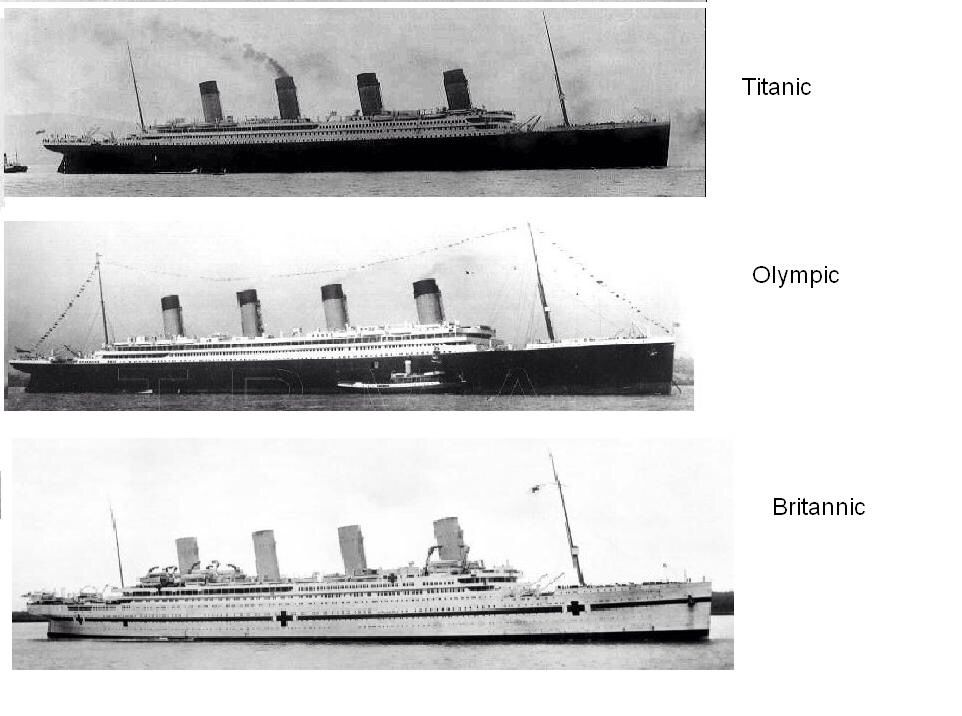
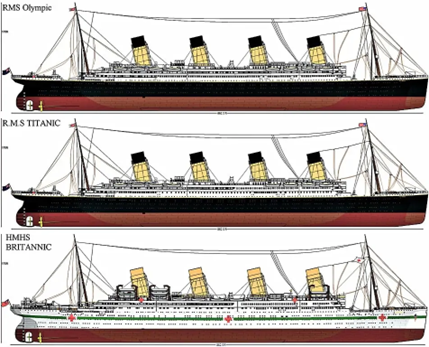
Titanic was purpose-built by White Star Shipping (Fig 4) to be the pride of its fleet of commercial shipping liners to meet the demand of travel from Europe to the United States. Many ships already offered passage across the Atlantic regularly. Still, White Star was determined to capture the hearts, minds, and wallets of travellers by building the grandest liner of them all.
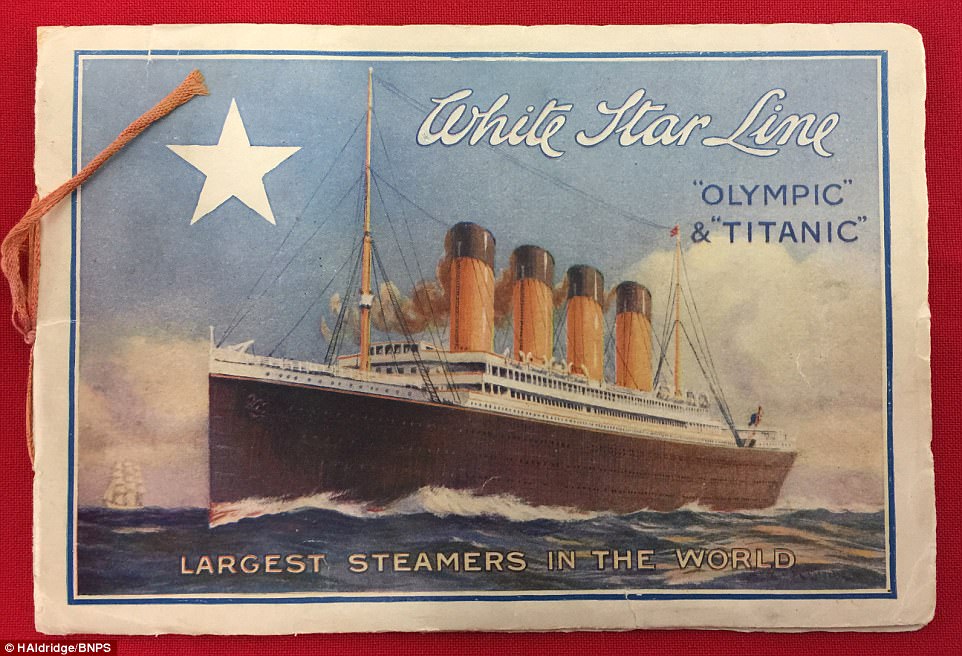
Concept for Olympic-class Ocean liners decided over dinner in 1907
It is generally accepted the concept of for the Olympic-class liners- namely, the Olympic and the Titanic (the third sister Britannic following later)- was decided over dinner in Downshire House, the London residence of the Harland & Wolff Chairman, Lord Pirrie, in the autumn of 1907. Present at dinner was the White Star Managing Director, J. Bruce Ismay.
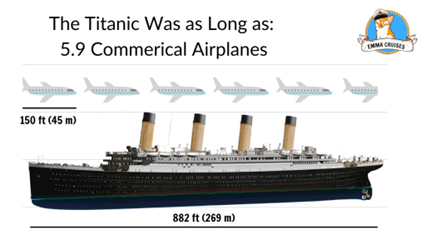
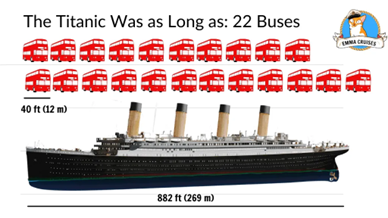
The Titanic, Olympic and Britannic were almost identical in size with a length of 882ft (269m) and a width of 92ft (28m). Britannic was slightly larger than the Titanic in terms of gross tonnage. Titanic had a gross tonnage of 46,000 and Britannic had a gross tonnage of 48,000.
The Olympic-class liners represented a 50 precent increase in size over the Cunard vessels Lusitania and Mauretania, the largest and fastest liners in the world at that time. They were planned and designed by the shipyard’s principle architect, Alexander Carlisle and intended to be the most luxurious vessels in the world. Registered in Liverpool, built by Harland & Wolff, Titanic and Olympic shared design plans and were near identical ships. The order to begin construction was given on 17 September 1908. The cost for both ships was £3 million for the pair (£322 million in today's money) Harland & Wolff’s usual arrangement with the White Star Line for ship construction was by their usual terms “Cost plus 3 per cent.”
Construction of the RMS Olympic and sister ship,Titanic was announced in 1908, with Olympic completed first.
Construction of Titanic commenced on 31 March 1909 and completed 31 March 1912.
On March 31, 1909, some three months after work began on the Olympic, the keel was laid for the Titanic. The two ships were built side by side in a specially constructed gantry that could accommodate their unprecedented size. The sister ships were largely designed by Thomas Andrews of Harland and Wolff. In addition to ornate decorations, the Titanic featured an immense first-class dining saloon, four elevators, and a swimming pool. Its second-class accommodations were comparable to first-class features on other ships, and its third-class offerings, although modest, were still noted for their relative comfort.
The construction of the Titanic which commenced on 31 March 1909 in Belfast, Ireland was completed in 31 March 2012, just over a week before it set sail on 10 April 1912.
It was launched on 31st May 1911 with spectators and journalists travelled from as far as America to see the spectacle.
After the Olympic’s maiden voyage in June 1911, slight changes were made to the Titanic’s design. In early April 1912 the Titanic underwent its sea trials, after which the ship was declared seaworthy.
Size of the Titanic
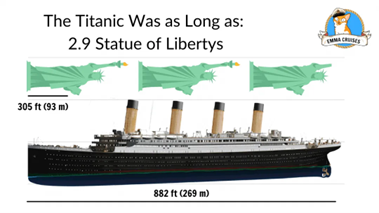
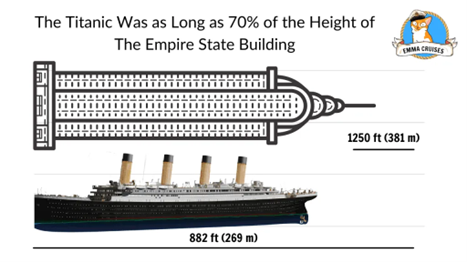
As it prepared to embark on its maiden voyage, the Titanic was one of the largest and most opulent ships in the world. It had a gross registered tonnage (i.e., carrying capacity) of 46,328 tons, and when fully laden the ship displaced (weighed) more than 52,000 tons. The Titanic was approximately 882.5 feet (269 metres) long and about 92.5 feet (28.2 metres) wide at its widest point.
The length of the Titanic is equivalent to 2.9 Statue of Libertys (Fig 5), 5.9 commercial airplanes.( Fig 6) and 22 London double decker buses. ( Fig 7)
If the Titanic was stood on it’s side, it would reach 70% of the height of the Empire State building (not including the spire). (Fig 8)
Titanic thought to be ‘practically unsinkable’
As to safety elements, the Titanic had 16 compartments that included doors which could be closed from the bridge, so that water could be contained in the event the hull was breached. Although they were presumed to be watertight, the bulkheads were not capped at the top. The ship’s builders claimed that four of the compartments could be flooded without endangering the liner’s buoyancy. The system led many to claim that the Titanic was unsinkable.
She could withstand damage sustained through any collision that was probable in the minds of the maritime community at that time. It was believed that the ship could remain afloat long enough to shuttle the passengers and crew to another ship using lifeboats on board.
Titanic started her 5 day maiden voyage on 10 April 1912
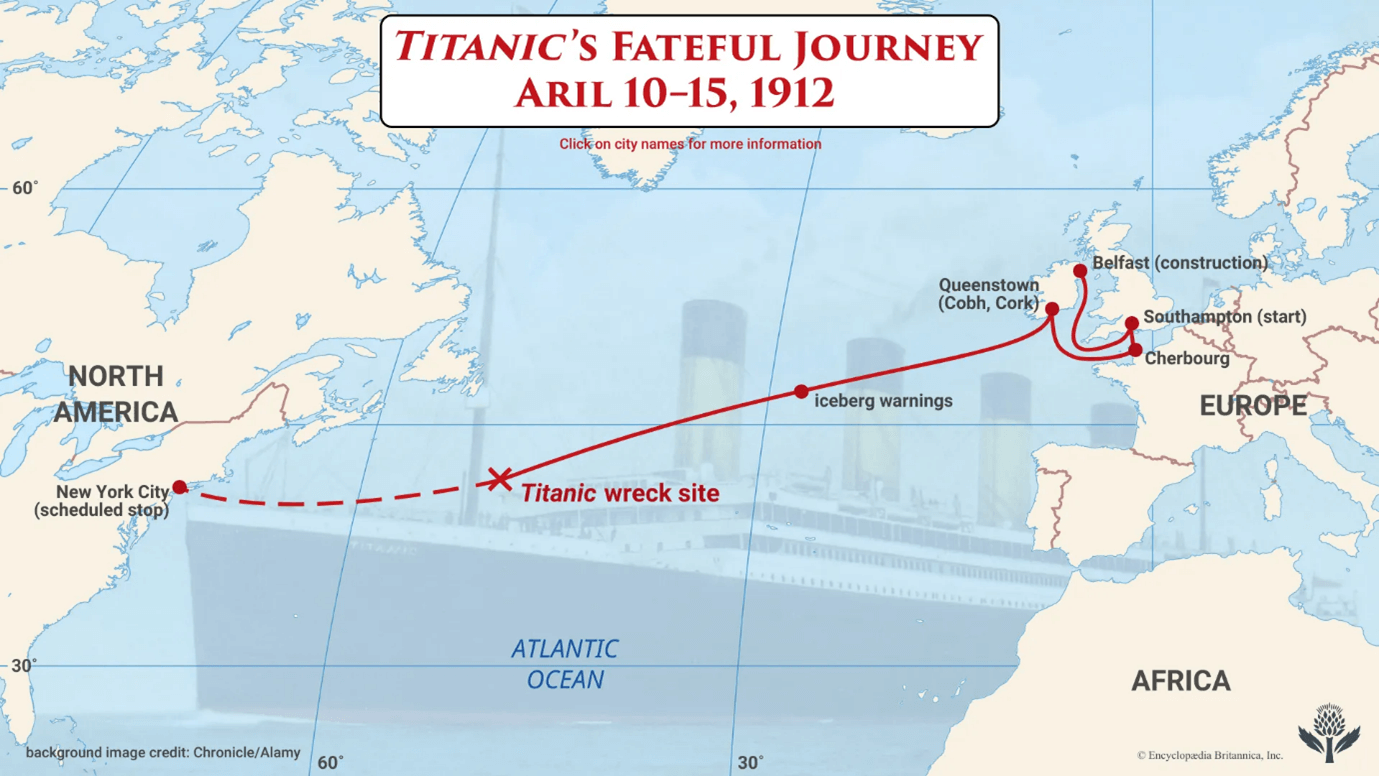
After successfully completing her sea trials on 2 April 1912, Titanic, departed Belfast for Southampton. (Fig 9) She arrived late the following evening and docked beside Berth 44, just after midnight.
The Titanic set off on its maiden voyage on 10 April 1912, at 1.30pm from Southampton, England, embarking on its transatlantic journey to New York City in the United States with around 2,200 passengers and crew on board. (Fig 10) The route that the Titanic was set to take would have seen it reach New York City via Cherbourg, France and Queenstown(now Cobh), Ireland. The return route would have been New York to Plymouth to Cherboug and Southampton.
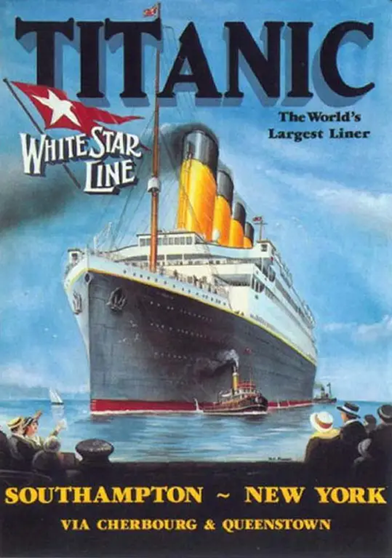
Counting among its passengers were the wealthy and prominent and poor immigrants making their way to America.
Although the capacity of the Titanic was designed to hold 735 passengers in first class, 674 in second class, 1,026 in third class and 885 crew members, however as for passengers, according to the United Kingdom's National Archives, 324 were first class, 284 were second class and 709 were third class.
The Titanic was under the command of Captain Edward Smith, a British naval officer who had served as master of a number of White Star Line vessels.
Unheeded warnings regarding icebergs by Titanic’s captain, Edward Smith and its tragic end
The first few days of the Titanic’s journey passed without any incident, however on the evening of 14 April 1912, the ship began to approach an area that was known to have icebergs.
Throughout much of the voyage, the wireless radio operators on the Titanic, Jack Phillips and Harold Bride, had been receiving iceberg warnings, most of which were passed along to the bridge. The two men worked for the Marconi Company, and much of their job was relaying passengers’ messages.
Two lookouts, Frederick Fleet and Reginald Lee, were stationed in the crow’s nest of the Titanic. Their task was made difficult by the fact that the ocean was unusually calm that night: because there would be little water breaking at its base, an iceberg would be more difficult to spot. In addition, the crow’s nest’s binoculars were missing.
The Titanic received a number of iceberg warnings from other ships, including Atlantic Line’s Mesaba at 9:40 pm and at 10:55pm from Leyland liner Californian.
Read all parts: Part 1, Part 2, Part 3, Part 4, Part 5, Part 6, Part 7, Part 8
Sheriffah Dato Syed is a content creator under the Newswav Creator programme, where you get to express yourself, be a citizen journalist, and at the same time monetize your content & reach millions of users on Newswav. Log in to creator.newswav.com and become a Newswav Creator now!
The User Content (as defined on Newswav Terms of Use) above including the views expressed and media (pictures, videos, citations etc) were submitted & posted by the author. Newswav is solely an aggregation platform that hosts the User Content. If you have any questions about the content, copyright or other issues of the work, please contact Newswav.