

Titanic in comparison to modern cruise ship
When most people think of the Titanic, (Fig 1) they think of a massive cruise ship.
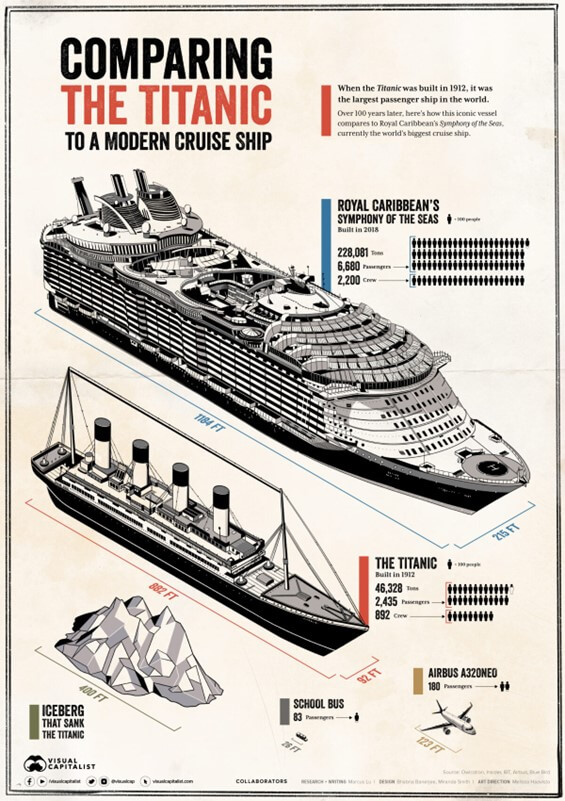
While it was the world’s largest passenger liner at the time in 1912, the famous ship was actually significantly smaller than the cruise ships we know today.
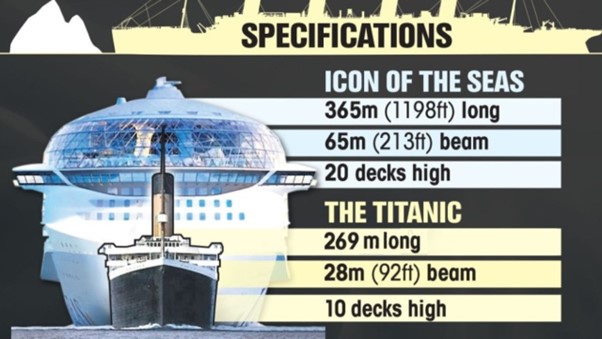
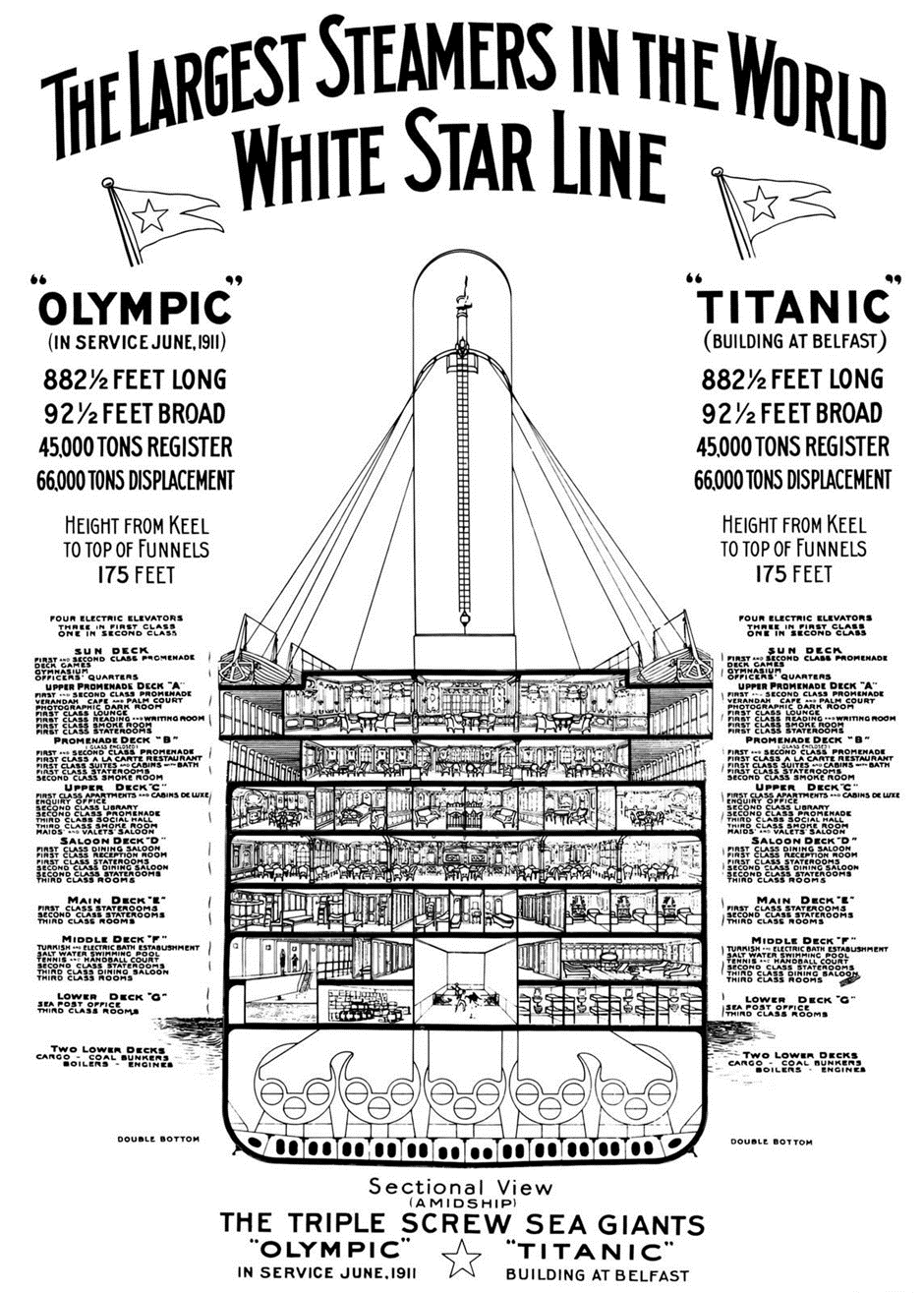
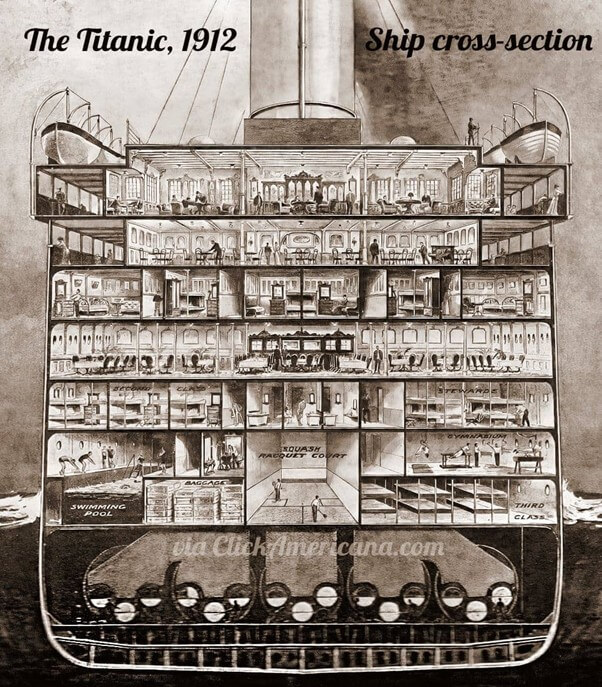
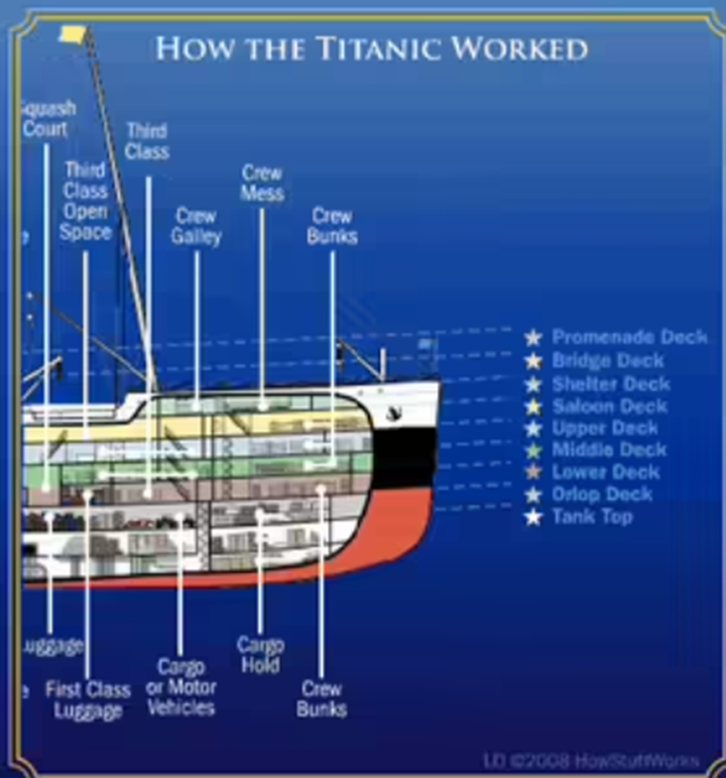
The Titanic was 10 decks high, 269m long and 28m beam, which is the widest part of the vessel; and 175 feet (53.3 meters) high (from top of the funnels to the keel). (Fig 2 - Fig 4) Meanwhile, the current largest cruise liner in the world, Royal Caribbean’s Icon of the Seas, which is due to make its maiden voyage in 2024, is 20 decks high, 365m long and 65m beam.
The Titanic- An Overview
By the time the Titanic was completed in 1912, the ship's price tag hovered around £4.3 million ($7.5 million or $400 million in 2019 dollars). The ship reflected Ismay and Pirrie's goals of a posh, fast and safe ship. Conceptually, Titanic wasn't too different from modern cruise ships.
Division of Class existed on the Titanic
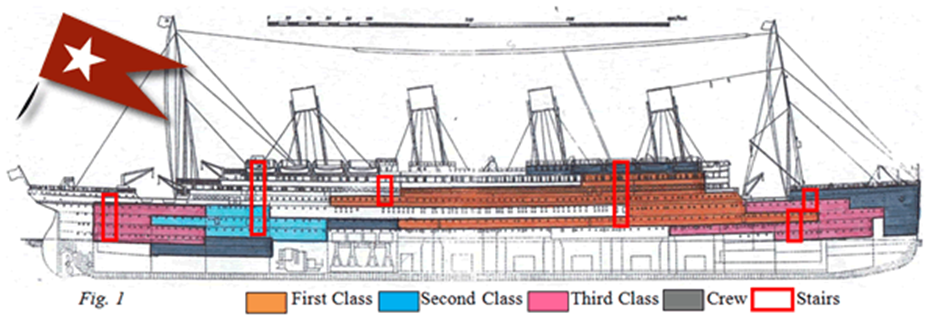
A division of class existed on-board the Titanic, as evident from the fact that first class passengers enjoy the upper and most central spaces while third class and crew occupy the lowest extremities of the ship https://www.encyclopedia-titanica.org/class-gender-titanic-disaster-1912~chapter-2~part-2.html and this had affected the evacuation as well as survival rates amongst the ship’s passengers, after the Titanic had collided with an ice berg at 11.40pm on 14 April 1912.
Aesthetics and the reduced number of lifeboats
But in the early 20th century, the comforts and amenities of this ocean liner were unlike anything travellers had ever seen before. It was more like a floating luxury hotel than a ship, and Titanic's designers put every effort into disguising or hiding equipment and cargo. Even the lifeboats were deemed eyesores on the deck, so only 16 were loaded along with four collapsible boats. (This would later prove a fatal mistake.)
Lifeboat drill scheduled for morning of 14th April 1912 was cancelled. Capt. Edward J. Smith had cancelled a scheduled lifeboat drill on the Titanic.
Decks and Location of Lifeboats
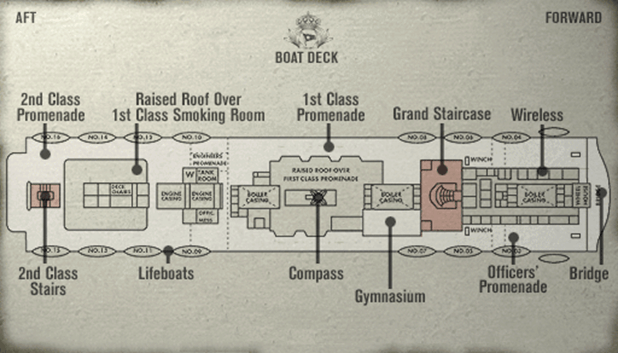
The Titanic consists of 10 decks (Fig 5 – Fig 7); Boat Deck the top most deck of the ship, A Deck, B Deck, C Deck, E Deck , F Deck, G Deck, Orlop Deck and Tank Top. Each floor had a different purpose.
The boat-deck was the topmost of the Titanic's ten decks, an uncovered deck where her lifeboats were stored. From here, in the early morning hours of 15 April 1912, the lifeboats were lowered into the North Atlantic. Bravery, heroism, cowardice and chivalry were all displayed as the sinking drama played out. (Titanic Deck Plans from Titanic The Ship Magnificent (2008) The History Press, courtesy of Bruce Beveridge.
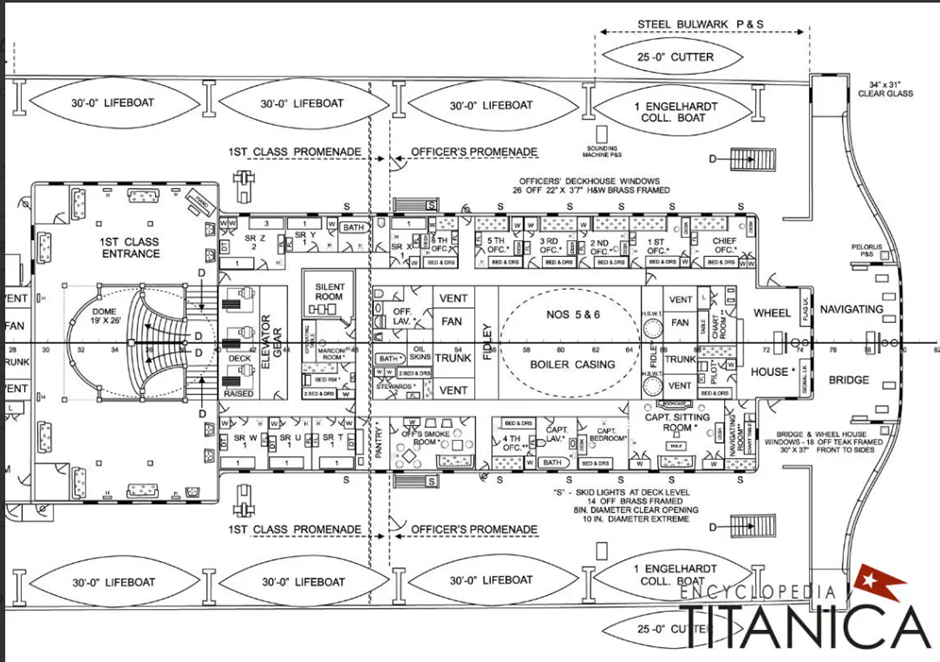
The boat deck was constructed of teak and divided into four segregated promenades; the Officer's promenade, First Class area, Engineers', and Second Class areas. The Bridge was at the forward end of the ship, in front of the Marconi Wireless Room, quarters for the Captain and Officers, and the Wheelhouse.(Fig 8) (Titanic Deck Plans from Titanic The Ship Magnificent (2008) The History Press, courtesy of Bruce Beveridge.
Location of Lifeboats
There were 20 lifeboats on the Titanic. (Fig 9)
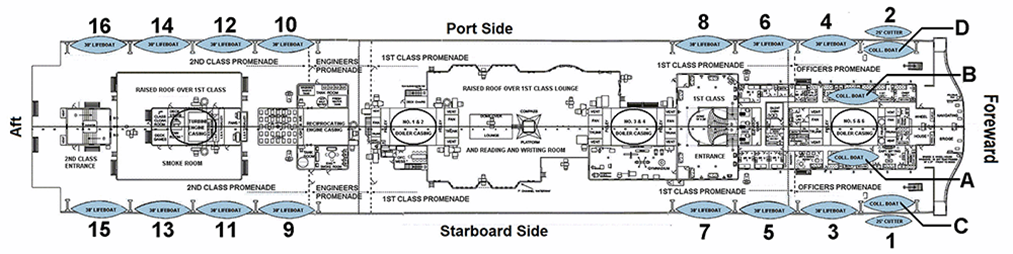
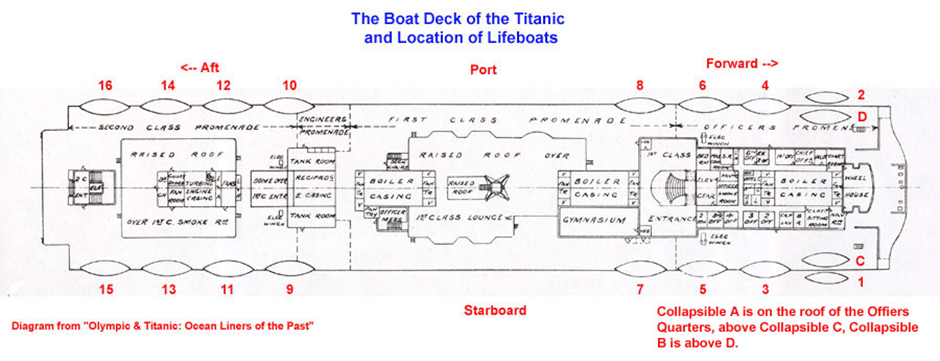
The 14 standard lifeboats were located on the boat deck with eight on either side of the ship. (Fig 9-12) The two emergency lifeboats were located over the hull and were attached to tilting crane and four ‘collapsible’ Engelhardt lifeboats; with C & D located next to the emergency lifeboats while A & B were stored way up on top of the officers quarters.
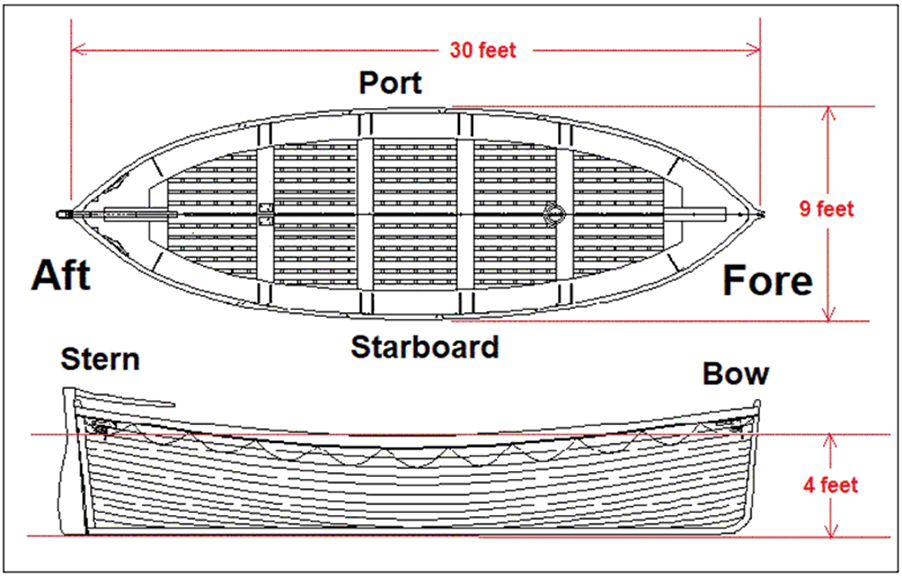
The 14 standard wooden lifeboats were designed by Harland and Wolff Chief Draughtsman Roderick Robert Crispin Chisholm, each measuring( 30 ft. long, 9 ft. 1 in. Broad, 4 ft. deep, 655·2 cubic ft. with capacity for 65 persons.)
The ones on the port side were evenly numbered, starboard ones were oddly numbered. Each boat was provided with oars, together with blankets, provisions and flares.
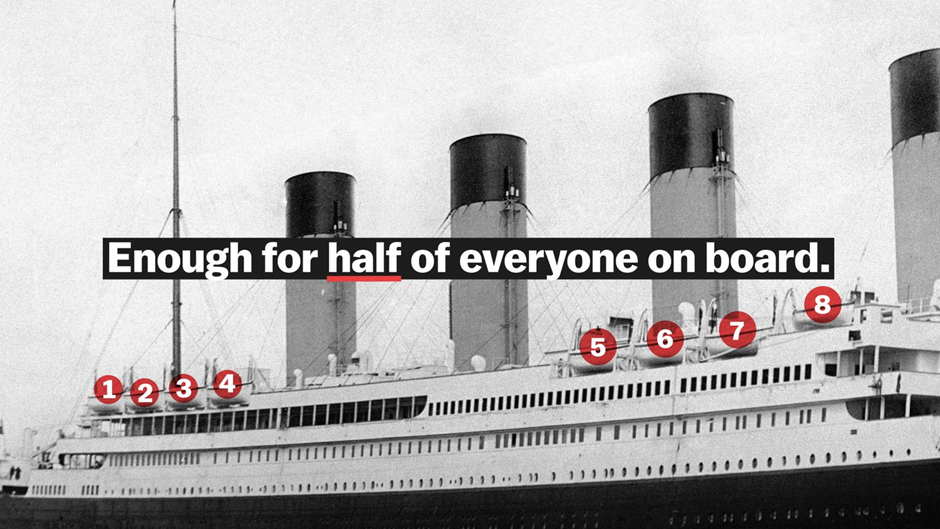
The boats were interrupted by a gap in the First Class area, ( Fig 8-12) to provide unobstructed views. ( Fig 8). The boats on the starboard side were numbered 1, 3, 5, 7, 9, 11, 13 and 15. While those on the port side were numbered 2, 4, 6, 8, 10, 12, 14 and 16. (Fig 10 and Fig 11)
Titanic was also equipped with two emergency cutters, (Fig 12 - 14) smaller boats than the standard lifeboats measuring; one was 25 ft. 2 in. Long, 7 ft. 2 in. Broad, 3 ft. deep, 326·6 cubic ft. with capacity of 40 persons whilst the other was 23 ft. 2 in. Long. 7 ft. 1 in. Broad, 3 ft. deep, 322·1 cubic ft., with capacity: 40 persons. (Fig 14)
The emergency cutter on each side at the fore end of the deck were stationed most forward on Part No.2 and Starboard side No.1, very close to the bridge. The main purpose of the emergency cutters was essentially to be available to be lowered as soon as an incident, such as a man overboard, occurred, and in order to facilitate a speedy decent when required, the two cutters would be kept swung-out, ready for use.
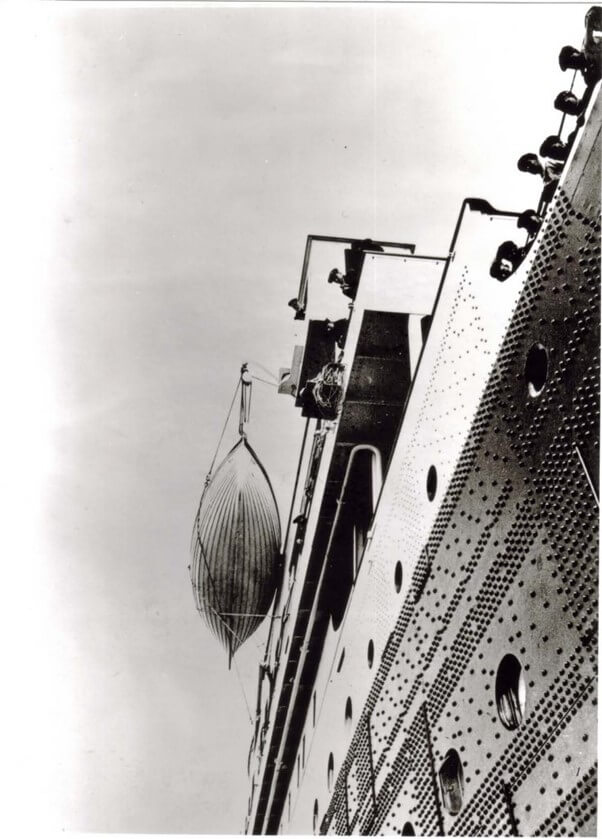
Abreast of each cutter was an Engelhardt life raft.
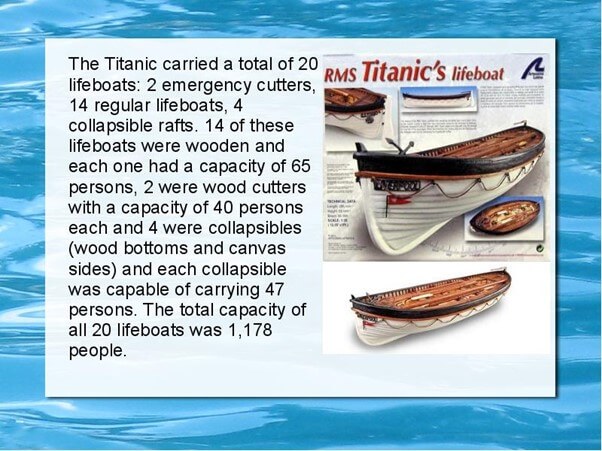
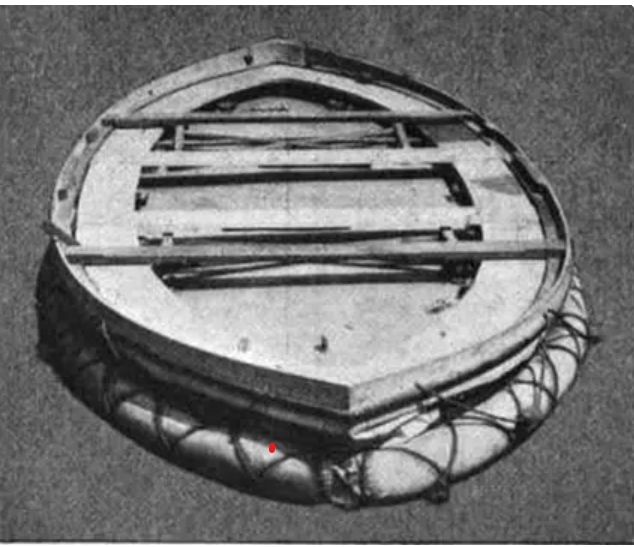
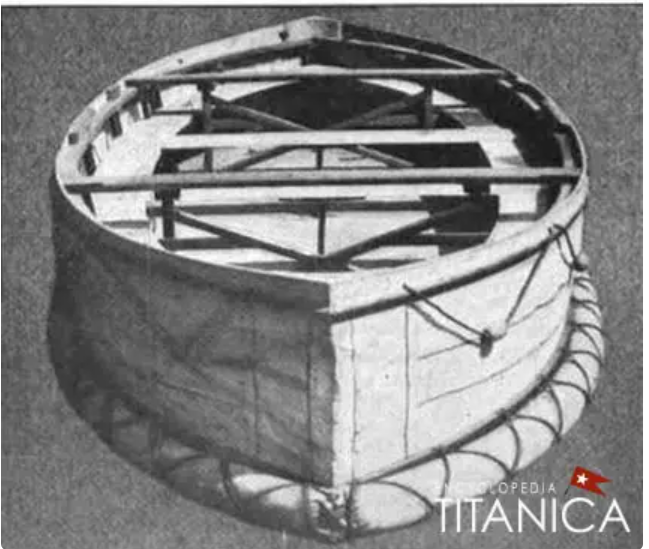
There were four Englehardt Collapsible Lifeboats, 27 ft. 5 in. Long, 8 ft. broad, 3 ft. deep, 376·6 cubic ft. with capacity of 47 persons, identified as A, B, C and D (Fig 15 and Fig 16).
Thus the lifeboats had a total of 11327.9 cubic ft, sufficient for 1,178 persons, about half the Titanic’s passengers and crews in total (Fig 17).
Captain Smith orders launching of Lifeboats and Distress Signal to be sent
The initial order to prepare boats for launch was issued by Captain Edward Smith at around midnight, some 20 minutes after the Titanic collided with an iceberg at 11.40pm on 14th April 1912.
At 12:15 a.m Smith gave the order for passengers to don lifebelts and proceed topside, First and Second Class passengers had no trouble following these instructions as they had direct access; the Boat Deck being divided into segments allocated to them. Wooden Boats 1-8, along with four canvas-sided collapsible rafts, were located on forward First Class deck space, and wooden Boats 9-16 were situated on aft Second Class deck space.
Recognizing that a total of 1173 persons could be rescued if the lifeboats are at maximum capacity leaving the remaining half of the passengers and crews stranded in the ship, Captain Smith realizes that the deaths of many hundreds of passengers and crew is inevitable.
Launch Time
The launch time of a boat is taken as the time that a boat first started to be lowered away with passengers in it after an order was given to lower the boat, not the time it first reached the water.
Order of Lifeboats Launched
The first lifeboat to be lowered was #7 (a standard lifeboat) at 12.40 am an hour after the ship hit an iceberg, it had a total of 26 passengers all of which were 1st Class Passengers and 3 crew members, it hit the water at 12.45am. It is then believed the forward starboard lifeboats #5 and #6 were launched at 12.55am then #3 and #1 soon after. The list then continues #8,#10,#14,#16, #9, #12, #11, #13, #15, #2 and then #4. (Fig 19-21)
The first boat launched on the port side, sometime around 12:55-1:00am, occurred about 15 to 20 minutes after the first boat was launched on the starboard side. consecutive launchings taking place mostly every 5 to 10 minutes on both sides of the deck.
Collapsible C (Starboard) & D (Port) were launched at around 2am and 2.05am.
At 2.15 Collapsible lifeboats B( Port) and A (Starboard) were washed out to sea with B hitting the water upside down and A floated off the deck without its sides up.
Collapsible boats A and B, which were not actually launched but floated off the deck of the ship after the bridge became inundated. Thus, the last lifeboat launched was 2.05am.
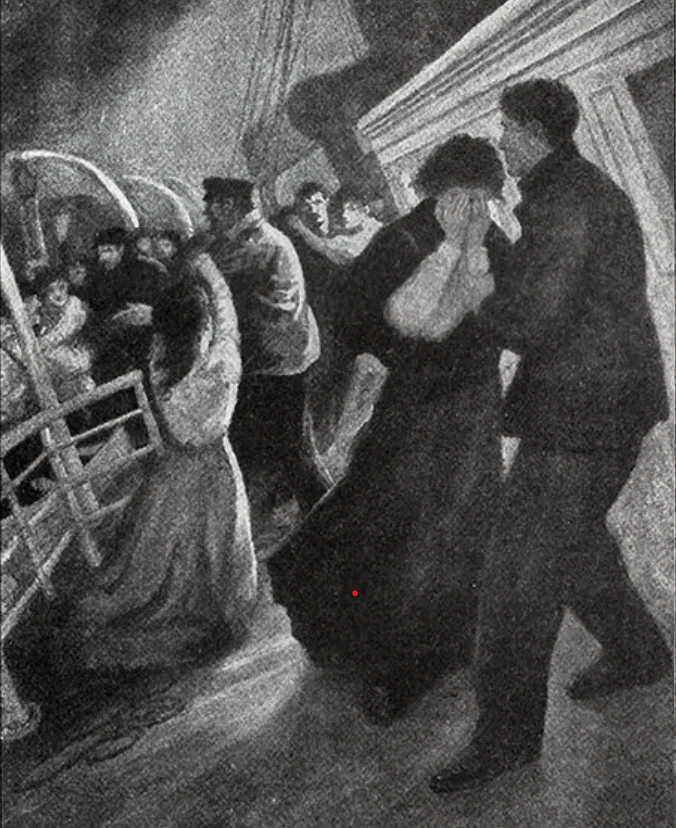
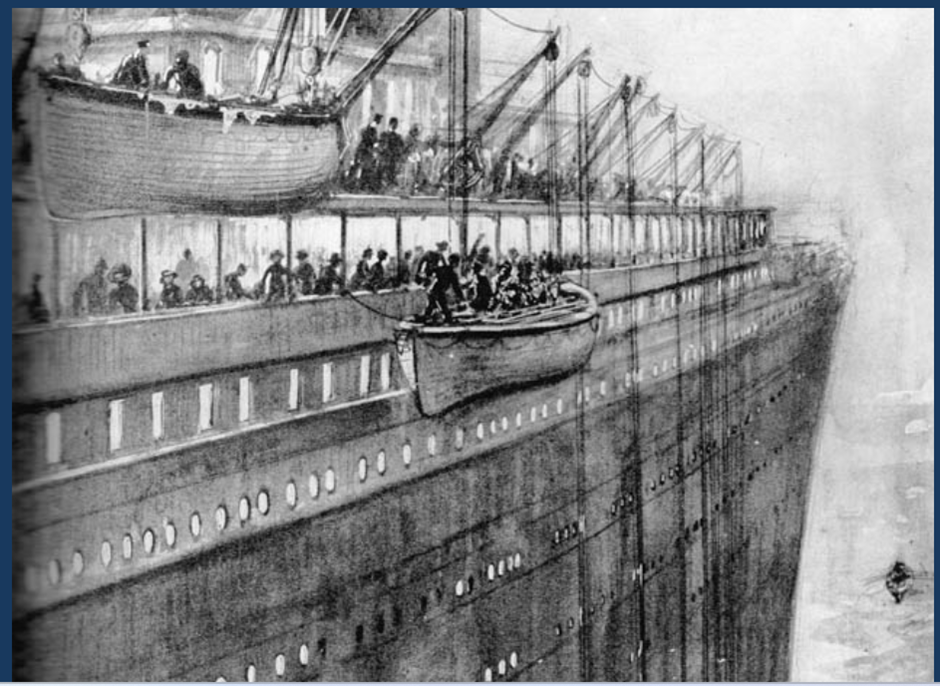
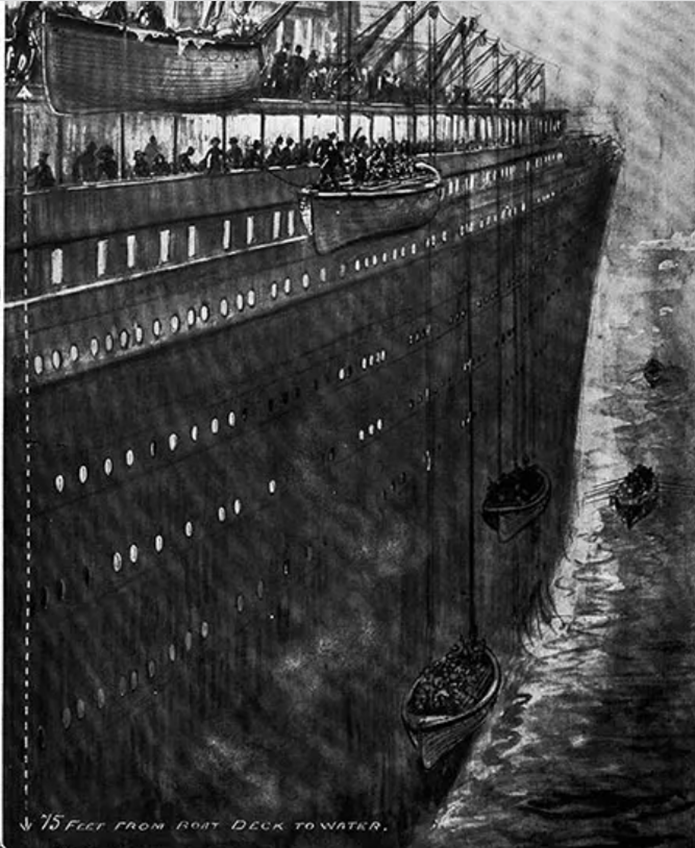
The loading of the first lifeboats took a lot more time because of the reluctance of many passengers to get into the boats, married women to leave their husbands behind, (Fig 18) or for many to leave the comfort of the ship as compared to being put into an open, small boat, and lowered some 60 feet to the dark, cold sea below.
Distress Signals continuously sent by Titanic’s Wireless Operators
While the lifeboats were lowered, with awful goodbyes between husbands, wives and children, the wireless operators stuck to their task and continued to send out distress signals [Part Nine].
Read all parts: Part 1, Part 2, Part 3, Part 4, Part 5, Part 6, Part 7, Part 8
Sheriffah Dato Syed is a content creator under the Newswav Creator programme, where you get to express yourself, be a citizen journalist, and at the same time monetize your content & reach millions of users on Newswav. Log in to creator.newswav.com and become a Newswav Creator now!
The User Content (as defined on Newswav Terms of Use) above including the views expressed and media (pictures, videos, citations etc) were submitted & posted by the author. Newswav is solely an aggregation platform that hosts the User Content. If you have any questions about the content, copyright or other issues of the work, please contact Newswav.