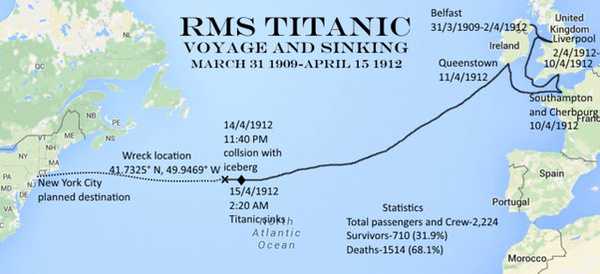
Titanic hit the iceberg on 14 April 1912 at 11:40 PM
The starboard side of the Titanic scrapes along the iceberg. (Fig 1) Captain Smith arrives on deck and is told that the ship has struck an iceberg. Shortly thereafter he is informed that the mail room is filling with water. Other reports soon come in of water in at least five of the ship's compartments.
Designer Thomas Andrews surveys the damage. The Titanic was built to remain afloat with only four compartments flooded. Andrews predicts that the ship has only about one to two hours before sinking.
Crucial Role of Lifeboats onboard the Titanic
The lifeboats onboard Titanic, played a crucial role in the disaster of the 14-15 April 1912.
Lifeboats tested in Belfast on 25 March 1912
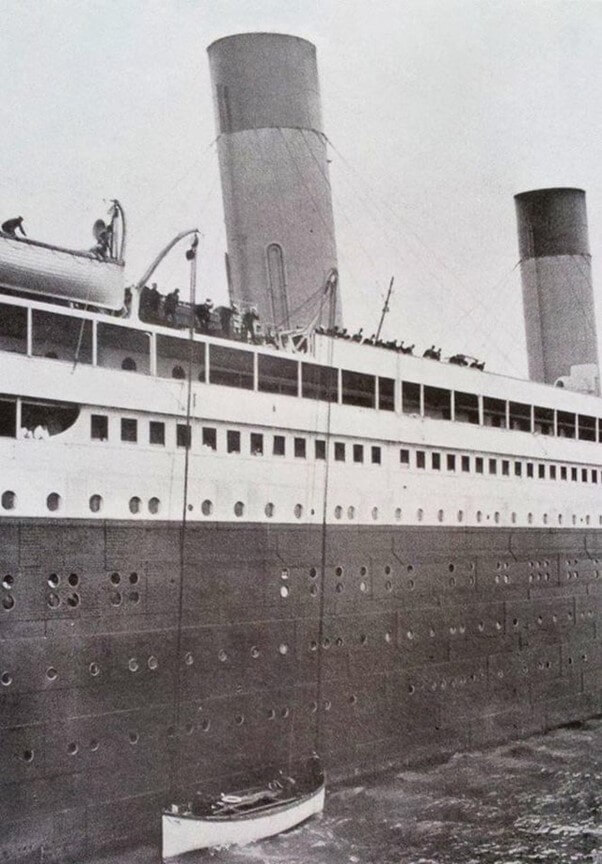
Titanic’s lifesaving equipment was tested in Belfast on 25 March 1912 All sixteen lifeboats under davits were fully loaded with Islandmen (yard workers) and lowered to the water in order to test their strength and operation in front of Francis Carruthers, the Board of Trade Engineer and Ship Surveyor at Belfast. (Fig 2)
The lifeboats had been tested successfully in Belfast with 70 men in each carried safely.
Evacuation begins at 12.00 AM on 15th April 1912
At 12.00 am, 20 minutes after the collision with the iceberg and Thomas Andrew’s forecast that the ship has only 1-2 hours before sinking, Captain Smith had ordered, the lowering and launching of lifeboats in preparation for evacuation.
Lifeboats were swung out from the davits so that their inboard sides were flush with the deck (or, in some cases, a bulwark), making them accessible for boarding. They were fortified with supplies—food, water, blankets, lanterns—although some passengers later claimed not all boats contained provisions. This work was carried out by crew from various departments until every fore and aft boat was ready for people to board.
Lifeboats on the Titanic
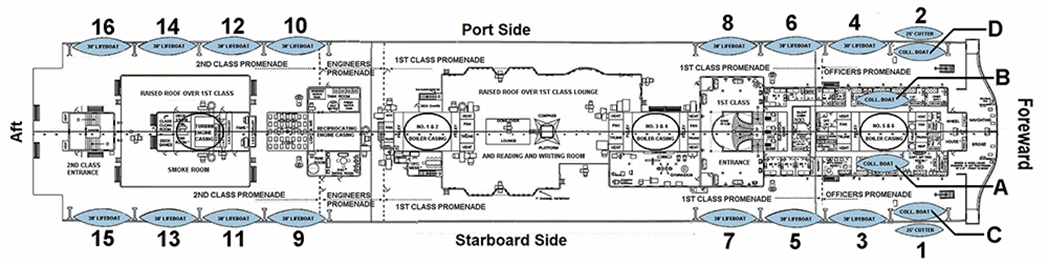
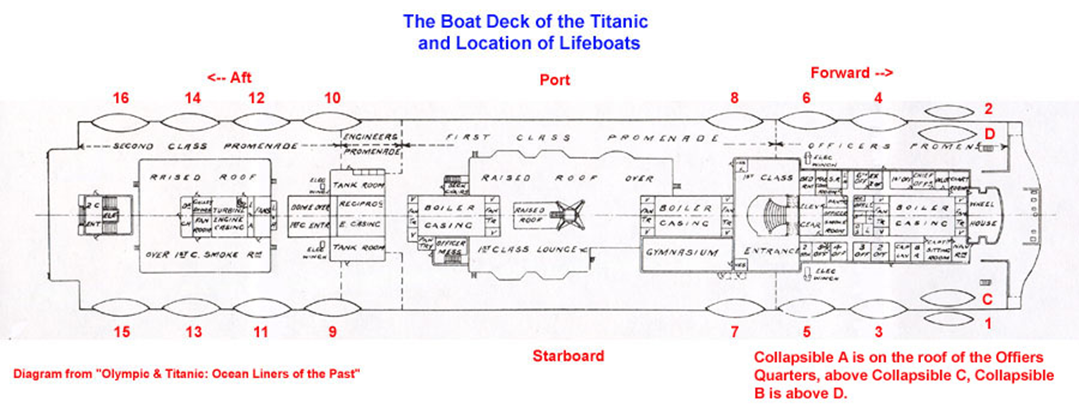
Although the Titanic was capable of carrying 64 lifeboats, 48 lifeboats was originally planned for Titanic by the ship’s Chief designer Alexander Carlisle. However, this number was drastically reduced to just 20 for cosmetic reasons aimed at making the decks look less clustered. (Fig 4, Fig 8 and Fig 9)
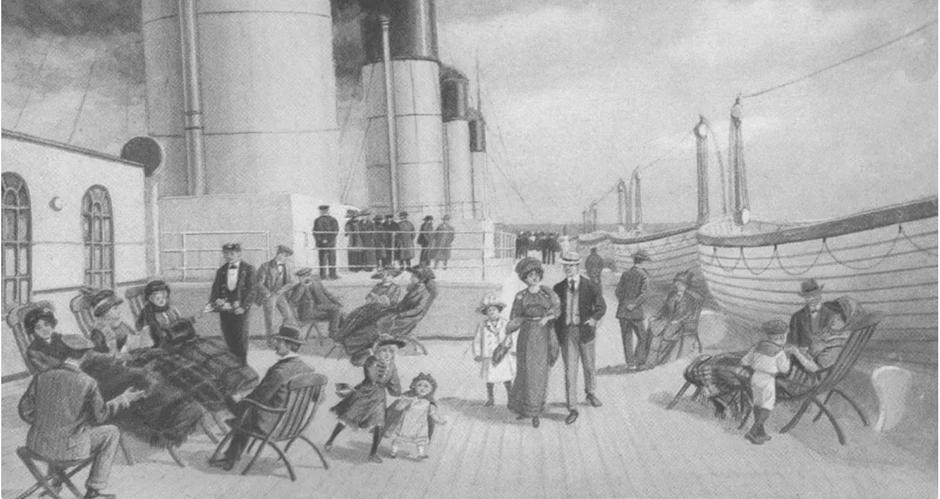
The lifeboats were stored on the very uppermost deck, the ‘Boat Deck’. This was also a promenade for the first-class passengers. (see Fig 4, Fig 8 and Fig 9) Extra lifeboats would have made this deck more cluttered, leaving the passengers with less deck space.
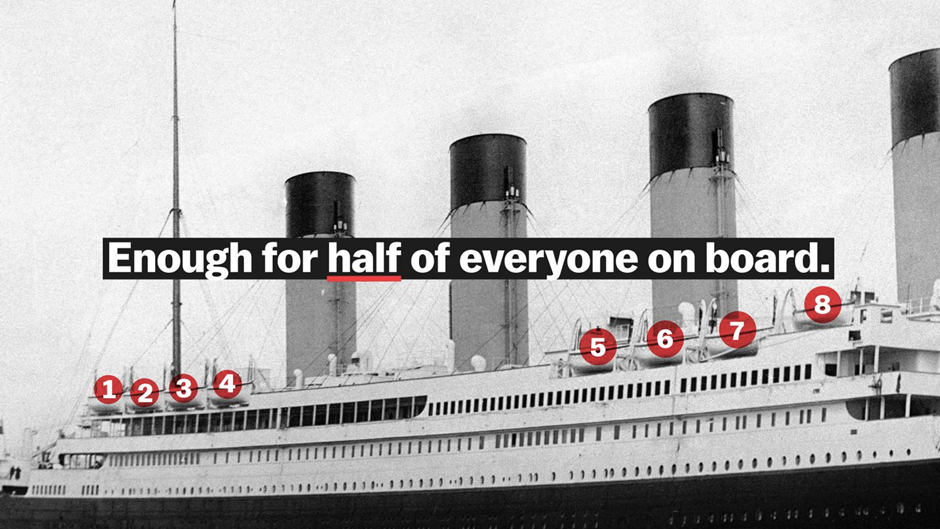
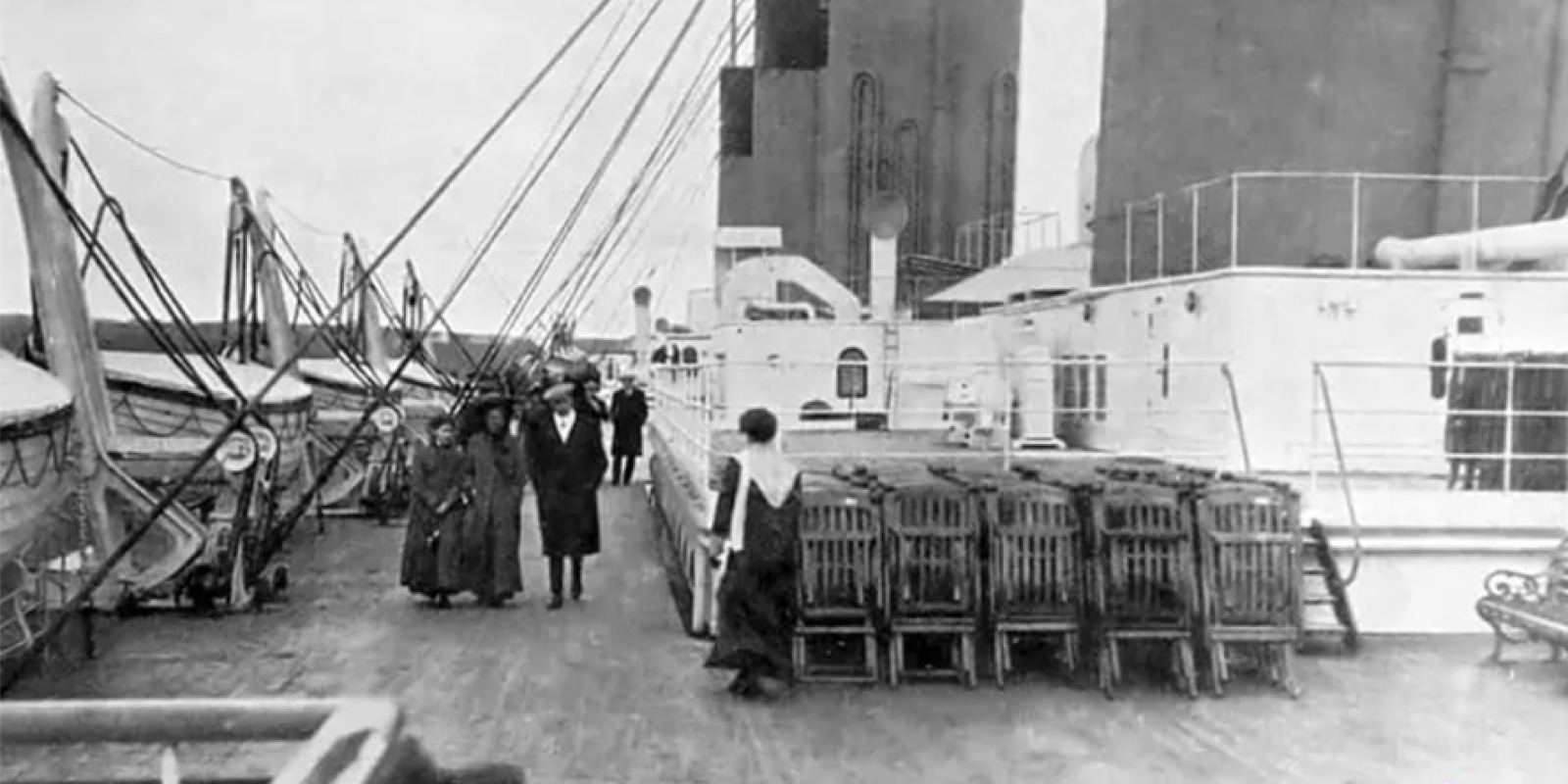
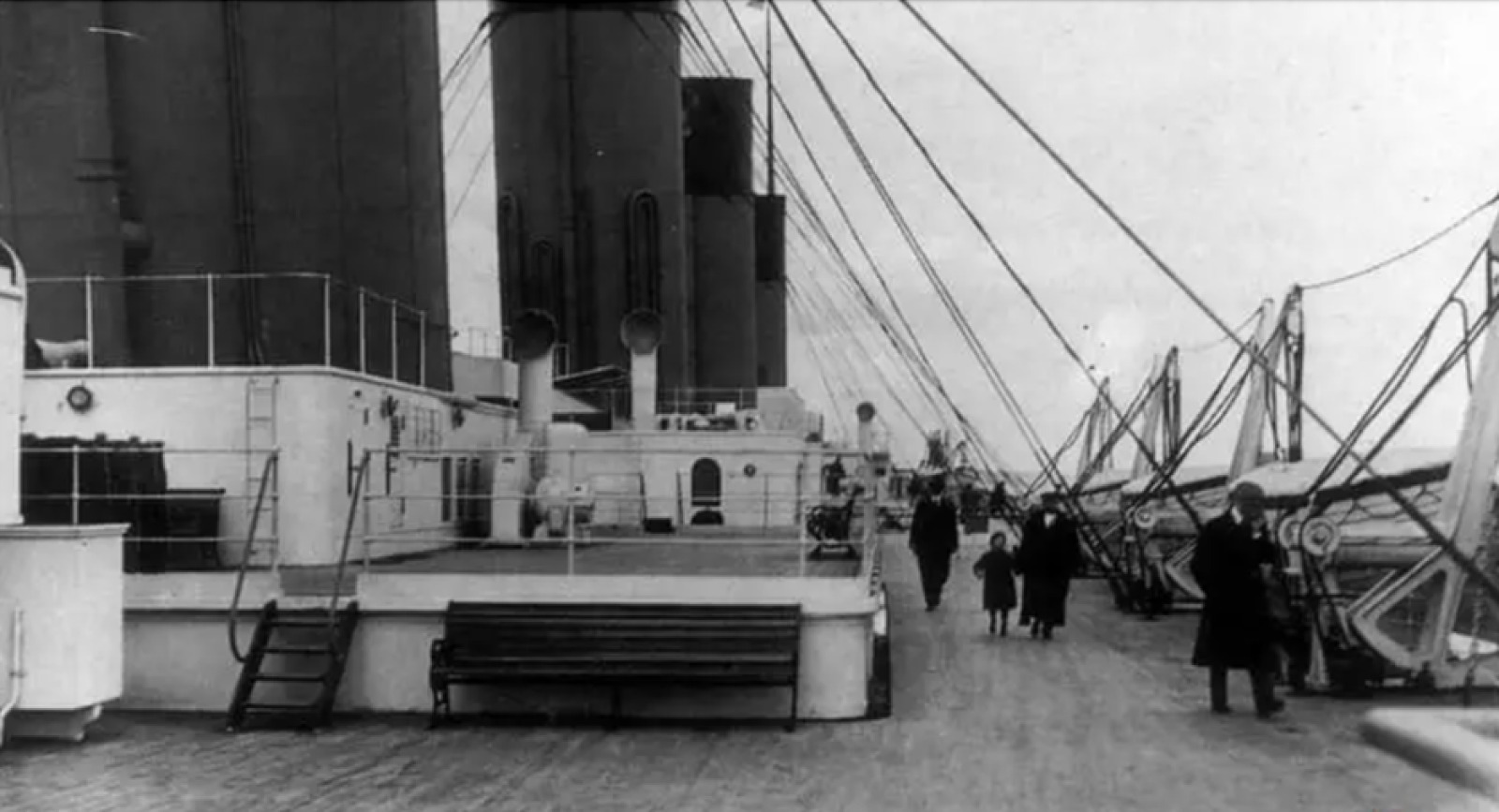
There were 16 pairs of davits (Fig 5-7 and Fig 10 & 11) located on the Titanic’s boat deck, the highest level of the Titanic. They were arranged in four groups of four pairs each, with a forward group of four and an aft group of four on the starboard side and a forward group of four and an aft group of four on the port side. (Fig 8- Fig 11)
All but two of the lifeboats were situated on the Boat Deck, the highest level of the Titanic. They were located on wooden chocks at the fore and aft parts of the Boat Deck, on either side of the ship. Two groups of three at the forward end and two groups of four at the after end. The two cutters were situated immediately aft of the bridge, one to port and the other to starboard.
The lifeboats were given odd numbers on the starboard side, even numbers to port running from forward to aft. The collapsible lifeboats were lettered A to D. (Fig 8 and Fig 9)
The eight starboard-side boats were given odd numbers, beginning with No. 1 forward, ending with No. 15 aft. The eight port-side boats were given even numbers, beginning with No. 2 forward, ending with No. 16 aft.
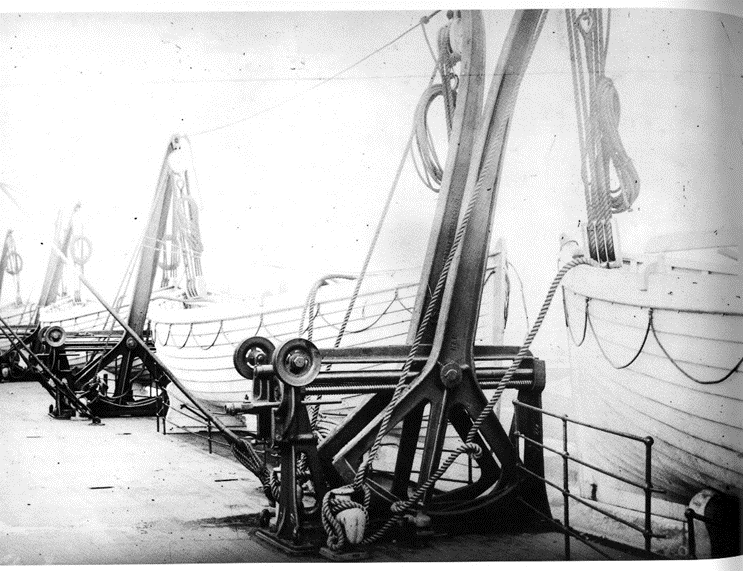
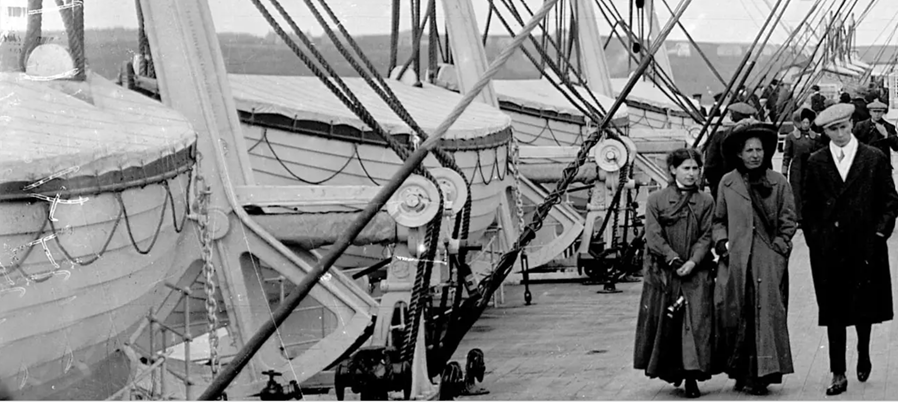
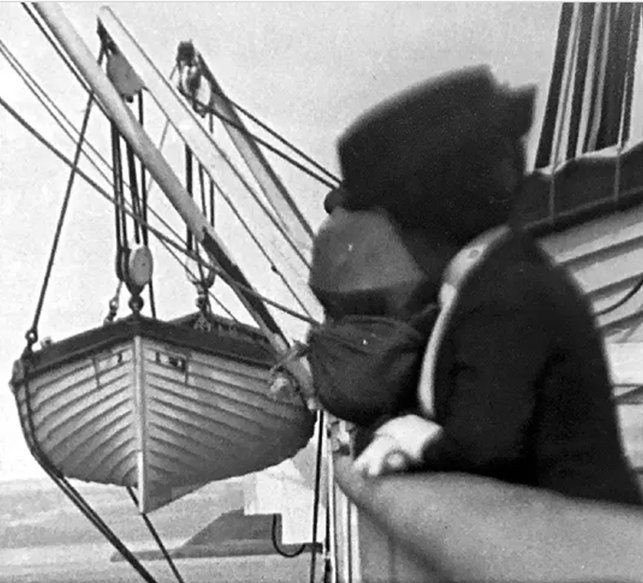
There were four collapsible boats stored on the Titanic. The collapsibles were stored in two place. Two of them w during stowed on the deck in their collapsed state underneath the cutters, while the remaining two were situated on top of the officers quarters. Although the first two were erected and launched without difficulty during Titanic’s sinking, the latter two turned out to be badly located.
The starboard-side collapsible boat stored on the roof of the officer’s quarters at the side of the first funnel was labeled boat A, while the port-side collapsible boat stored on the roof of the officer’s quarters at the side of the first funnel was labeled boat B. Stored on deck by the davits for No. 1 boat on the starboard side was collapsible boat C, and the one stored on deck by the davits used by No. 2 boat on the port side was collapsible boat D. (Fig 9)
Instructions to don lifebelts at 12.15 AM on 15th April 1912
Smith gave the order for passengers to don lifebelts and proceed topside at approximately 12:15 a.m. First and Second Class passengers had no trouble following these instructions as they had direct access; the Boat Deck being divided into segments allocated to them.
First and Second Class passengers had no trouble following these instructions as they had direct access; the Boat Deck being divided into segments allocated to them. Wooden Boats 1-8, along with four canvas-sided collapsible rafts, were located on forward First Class deck space, and wooden Boats 9-16 were situated on aft Second Class deck space.
Titanic’s Third Class passengers faced a decided disadvantage — they had no clearly designated route to the Boat Deck. As single and even some married Third Class male passengers were berthed in the bow, many congregated on the forward Well Deck until they made their way aft, via interior passageways, to join the single women, married couples and children who were assigned cabins in the stern. All Third Class passengers then assembled in groups amid much confusion on the aft Well and Poop decks. They were within sight of the Boat Deck but could not easily access it as the two outside stairways leading to B Deck were closed off by gates. Above that, only crew ladders (and iron stairwells located further aft) led to the Boat Deck.
Distress Signals ordered to be sent out 15 April 1912 at 12:15 AM
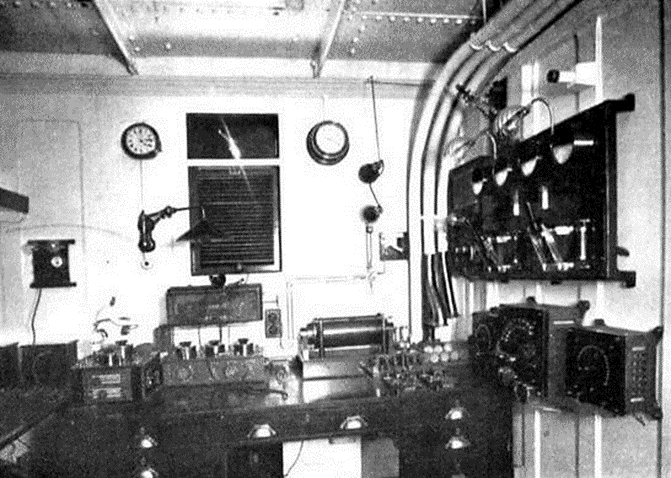
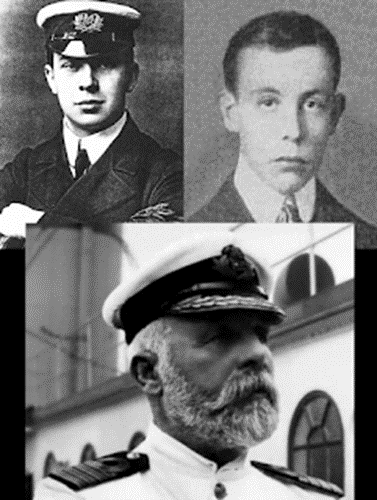
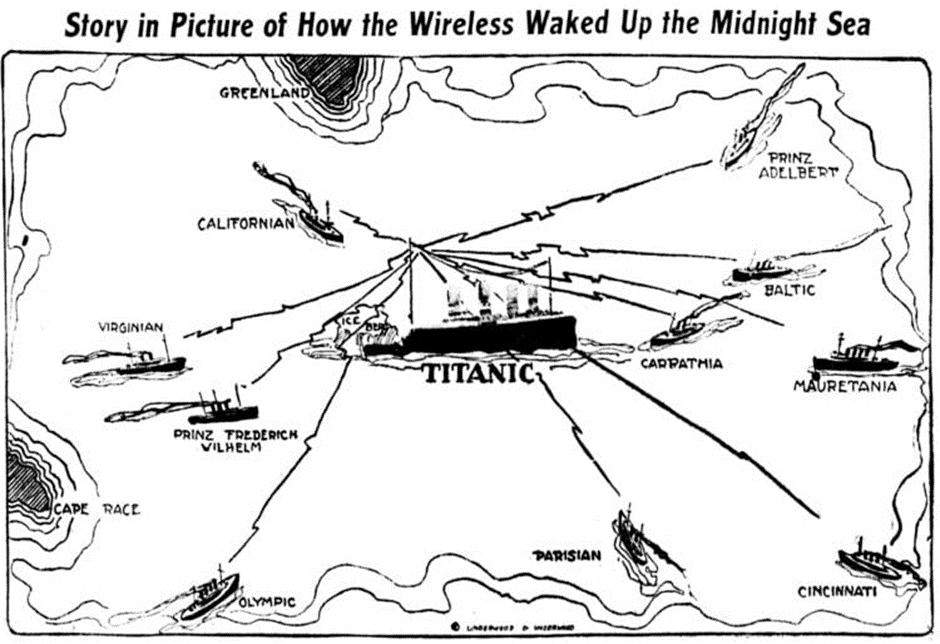
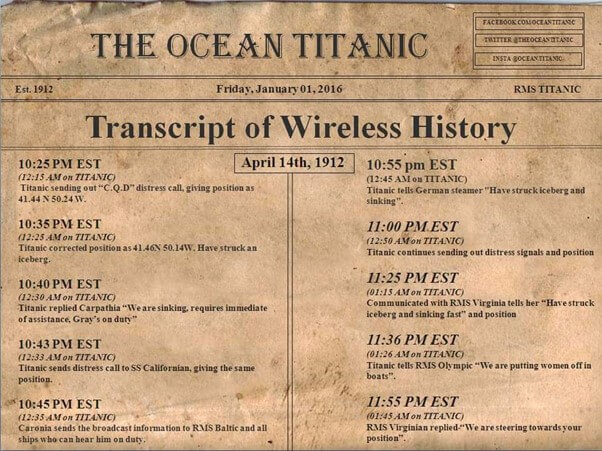
Captain Smith orders Titanic’s Wireless Operators Jack Phillips and Harold Bride to send out a distress signal. (Fig 5 and Fig 6) Although SOS became the official distress signal several years earlier, many still use CQD. (CQ signifies a general call, and the D means distress.) Over the next several hours, Phillips sent out both at all ships nearby. (Fig 12 - Fig 15)
Titanic Lifeboats and Capacity
The Titanic actually carried just 20 lifeboats; 2 wooden cutters, 14 standard wooden lifeboats and 4 collapsible canvas life boats. This was far too few for the number of people aboard and yet remarkably, this was technically legal; as the law at that time based the number of lifeboats required on the gross register tonnage of a ship and not on her passenger capacity.
The full-sized wooden lifeboats (Nos. 3-16) had a 65-person occupancy, the canvas rafts (lettered A-D) could hold about 47 people each and two emergency cutters (Nos. 1 and 2) were made to carry 33-40.
Thus, the 20 lifeboats on Titanic could only carry a maximum of 1178 persons if all were carrying passengers to their full capacity.
The Merchant Shipping Act of 1894 required the largest-class ships, those weighing over 10,000 tons, to carry at least 16 lifeboats. Even though the Titanic, which launched in 1911, weighed 45,000 tons, that minimum was the same. The Titanic carried 20 lifeboats, giving it enough capacity for roughly half of the people on board the night the ship sank.
Although the Titanic weighed nearly 50,000 tonnes. it carried 16 life boats and 4 collapsibles and had thus fulfilled the requirements of the British Board of Trade which had responsibilities to advise and implement shipping laws and regulations.
Command to abandon ship was given at 12.25am 15 April 1912
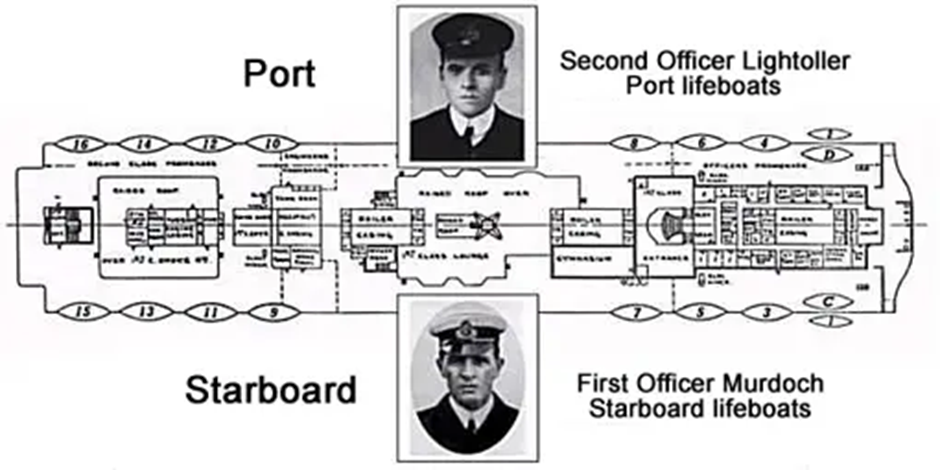
The command to abandon ship came down from Captain Smith at 12:25 a.m. First Officer William Murdoch, placed in charge of the evacuation on the starboard side, and Second Officer Charles Lightoller, heading up the departure of boats on the port side, started their work on the forward portion of the Boat Deck. (Fig 16)
The actual process of launching was handled by deckhands and other crewmembers under officers’ supervision. The work accomplished by these men on April 15th is seldom mentioned, yet they succeeded in saving the lives of everyone lowered away in boats that morning.
Titanic's captain Smith's order of "Women and children first" during evacuation
One of the misunderstandings about the Titanic’s sinking is that only women and children were allowed into lifeboats.
Captain Smith's order was intended that women and children would board first, with any remaining free spaces for men.
During the evacuation, Murdoch on the Starboard side had carried out the captain’s order literally–women and children were loaded first, but men were allowed in afterwards whilst Lightoller on the Port side misinterpreted the Captain's orders and enforced “Women and children only,”
The process was fairly orderly for Murdoch but Lightoller had confronted resistance from passengers.
Read all parts: Part 1, Part 2, Part 3, Part 4, Part 5, Part 6, Part 7, Part 8
Sheriffah Dato Syed is a content creator under the Newswav Creator programme, where you get to express yourself, be a citizen journalist, and at the same time monetize your content & reach millions of users on Newswav. Log in to creator.newswav.com and become a Newswav Creator now!
The User Content (as defined on Newswav Terms of Use) above including the views expressed and media (pictures, videos, citations etc) were submitted & posted by the author. Newswav is solely an aggregation platform that hosts the User Content. If you have any questions about the content, copyright or other issues of the work, please contact Newswav.