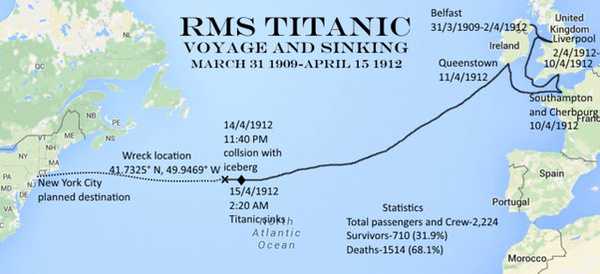
Titanic’s tragic-end
The Titanic had sank in the Atlantic Ocean at 2.20am on 15 April 1912.
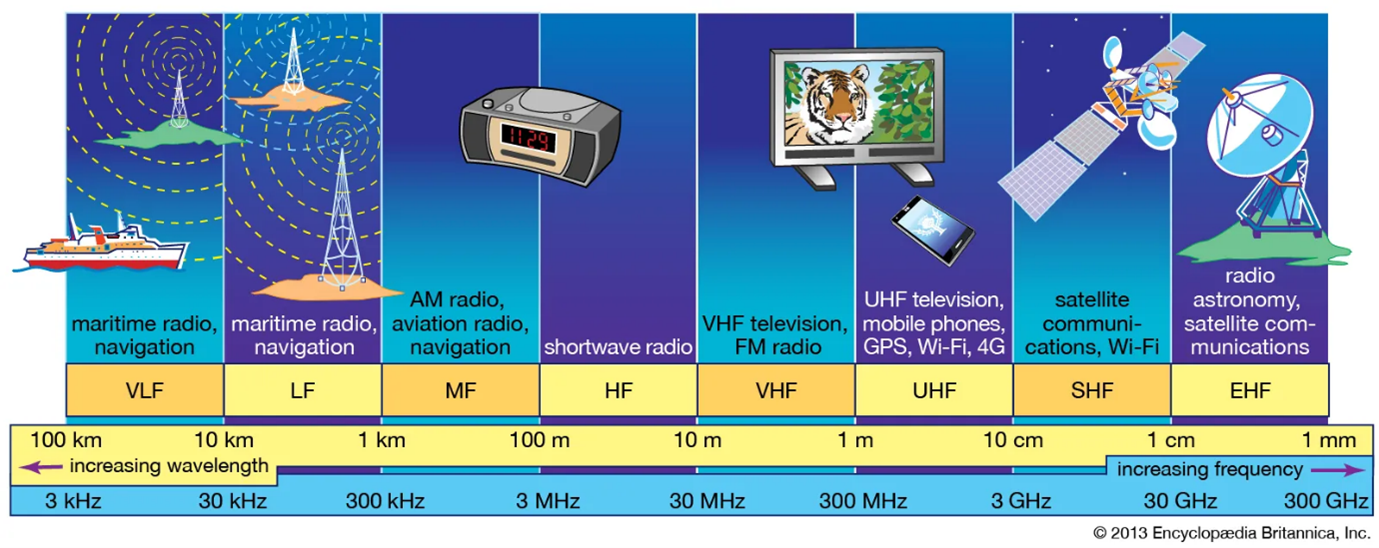
Wireless - A New Technology for Communications
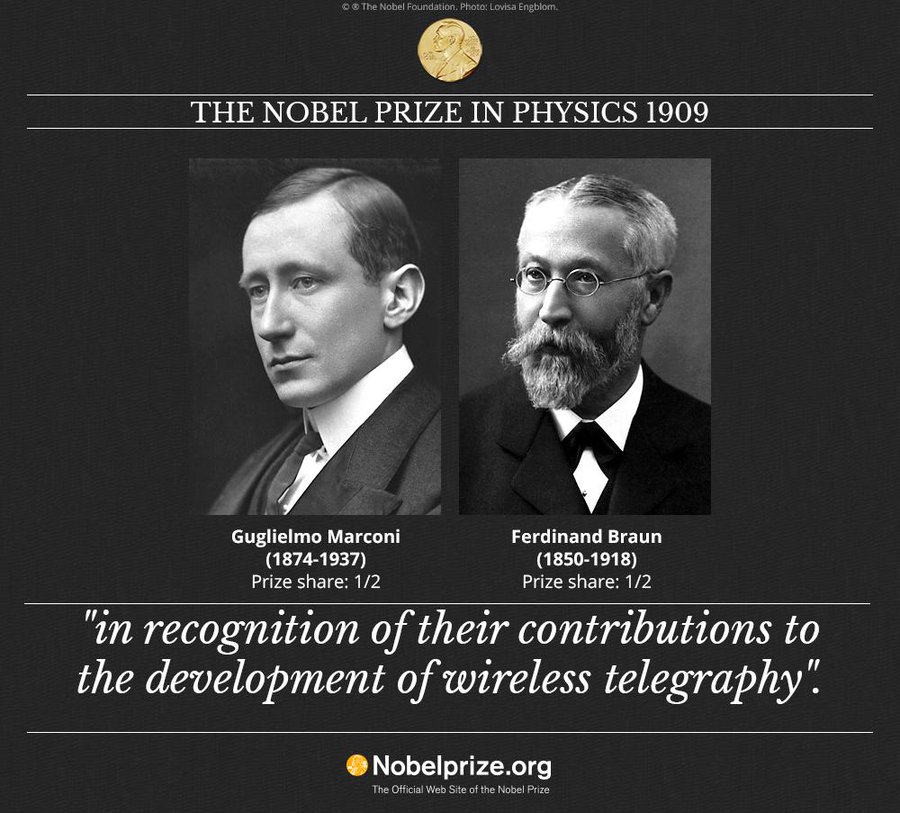
When RMS Titanic set sail in 1912, it was blessed and cursed with the latest in communication technology—the wireless telegraph, designed by Guglielmo Marconi, a telecommunications pioneer (Fig 2) and 1909 Nobel Prize winner in physics (Fig 3) who invented the first device to facilitate wireless communications using radio waves.
His pioneering work on long-distance radio transmission, his development of the Marconi's law, and the radio telegraph system led him to sharing the Nobel Prize in Physics with Karl Ferdinand Braun in 1909 “in recognition of their contributions to the development of wireless telegraphy.”
Marconi harnessed the discovery of radio waves by developing a working system of wireless transmission and formed the Wireless Telegraph and Signal Co. Ltd in 1897 the first commercial development of this new technology.
This new mode of transmission had to compete with existing cable networks, Marconi sold his earliest systems to lighthouses and ships, which could not access the cable network and yet had most need of rapid communication.
By the time of Titanic’s maiden Voyage in 1912, most passenger ships operating in north Atlantic had a Marconi installation staffed by Marconi Company Operators. Communication between ship and shore was by Morse code, as it was conventional telegraphy.
Marconi had a commercial monopoly on his wireless telegraph, cornering a luxury market for non-essential communications at sea that included Titanic. (Fig 4) Despite the limitations of the Marconi telegraph—and the fact that it wasn’t intended to be used as an emergency device—Titanic was outfitted with a radio room and a Marconi-leased telegraph machine. Two young Marconi-employed operators, chief telegraphist Jack Phillips and his assistant Harold Bride, sent Morse code “Marconigrams" on behalf of Titanic’s well-heeled customers 24 hours a day during its maiden voyage in April 1912.
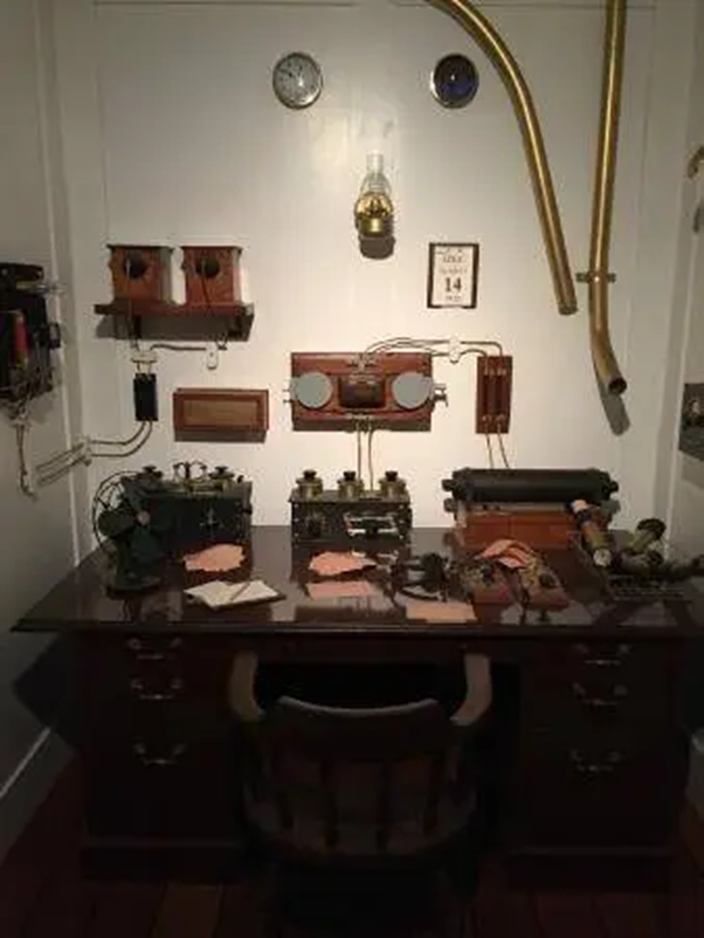
The Titanic, as the showcase of an ambitious, optimistic era, had the biggest and best wireless equipment in the world. It was still something of a novelty and much of the initial wireless traffic was from first class passengers sending messages to their friends, rather like text messages showing off about a glamourous trip. As well as letting passengers send personal messages, they provided the first wireless news service for ships and were also beginning to be used for more serious purposes. Ships gave each other safety information - and the Titanic received detailed advice about the location of icebergs.
Distress Call to Ships nearby
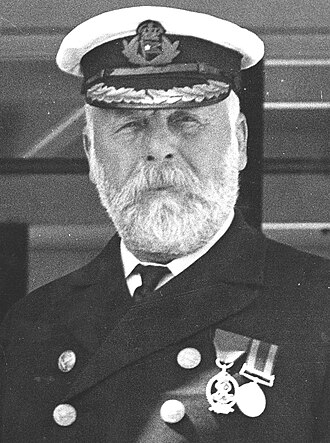
On the evening of April 14 the Titanic began to approach an area known to have icebergs. Captain Smith ( Fig 5) slightly altered the ship’s course to head farther south. However, he maintained the ship’s speed of some 22 knots.
Throughout much of the voyage, Jack Phillips (Fig 6) and Harold Bride, (Fig 7) the senior and junior wireless radio operators on the Titanic had been receiving iceberg warnings, most of which were passed along to the bridge. The two men worked for the Marconi Company, and much of their job was relaying passengers’ messages.
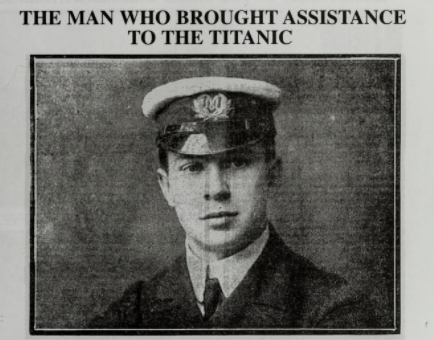
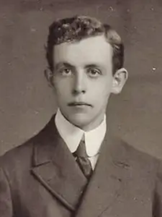
At approximately 9:40 PM the Mesaba sent a warning of an ice field. The message was never relayed to the Titanic’s bridge. At 10:55 PM the nearby Leyland liner Californian sent word that it had stopped after becoming surrounded by ice.
Later around 11:30 p.m. on April 14, an operator on the SS Californian, sailing not far from the Titanic, messaged the Titanic, warning the captain that there was ice ahead.
Overwhelmed by the backlog of requests for messages to be sent from the Titanic’s passengers, Jack Phillips, who was handling passenger messages, angrily shot back the message, "Shut up, Shut up, I'm working Cape Race." Phillips meant that he was busy relaying messages to a wireless station in Cape Race, Newfoundland, about 800 miles away.
After the Titanic hit the iceberg at 11.40pm Captain Smith had instructed for lifeboats to be launched and directed distress call to be made to the ships nearby seeking their help.
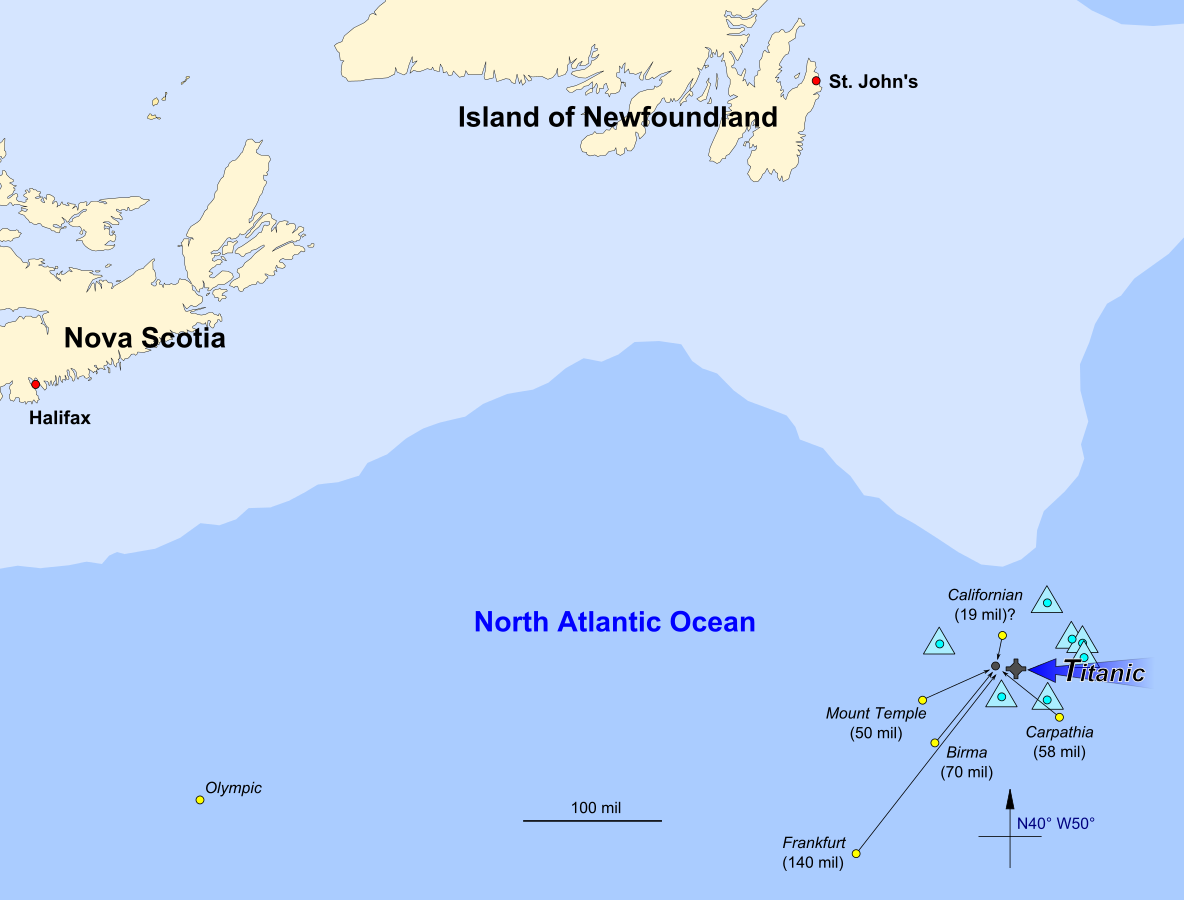
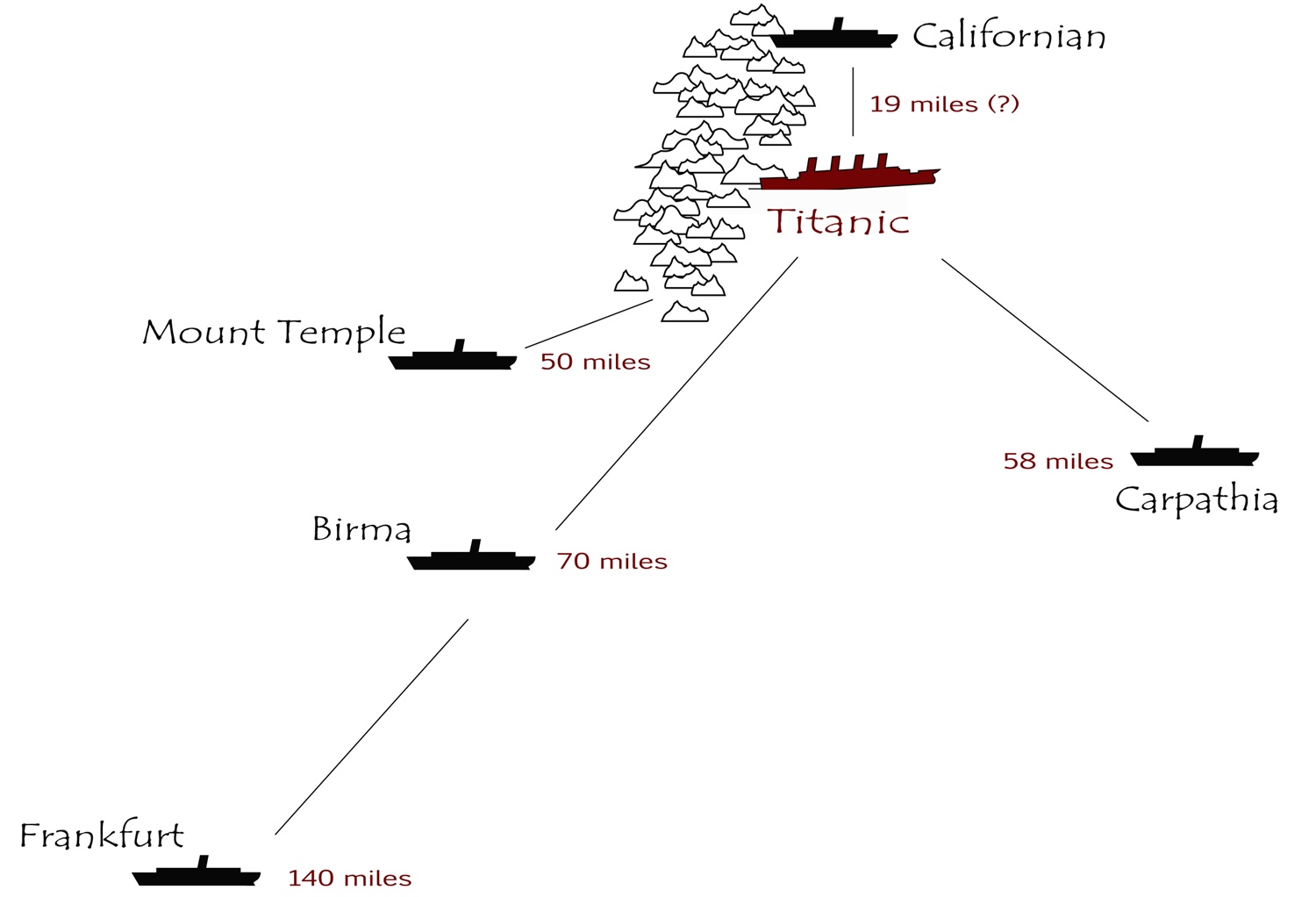
At that point in time the nearest ship was the Californian estimated to be about 19- miles away, Mount Temple 50 miles, Carpathia 58 miles, Birma 70 miles and the farthest was Frankfurt 140 miles away. (Fig 8 and Fig 9)
The telegraph equipment is, of course, legendary. (Fig 3) It was on this set that radio operators, Jack Phillips and Harold Bride, first received warnings of ice from ships ahead of them and passed them on to Capt Smith. Then after striking the iceberg, it was this set that broadcast their cries for help using at first the traditional CDQ distress code, then switching to the new SOS call for help.
The morse code cry for help was tragically not heard by the SS California only a few miles away, but was picked up by the SS Carpathia, which came steaming at full speed to RMS Titanic’s aid.
Even when Jack Phillips had been relieved from his post and could have survived, like his co-worker Harold Bride, he instead heroically stayed with the Marconi telegraphy set, sending out distress signal on behalf of the ship’s survivors until the power failed just three minutes before the ship plunged into the icy depths. Phillips did not survive the sinking.
Bride survived on an upturned lifeboat and then sold his story to the New York Times. And he commemorated the role of Jack Phillips, unflinching, even when he knew better than anyone else that there was no chance of a rescue ship arriving in time. "I will never live to forget the work of Phillips during the last awful 15 minutes," said Bride. “I suddenly felt a great reverence to see him standing there sticking to his work while everybody else was raging about.”
Honoring Heroic Sacrifice of Jack Phillips, Marconi’s Senior Wireless Operator
Jack was born on April 11, 1887 to George and Ann Phillips at 11 Farncombe Street, above the draper's shop where his father was the manager. The day after the Titanic departed Southampton, on 11 April 1912 Jack and Harold celebrated Jack’s 25th birthday with pastries bought from the first class dining room.
After hitting the iceberg and with water entering the water, Jack urged Harold to save himself: Harold didn't leave until he had forced Jack to put on a life vest. Jack stayed at his post, updating the Titanic's position and urging other ships to come to the rescue. This was even after Captain Smith had given the order of 'Every man for himself'. Harold was washed from the deck but managed to cling to a lifeboat and was rescued by the RMS Carpathia. In all the chaos, confusion and panic, Jack remained at his post until almost the last minute.
He sent his last message at 2.17am: Titanic sank at 2.20am. Harold Bride survived the disaster, and went on to marry and have a family. For Jack, and around 1,516 others, sadly, that was not to be. His parents and sisters, bereft at his death at such a young age, were overwhelmed at the outpouring of affection and support they received from the townsfolk of Godalming.
In 1912, the town rallied to honour its hero Jack Phillips and still treasures his selfless devotion and heroic deed till today. In April 2002, to mark the 90th anniversary of the sinking of the Titanic, Godalming Town Council refurbished Jack's family graves in Nightingale Cemetery and in the centre of a six-foot-square kerb of white marble is an obelisk in the shape of an iceberg.
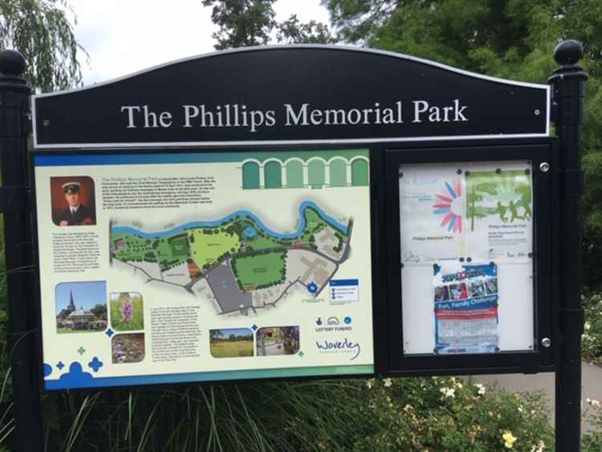
In memory of his courage and sacrifice a Memorial was set up in his hometown of Godalming in Surrey, United Kingdom. (Fig 10)
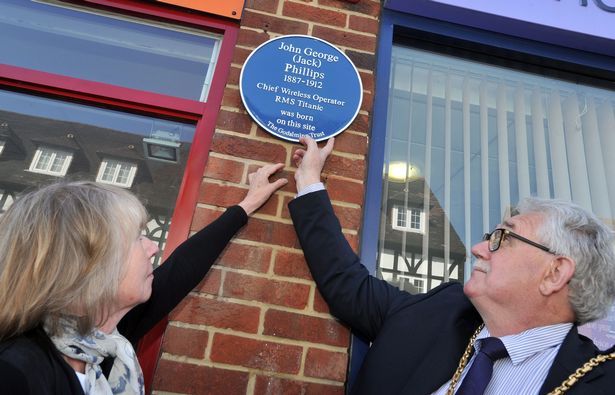
In 2012, Godalming Museum containing, a wealth of information of Jack and his family held an exhibition to mark the centenary of the disaster and in 2017, a blue plaque was unveiled by the Godalming Trust at the building that now stands on the site of number 11, Farncombe Street, Jack’s birthplace. (Fig 11)
Honour for Guglielmo Marconi, inventor of the wireless
Although lives were lost in the Titanic tragedy, it was widely recognized that wireless communication had played a huge part in saving lives. A case in point, in the British inquiry of the Titanic, Britain's Postmaster-General summed up, referring to the Titanic disaster: "Those who have been saved, have been saved through one man, Mr. Marconi ... and his marvellous invention.”
On 18th April 1912, Guglielmo Marconi had been invited to lecture in the Engineering Societies Building under the auspices of the New York Electrical Society. The crowd of both men and women gathered began cheering and applauding as soon as Marconi appeared in the large auditorium and they cheered again when the chairman of the lecture board read a congratulatory telegram to Marconi that praised “the splendid work your system has done in saving human life in disasters on the sea” from fellow inventor Thomas Edison.
In addition to his role and contribution to saving lives of passengers on the Titanic, Marconi has received numerous prizes, accolades and awards including ennobled as a Marchese (marquis) by King Victor Emmanuel III of Italy.
Read all parts: Part 1, Part 2, Part 3, Part 4, Part 5, Part 6, Part 7, Part 8
Sheriffah Dato Syed is a content creator under the Newswav Creator programme, where you get to express yourself, be a citizen journalist, and at the same time monetize your content & reach millions of users on Newswav. Log in to creator.newswav.com and become a Newswav Creator now!
The User Content (as defined on Newswav Terms of Use) above including the views expressed and media (pictures, videos, citations etc) were submitted & posted by the author. Newswav is solely an aggregation platform that hosts the User Content. If you have any questions about the content, copyright or other issues of the work, please contact Newswav.